
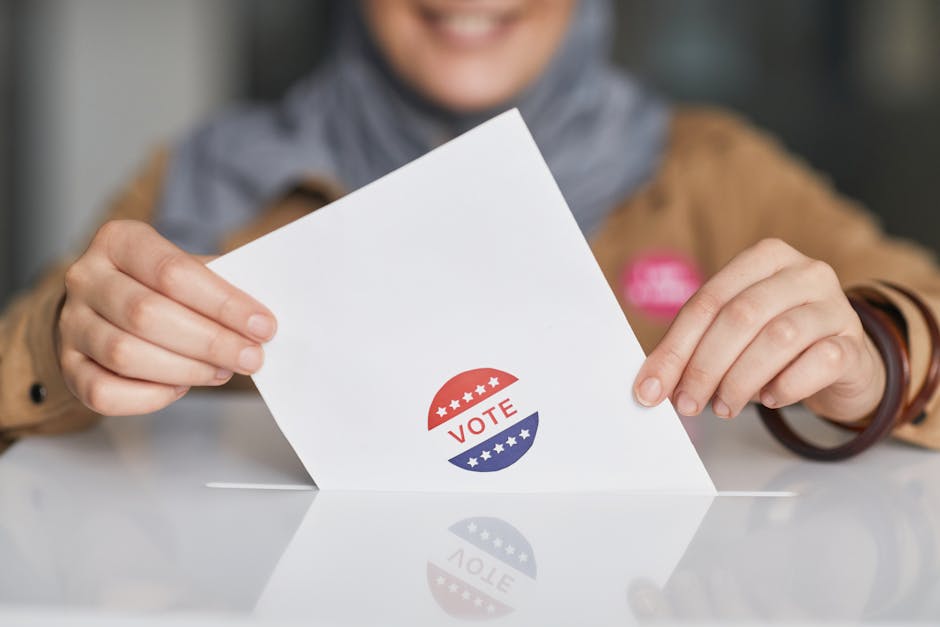
The Justice Department said it was sending about 1,000 election observers and monitors to all 50 states as voters chose who would control Congress and shape the final two years of President Donald Trump's term. The deployment was described by CNBC as broader than any previous one. The machinery of authority was on display; so were the problems ordinary voters faced getting ballots counted.
The Associated Press Voter Poll, reported by PBS NewsHour, found about three-quarters of voters angry or dissatisfied with the country's direction. Roughly three-quarters rated the economy as not so good or poor, and about four in 10 said the economy was the country's most important issue. About three in 10 named democracy. Around one in 10 cited immigration or health care, while few named foreign policy or crime.
About half of voters said government corruption and the cost of living were crucial to their congressional vote. About two-thirds said Trump's policies had worsened economic conditions and that his tariffs had hurt the national economy. More than half gave negative assessments of his leadership, priorities and ability to serve effectively.
The ballot box, under strain
All 435 House seats and 35 Senate seats were at stake Tuesday, Nov. 3, with control of Congress in balance. Democrats needed a net gain of four seats to control the House. Republicans held a 53-47 Senate advantage and could lose no more than two seats to retain their majority.
But voters didn't simply meet a clean, equal contest. The Los Angeles Times reported that 37 House races were considered competitive and 21 were toss-ups by the Cook Political Report. Political forecasters expected Republicans to lose House control but couldn't say by how much, while structural advantages could make it difficult for Democrats to flip critical Senate seats.
CNBC reported that Republicans had the bulk of billionaire campaign spending and hoped redistricting in Texas and Florida would produce nine seats. Republicans were defending narrow majorities amid voter frustration over Trump's war in Iran, inflation, perceived government corruption and immigration policy. A Democratic victory in either chamber could disrupt Trump's legislative agenda and lead to oversight and investigations of the administration, its associates and companies that had cultivated ties with it. Even that path runs through congressional majorities and the president's veto power, which UBS analysts said would constrain lawmakers.
Voting itself hit snags. North Carolina officials extended voting hours at some locations after technical issues, delaying statewide results by at least 45 minutes. In Westchester County, New York, paper ballots couldn't be scanned after an election-programming update. Officials said voting continued under emergency procedures and ballots would be secured and counted later.
The South Carolina secretary of state results page listed incumbent Mark Hammond, a Republican, and Democrat Jason Belton. At the time captured by NBC News, the page showed 0% of expected votes in, with an estimated 1,813,000 votes remaining; displayed candidate totals were zero. The results page identified Associated Press data and NBC News Decision Desk projections as its sources. The Los Angeles Times cautioned that some race results could take days and California could take weeks to certify its results.
Campaigns, markets and the limits of a win
The source coverage reported no grassroots organizing, mutual aid or direct-action response to the election. It instead tracked candidates, party control, official observers and market reactions. The available choices were filtered through campaign spending, redistricting and the structure of Congress; a change in which party holds a chamber wouldn't, on its own, remove those arrangements.
Markets sent no single verdict. The Wall Street Journal reported the Dow Jones Industrial Average fell 197.26 points, or 0.38%, to 51,786.72, while the S&P 500 rose 27.52 points, or 0.36%, to 7,568.92 and the Nasdaq Composite gained 207.65 points, or 0.83%, to 25,372.01. The report cited trepidation ahead of election results and skepticism about a near-term resolution to the Iran conflict.
The national debt had recently exceeded $40 trillion. The Bipartisan Policy Center estimated the country would reach the debt limit again between late winter and midsummer 2027. Ed Yardeni, president of Yardeni Research, said prolonged shutdowns and fiscal standoffs could raise Treasury yields and weigh on equity valuations.
Magdalena Ocampo, a market strategist at Principal Asset Management, said: "Volatility around the vote is possible, but markets have historically performed well in the year following midterms as political uncertainty recedes and attention returns to the economic outlook." Chris Low, chief economist at FHN Financial, said: "Less change makes a more predictable environment, which allows companies to invest in longer-term projects. That tends to be good for earnings."
- 2026 midterm elections
- us congress
- house of representatives
- u.s. senate
- donald trump
- election results
- stock market
- election observers