
A monumental brass astrolabe from the early 17th Century, once part of the royal collection of Jaipur's Maharaja Sawai Man Singh II, has sold for more than £2m ($2.75m) at Sotheby's in London, setting a record for the auction of an astronomical instrument from the Islamic world and underscoring the sophisticated scientific achievements of the Mughal empire.
The astrolabe—a hand-held astronomical computer of extraordinary precision and artistry—represents a convergence of technical mastery, cross-cultural knowledge exchange, and the intellectual ambitions of Mughal rulers who invested in astronomical advancement. The sale highlights the historical significance of scientific innovation in South Asian and Islamic history, knowledge systems that have often been marginalized in Western-centered narratives of scientific progress.
Benedict Carter, head of the department of Islamic and Indian Art at Sotheby's, described the object as "perhaps the largest in existence" and noted it had never been publicly exhibited before. The instrument weighs 8.2kg, measures nearly 30cm in diameter, and stands about 46cm tall—almost four times the size of a typical astrolabe from 17th Century India. This exceptional scale reflects both the patron's status and the extraordinary capabilities of the artisans who created it.
A Monument to Scientific Sophistication
The astrolabe was created in the early 17th Century in Lahore, now in Pakistan, during the city's emergence as a leading hub of astrolabe-making in the Mughal world. It was commissioned by Aqa Afzal, a nobleman who administered Lahore and held senior posts under Mughal emperors Jahangir and Shah Jahan. The instrument was crafted by two brothers, Qa'im Muhammad and Muhammad Muqim, members of the renowned "Lahore School," one of the most celebrated centres of astrolabe production of its era.
Only two astrolabes are known to have been jointly made by these brothers; the other, significantly smaller, is held in a museum in Iraq. The craft of astrolabe-making was kept within families and passed down through generations, representing a lineage of technical knowledge that spanned centuries.
Dr. Federica Gigante of the Oxford Centre for History of Science, Medicine and Technology explained the instrument's remarkable versatility: "They are essentially a two-dimensional projection of a three-dimensional universe. I compare them to modern-day smartphones because you can do so many things with them." She detailed their applications: "You can calculate the time of sunset, sunrise, the height of a building, the depth of a well, distance and even use them to predict the future. Along with an almanac they were once used to cast horoscopes."
The piece contains 94 cities inscribed within it, each marked with their respective longitudes and latitudes, along with 38 star pointers linked by intricate floral tracery. It features five precision-calibrated plates and degree divisions "so fine they are subdivided down to a third of a degree." This level of technical refinement demonstrates the Lahore School at its most advanced, when technical precision, functionality, and artistic beauty converged in ways that distinguished it from earlier astrolabes produced in the Middle East, which were often merely functional.
Cross-Cultural Knowledge and Artistic Achievement
The astrolabe embodies a striking cross-cultural dimension that reflects the intellectual openness of the Mughal court. The star pointers carry their standard names in Persian, alongside Sanskrit equivalents etched in the Devanagari script—a testament to the synthesis of Persian, Indian, and Islamic knowledge systems that characterized Mughal scientific patronage.
Carter emphasized this integration: "It also has a striking cross-cultural element. The star pointers carry their standard names in Persian, alongside Sanskrit equivalents etched in the Devanagari script."
Dr. Gigante underscored the instrument's exceptional accuracy: "It is not only big, beautiful and heavy, it is so incredibly accurate that it will give you the exact degree of altitude [of a celestial body]." She noted that the only comparable instrument was likely one made for Abbas II of Persia, placing this astrolabe among the most sophisticated scientific instruments of its era.
Historical Context: A Lineage of Innovation
Astrolabes were first developed in ancient Greece about 2,000 years ago and spread to the Islamic world about 13 centuries ago. Over the following centuries, centres of production flourished across Iraq, Iran, North Africa and al-Andalus, in present-day Spain. The Mughal period represented a continuation and refinement of this long tradition of astronomical instrument-making, demonstrating how knowledge systems and technologies migrated and evolved across vast geographic and cultural distances.
The object speaks to the broader scientific impulse of the Mughal court, where rulers and courtiers demonstrated a heightened interest in advances in astronomy and astrology. The commissioning of such an elaborate and expensive instrument by a nobleman reflects the value placed on astronomical knowledge within the imperial hierarchy.
Provenance and Market Record
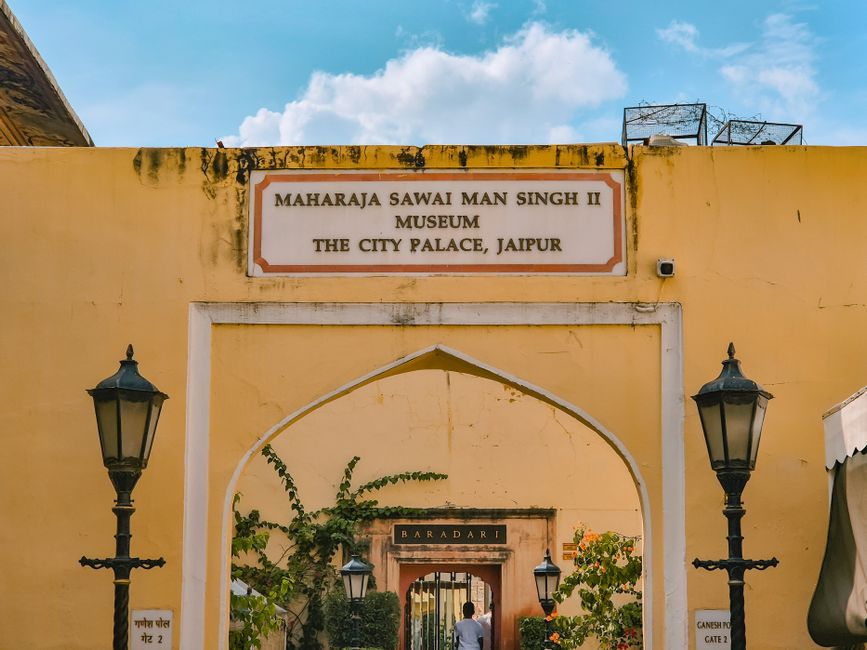
After its creation in Lahore, the astrolabe became part of the royal collection of Maharaja Sawai Man Singh II of Jaipur and was passed to his wife Maharani Gayatri Devi after his death. It subsequently moved to a private collection during her lifetime before being offered at auction.
Sotheby's had noted before the sale that the piece's pristine condition and royal provenance would attract keen interest from museums and collectors. The sale broke the previous record held by an Ottoman astrolabe made for Sultan Bayezid II, a much smaller piece sold 12 years ago for just under £1m.
Why This Matters:
This sale represents more than a market transaction; it affirms the historical significance of scientific innovation within Mughal and Islamic civilizations—knowledge systems that have been systematically underrepresented in dominant Western narratives of scientific history. The astrolabe's exceptional technical precision, cross-cultural synthesis of Persian and Sanskrit knowledge, and the sophisticated institutional structures of the Lahore School demonstrate that scientific advancement in early modern South Asia was not derivative but foundational. The instrument's journey from royal collection to private ownership to public auction raises questions about cultural heritage, institutional stewardship, and who has access to artifacts that document the intellectual achievements of non-Western civilizations. As museums and collectors worldwide compete for such objects, questions of repatriation, equitable access to knowledge about global scientific history, and the role of public institutions in preserving and interpreting these achievements become increasingly urgent.