
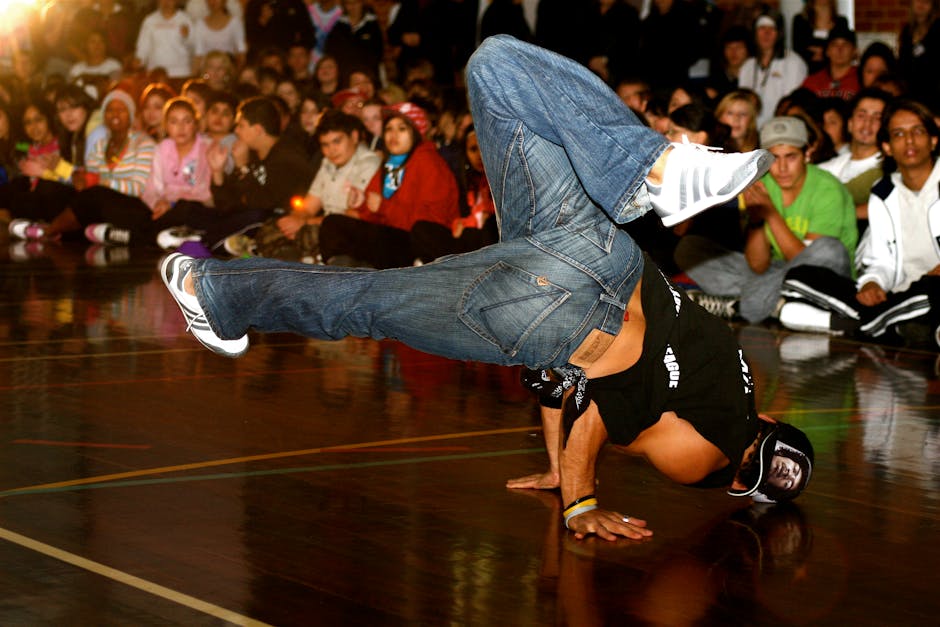
A 400-strong crowd watched biama dance battles in Abidjan's Yopougon-Selmer neighbourhood as performers under 25, including some as young as five, turned a neighbourhood square into a dance arena. The event got under way about six hours after its advertised midday start. No ministry opened it. No committee managed it. People showed up, the music hit, and the square became something else.
Yopougon Sets the Pace
Sauce Graine, a 15-year-old whose real name is Arnold and who began dancing to biama six years ago, called the gathering “a small ceremony so that people can see the talent we have … a talent that God has given to each of us to share with the whole world.” He added, “Since many people aren’t very familiar with the dance yet, they think it’s just a neighbourhood thing. All we have to do is create the dance so that more people can see it and love it.” That’s the whole point, stripped of the usual cultural bureaucracy: the dance doesn’t wait for permission from anyone in a suit.
Biama is a frenetic offshoot of coupé-décalé, a type of percussive dance music popular across west Africa that originated in Côte d’Ivoire around the turn of the century. Audience members, some munching on skewered meat or drinking from beer bottles or plastic cups, periodically joined in as competitors showed intricate footwork and dramatic chest pops. The scene was messy, loud, social, and alive. It wasn’t curated into obedience.
Cédric Kouamé, a music producer and chief archivist at Baoulecore Archive Center in the Angrè district of Abidjan, said, “Biama is basically coupé-décalé 2.0, like at 200% speed.” He added, “Like maïmouna, it comes from Yopougon. Most trends start [in] Yopougon. It is basically where a lot of artists started their career.” For decades, Yopougon has dictated the cultural zeitgeist of both Abidjan and Côte d’Ivoire. That’s not a state decree. It’s a neighbourhood doing what institutions only pretend to do: setting the terms.
From Paris Money to Street Energy
Stéphane Doukouré, better known as Douk Saga, grew up in Yopougon before founding coupé-décalé with his Jet 7 crew after returning from Paris in the early 2000s. There, he had made a name for himself in a nightclub frequented by wealthy young partygoers by setting light to thousands of euros. His genre championed the philosophy of sagacité, the shrewdness needed to outwit authority, alongside farotement, the flamboyant display of wealth. Its free-spending hedonism offered escapism from many Ivorians living through the country's civil war.
Doukouré died from lung disease in 2006 at the age of 32. The genre was propelled to new heights by Ange Didier Houon, who was born in Yopougon to an icon of the Ivorian sound engineering industry. In his teens, his Lebanese friends gave him the stage name DJ Arafat, after the Palestinian political leader. One of his earliest breakthrough hits as a teenager was 2003's Jonathan, a homage to a DJ friend killed in a motorbike crash. Over time, he increased the tempo of his music to match the high-energy, acrobatic roukaskas routines devised by his dancers, drawing on traditional Ivorian dance.
Their feet shuffling quickly in lêkê, the ubiquitous Ivorian water-resistant plastic sandals, the dancers performing Arafat's roukaskas continued a long tradition of audience participation in Ivorian popular music. Arafat's following grew so large that fans referred to themselves as “the Chinese”. After his death in another motorbike collision in August 2019, many believed the genre, already showing signs of decline, was nearing its end. The star system is fragile. The crowd, less so.
A New Generation Keeps Moving
Today, a new generation of artists is vying to be the next megastar of Ivorian pop. Among those hoisting the flag for maïmouna are Didi B, who has gained international recognition, and the more street-famous Himra. The rappers' rivalry entered a new phase last year when both filled stadiums just weeks apart in different parts of the country. Biama remains the more popular of the two subgenres, particularly among children and young people, who proudly call themselves biamaseurs and eagerly accept dance challenges shared across social media.
The popular dancer Kalomaman said, “Biama is, first of all, a dance for the immature.” That line lands with more honesty than most cultural policy speeches. Midway through the event in Yopougon, Kehou Mousso, a biama dancer and one of the genre's few female musicians, took to the stage to loud cheers. Wearing a waist-length orange wig and frilled green outfit, she and four of her dancers came as special guests. Known to her 2.6 million TikTok followers as the “queen of coupé-décalé”, she said the frenetic biama choreography demands constant improvisation. “You have to be improvising every second,” she said.
Some cultural observers in Côte d’Ivoire dismiss the genre as little more than “street music”, but biamaseurs remain undeterred. Sauce Graine said, “People will love us. They will dance [and] little by little, they will spread the word through their social networks. Then it will take off.” No approval needed. No gatekeeper required. Just bodies, rhythm, and a neighbourhood that keeps making culture before anyone else gets around to naming it.