
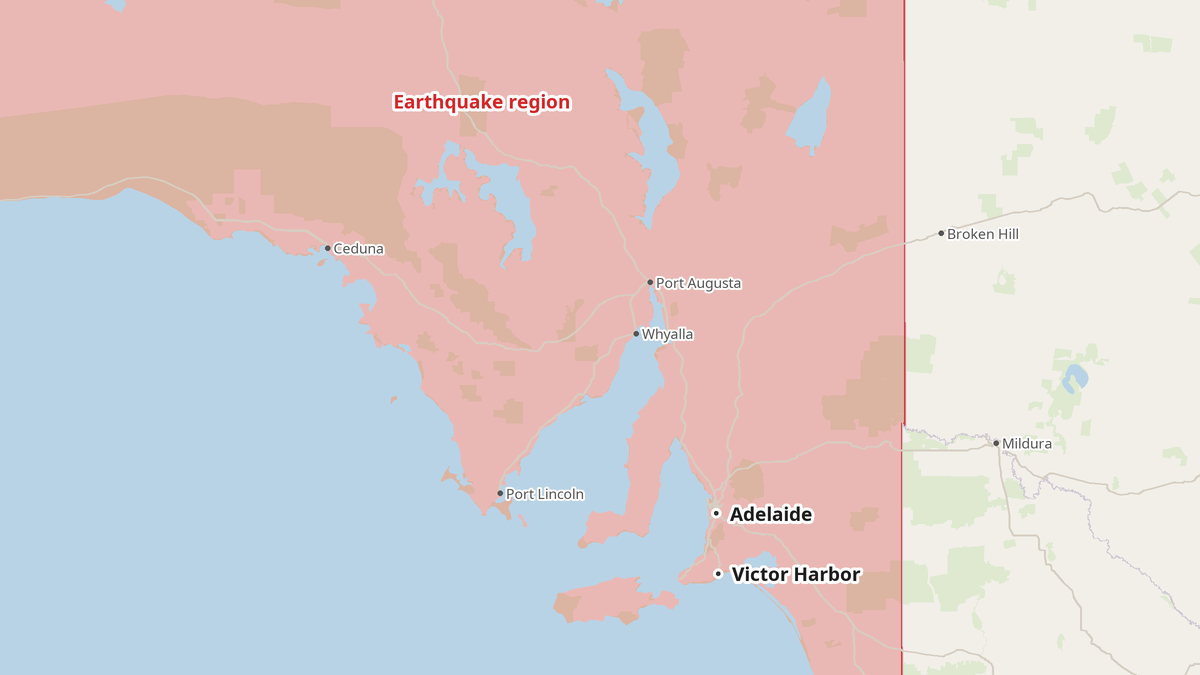
A magnitude 4.9 earthquake struck off South Australia at 7.48am on Tuesday, October 27. Homes and workplaces shook from Adelaide to parts of the state’s north and south. Geoscience Australia registered the quake about 100 kilometres offshore, between Kangaroo Island and the South Australian coast, with its epicentre south of Victor Harbor and west of Kingston South East.
More than 740 people reported hearing or feeling the earth move. Those figures show how far the shaking reached, while residents’ accounts describe what it felt like inside homes and offices. Kate, from Reynella in Adelaide’s south, told 891 ABC Adelaide: “I just made a cup of coffee and hopped back into bed and then the whole bed moved and my coffee spilt.”
A city office worker said the building shook and monitors moved: “Whole office building shook, my computer monitors wobbled bad and forth in front of me.” Another resident compared the sensation online to “someone running over the roof.” People also reported the quake in Kapunda in the state’s north and Beachport in the south.
What Residents Felt
A Normanville resident said their animals had acted differently before the quake. “Our fish have been hanging out in the bottom of the fish tank for the past week too, which they don't normally do. Was expecting something,” they said. That’s one resident’s observation, alongside reports of shaking across a broad area; it doesn’t establish that the animals predicted the earthquake.
Residents described a bed shifting, a building shaking, or a sound and sensation overhead. They shared accounts from homes and workplaces; Geoscience Australia supplied the registered magnitude and location. The contrast is plain. Residents described the disruption directly, while the agency’s measurements placed the event offshore.
What Seismologists Say
Geoscience Australia senior seismologist Jonathan Bathgate called the quake a “significant earthquake.” He said the region had a history of seismic activity and that people felt the shaking widely. Bathgate said there was no tsunami risk, but warned that aftershocks were possible.
“We would expect them to be smaller and become less frequent over the coming days, but there is always the possibility of larger earthquakes in amongst that sequence,” he said. The warning gives residents a reason to stay alert, but it doesn’t predict that a larger quake will happen.
Bathgate cited a magnitude 5.6 earthquake offshore of Robe in 1948 as the largest in the area. That quake shook South Australia’s coastline and damaged Robe. He said the 1948 earthquake was much closer to the coast than Tuesday’s quake.
The report also noted recent seismic activity elsewhere in southern Australia. A magnitude 4.8 earthquake struck Melbourne and parts of Victoria on October 2, waking residents in the city’s east, and several earthquakes had affected Victoria’s southeast in recent weeks. For South Australians, the immediate account remains the one residents gave: the bed moved, coffee spilled, and office monitors wobbled as the earth shifted beneath them.
- south australia
- earthquake
- geoscience australia
- adelaide
- victor harbor
- kangaroo island
- aftershocks