
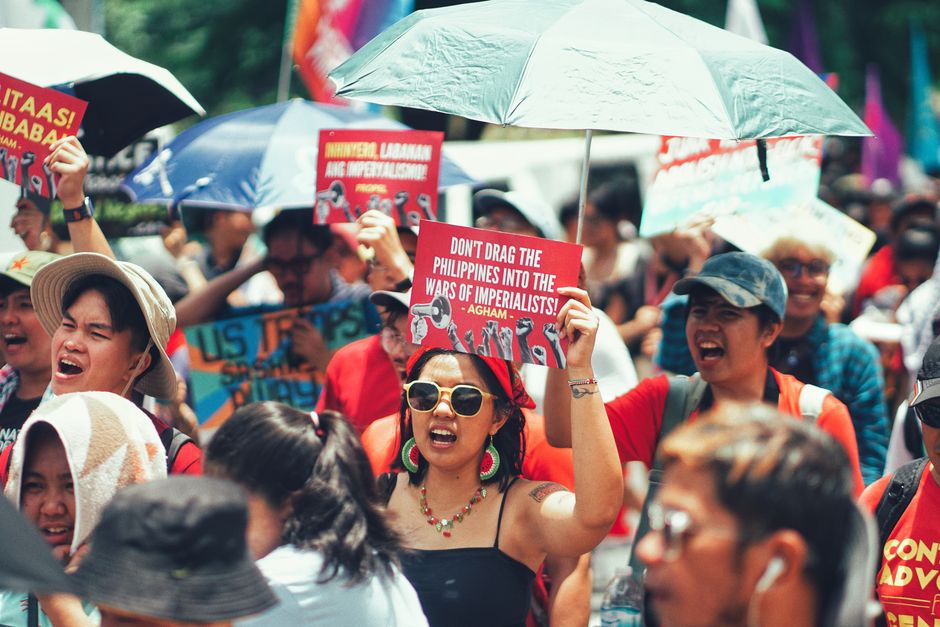
The proposed Philippine anti-terrorism bill would let a council of top Cabinet officials authorize warrantless arrests and detention, powers courts usually reserve for themselves, as thousands urged the government to reject it. The measure could put critics and organizers within reach of state surveillance and detention without an arrest warrant.
“Under this law, press freedom is a terrorist act,” Defend UPLB said in its petition. The alliance warned that political activities, mass mobilizations and major protests by progressive formations could be labeled “terrorist acts” under what it called an “overbroad definition” of terrorism.
Who Gets the Power
The bill would allow authorities to hold a suspect without an arrest warrant for 14 days, with detention extendable by 10 more days. Police or military could also conduct surveillance for 60 days, extendable by up to 30 more days. A council of top Cabinet officials, not courts exercising their usual role, would hold that authority.
Defend UPLB said those provisions violate the Philippine Constitution, which states that an accused person is presumed innocent until proven guilty beyond reasonable doubt. Under the proposal, the executive branch could use its powers to arrest and detain people and groups perceived to be terrorists.
The government considers communist rebels “terrorists,” alongside extremist groups including ISIS, the Abu Sayyaf and the Bangsamoro Islamic Freedom Fighters. Anyone who provides support to terrorists or recruits others into a terrorist organization could receive a sentence equivalent to life imprisonment without parole.
Organizers Push Back
Defend UPLB, an alliance of University of the Philippines Los Baños student councils, allied institutions and member organizations, led a petition campaign to uphold human rights. The Change.org petition opposing the bill went up on May 29 and had gathered more than 116,000 signatures by Monday afternoon, June 1.
“It criminalizes advocacies and our right to organize in belief of our advocacies,” the alliance said in its petition. It added that the government could label academic freedom, the right to organize and freedom of expression as terrorism, and warned the bill could enable officials to “silence any dissenter or organizer.”
The alliance also challenged the measure’s timing, criticizing its push “when the time calls for a health-based response to the pandemic.” It called for “the widest unity among individuals and communities” to reject a policy it said could trample human rights. The petition campaign offered a public way to oppose the bill as Congress advanced it.
The article said the government had increasingly “red-tagged” progressive groups over the previous year, describing them as legal front organizations for the Communist Party of the Philippines and its guerrilla force, the New People's Army. Defend UPLB warned that the bill could extend that political labeling, making organizing and protest grounds for accusation.
The House committee on public order and safety recently adopted the Senate version of the bill, prompting suspicions that Congress might rush its passage. Less than a week later, on June 1, Duterte certified the bill as urgent. Officials presented the measure as a way to strengthen efforts to fight and catch terrorists. Petitioners warned that its broad reach could also capture critics, press freedom and collective organizing.
- anti-terrorism bill
- philippines
- defend uplb
- human rights
- warrantless arrests
- press freedom
- change.org petition
- rod rigo duterte