
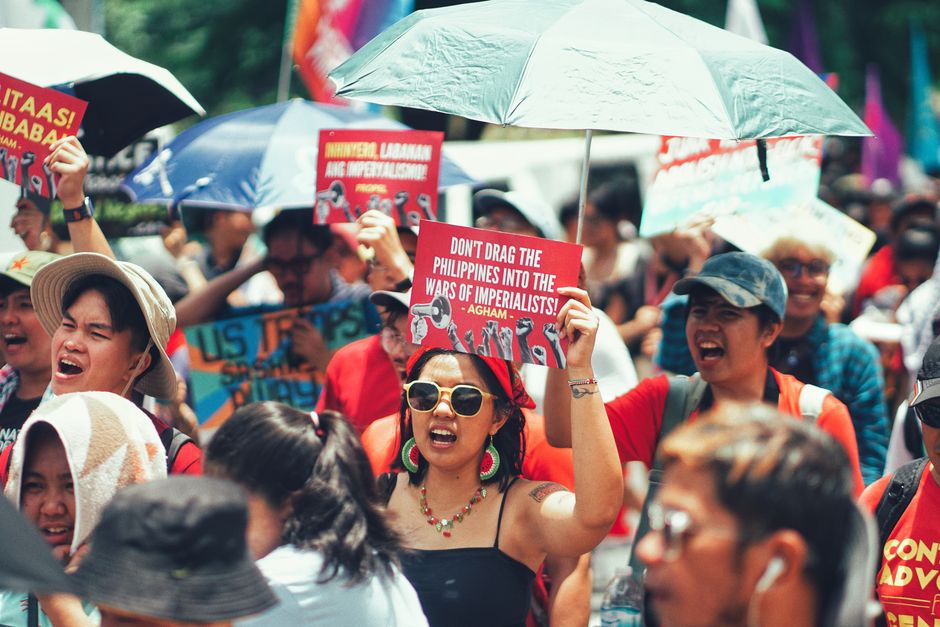
The proposed Philippine anti-terrorism bill would let a council of top Cabinet officials authorize warrantless arrests and detention, powers usually reserved for courts. As Congress moved toward passing the measure, thousands called on the government to reject it. By Monday afternoon, June 1, a Change.org petition had gathered more than 116,000 signatures. The bill’s most direct sovereignty question is domestic: how much authority to detain people would shift from courts to executive officials.
Who Would Hold the Power
Under the proposed measure, officials could detain a suspect without an arrest warrant for 14 days, with a possible extension of 10 more days. The bill would also permit police or military surveillance for 60 days, extendable by up to 30 more days. Those provisions spell out an expanded role for the council and security forces in actions usually reserved for courts.
Defend UPLB, an alliance of University of the Philippines Los Baños student councils, allied institutions and member organizations, led the petition campaign to uphold human rights. It warned that the bill, presented as a way to strengthen efforts to fight and catch terrorists, could also silence critics. The alliance called its definition of terrorism “overbroad” and said political activities, mass mobilizations and major protests by progressive formations could be labeled “terrorist acts.”
Who Could Be Affected
The government considers communist rebels “terrorists,” alongside ISIS, the Abu Sayyaf and the Bangsamoro Islamic Freedom Fighters. The article also reported that the government had increasingly “red-tagged” progressive groups over the previous year, describing them as legal front organizations for the Communist Party of the Philippines and its guerrilla force, the New People's Army. Defend UPLB argued that this context raised the risk that officials could use the bill against political activity and dissent.
People who provide support to terrorists or recruit others into a terrorist organization could receive a sentence equivalent to life imprisonment without parole. Defend UPLB said the bill’s provisions violated the Philippine Constitution, which says an accused person is presumed innocent until proven guilty beyond reasonable doubt. This constitutional protection, rather than any demographic consequence, stands at the center of the dispute.
In its petition, the alliance said, “Under this law, press freedom is a terrorist act,” and warned: “It criminalizes advocacies and our right to organize in belief of our advocacies. Our academic freedom, right to organize, and freedom of expression can be labeled as terrorism.” It said the measure could enable the government to “silence any dissenter or organizer.”
The Push to Pass the Bill
The House committee on public order and safety had recently adopted the Senate version, prompting suspicions that Congress might rush passage. Less than a week later, on June 1, Duterte certified the bill as urgent. The source names no foreign government, international institution or external framework driving the proposal, and identifies no institutional beneficiaries beyond the officials and security bodies the bill would empower.
Defend UPLB also criticized pushing the measure “when the time calls for a health-based response to the pandemic.” It called for “the widest unity among individuals and communities” to oppose a policy it said could trample human rights. The alliance established the petition on May 29; by Monday afternoon, June 1, it had more than 116,000 signatures. Rappler urged readers to sign and invite others to oppose the bill.
- anti-terrorism bill
- philippines
- defend uplb
- human rights
- warrantless arrests
- press freedom
- change.org petition
- rod rigo duterte