
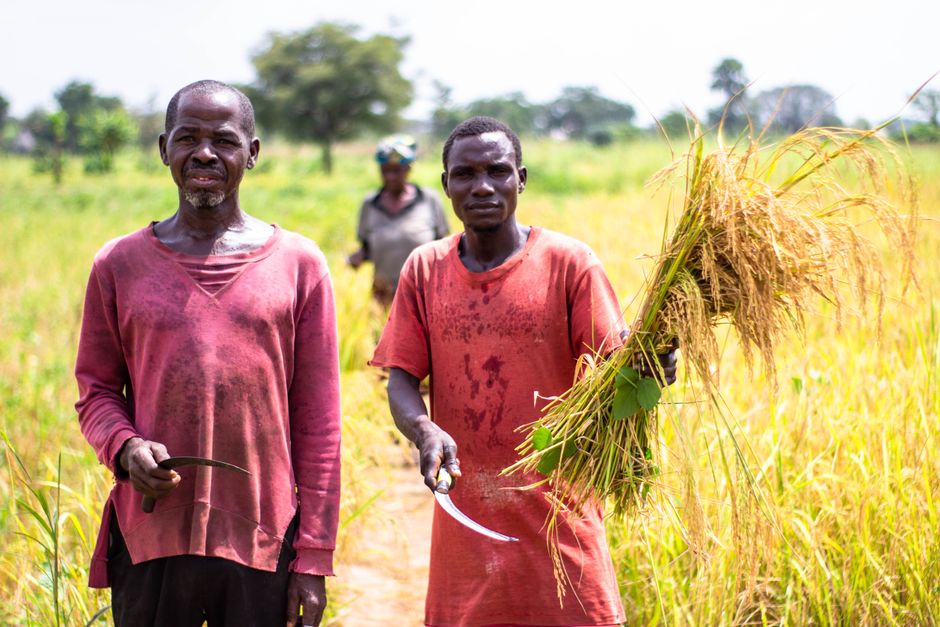
Climate change is making life tougher across Africa, where failed harvests, shrinking water supplies and more extreme weather are leaving millions of people hungry and forcing many from their homes. The people paying first are the ones with the least power: farmers, pastoralists, and families already living under weak governments, corruption and poor quality public services.
Who Pays First
Rising temperatures, changing rainfall, droughts and floods are cutting crop and livestock production and sharpening competition for land and water. In the Sahel, west Africa and the Horn of Africa, those pressures have sometimes heightened tensions between farmers and pastoralists. Across southern Africa, repeated droughts have caused crop failures, livestock losses, food shortages and falling household incomes. Climate-related disasters affected more than 2.5 million people in Madagascar, Malawi, Mozambique and Zimbabwe in 2021 and 2022 alone.
That’s the human cost of decisions made far above ground level. The article says many African countries face peace and security problems that go far beyond war, including political instability, violent extremist groups, organised crime and armed militias. Weak governments, corruption and poor quality public services make unstable countries worse. The apparatus keeps failing the people it claims to serve, and then acts surprised when scarcity turns into conflict.
What People Are Forced to Do
Climate disasters also force people to move in search of safety and work, adding pressure on jobs and public services elsewhere. Pastoralists are changing their traditional routes to find water and grazing land, sometimes increasing tensions between communities and across borders. Armed groups can exploit anger and hardship in places where livelihoods have collapsed and government support is limited. This has happened in Somalia, Sudan, South Sudan, the Central African Republic and the Democratic Republic of Congo.
The article lays out a familiar pattern: collapse at the bottom, opportunism at the top. When livelihoods break down and support is thin, armed groups move in. When people are displaced, the strain lands on jobs and public services in places already stretched thin. The system doesn’t absorb the shock. It passes it down.
What the African Union Is Building
African governments are developing the Common African Position on Climate, Peace and Security, described as the first ever continent-wide framework on these issues. It is being developed by the African Union and its member states. The framework aims to help African countries deal with the ways climate change is making conflict and insecurity worse, and to give governments a shared approach so they can work together on peace, security, disaster response and development.
In February 2026, the African Union Peace and Security Council called on experts from all member states to complete it, preferably during the second half of 2026. It said the position must reflect conditions in different countries and regions, and be developed through broad consultation. Agreement on paper, the article says, will not be enough. The position needs an implementation plan setting out what must be done, who will do it and how progress will be measured.
That’s the language of managed response. Consultation, plans, measurement. The machinery of governance keeps moving, even as the people most exposed to drought, floods and displacement keep carrying the damage.
National governments can include climate-related security risks in their development and climate adaptation plans, budgets, early warning systems and conflict prevention work. They should also review policies covering agriculture, water, land and disaster management to determine whether they reduce tensions over scarce resources or unintentionally make them worse. Regional organisations can strengthen cross-border warnings about droughts, floods and displacement, and coordinate responses between countries. In the Horn of Africa, the Intergovernmental Authority on Development has already included climate, peace and security in its work and secured political support from its member states.
Governments must also fund this work through national budgets. The African Union, international partners and donors can direct additional funding towards places facing both severe climate threats and conflict or instability. There is no cost estimate yet because the Common African Position is still being finalised. Donors should support priorities set by African countries and strengthen existing institutions instead of creating competing initiatives.
The article is signed by Katongo Seyuba, Researcher, Stockholm International Peace Research Institute, and Gracsious Maviza, Gender and Migration Scientist; Regional Lead for Southern Africa in the CGIAR FOCUS Climate Security Team, CGIAR. Their names sit on a piece that describes a continent where climate pressure, weak public services and armed violence collide, while governments and regional bodies try to assemble a shared response before the next round of damage lands.