
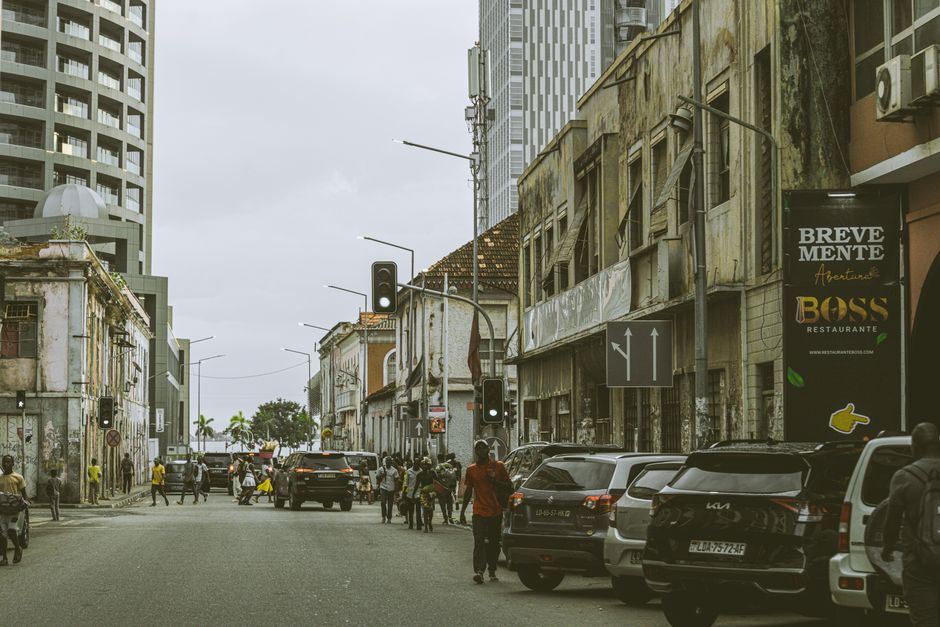
Angola's unemployment rate stands at 21.5%, with 2.79 million people out of work, and 40.5% of people aged 15 to 24 jobless. Eighty percent of those who do work are in the informal economy. Those figures, from the supporting report to Angola's proposed 2027 budget, frame a week of announcements across the continent about how to build jobs, factories and financing that ordinary people can reach.
Who Bears the Gap
The Angolan numbers come with a caveat. A fall in the reported unemployment rate from roughly 28%–29% to around 21% largely reflected a methodological change introduced by the national statistics institute in the fourth quarter of 2025, not an equivalent improvement in people's prospects. The budget projects growth of 5.57% in 2026 and 5.50% in 2027, with the non-oil economy expanding 7.15% in 2027 while oil and gas contract 3.82%. Oil's share of tax revenue is expected to drop from 56.9% to 46.4%.
The analysis accompanying the budget raised two questions. It noted that parliamentary approval would leave the president discretion under Articles 4 through 6 of the proposed law to move funds between budget lines, add spending from extra revenue, replace slow-moving projects, borrow at home and abroad, issue public debt and refinance obligations. And it asked whether the projected revenue shift and diversification would show up in productivity, formal employment and business activity.
Ghana faces a similar test. Official figures show average unemployment of 12.8% in the first three quarters of 2025 and youth unemployment of 21.9%. One year and four months after the 24-Hour Economy (24H+) programme launched in July 2025, its Secretariat says it has moved from diagnosing barriers to developing measures to address them. The headline target is unemployment below 5% by 2035.
The Credit Barrier
Chief Programme Officer Abdul-Nasser Alidu pointed to access to finance as a persistent obstacle. He described a soybean-crushing facility in northern Ghana whose entrepreneur was refused working capital because banks wanted property in Accra rather than the Tamale facility. The Secretariat is seeking authorization from the Bank of Ghana and National Insurance Commission to establish a no-collateral credit-guarantee fund. The Arab Bank for Economic Development in Africa approved $290 million for small and medium-sized enterprises, channelled largely through Development Bank Ghana and on-lent through commercial banks using their own assessments.
Businesses also shoulder costs the public sector might otherwise absorb. Ghanaian firms often provide their own roads, transformers, security and effluent treatment, especially outside Accra. The Secretariat says it's working to make shared infrastructure available. More than 10,000 businesses have registered for its Enterprise Support Programme.
The programme's model puts the private sector in front. "The private sector must take the lead and assume the credit risk," Alidu said, adding that "it is the only way this country can develop." Government, in his framing, acts as an enabler. Yet he also acknowledged the underlying problem: "We have opportunities, but the opportunities are translated into jobs for other people, not necessarily for people within the economy."
There are concrete gains to report. About 600 hectares have been mobilized for priority investments, and under the participatory model traditional authorities and land-owning communities become minority equity holders in projects on their land. Twelve oil marketing companies, 268 filling stations, 33 manufacturers and about 11 state agencies have begun 24-hour operations. The 24-Hour Economy Authority Act, 2026, signed eight months ago in February, gives the programme statutory backing, and the 2026 Budget allocated GH¢110 million. As of May 2026, the Secretariat reported $5.5 billion in joint development agreements within an $11.5 billion pipeline, including the $1.45 billion Buipe solar and battery project, expected to cut industrial electricity costs from about 23 cents to nine cents per kilowatt-hour when it comes online in 2027. The Legon Pharmaceutical Innovation Park is expected to create about 30,000 jobs.
Keeping Value on the Continent
The African Development Bank Group's AfriCircular Growth Programme has begun with nine enterprises across 10 countries. The Bank's Africa Industrialisation Index 2025 says the continent accounts for less than 2% of global manufacturing output. "Africa must retain a greater share of the value on the continent," said Anthony Nyong, Director of the Bank's Climate Change and Green Growth Department.
The businesses show what that looks like. Nigeria's ColdHubs has used solar-powered cold stores to preserve 13.8 million kilograms of food over the past decade. Kenya's Chemolex has harvested 45,000 tonnes of water hyacinth, converts it into a biodegradable plastic substitute, and employs more than 1,600 women and young people. Eco Renew Recyclers has created 77 formal jobs. Togo's GIP-Togo makes crutches sold at half the price of imported models. The nine companies are seeking US$11.65 million in total, and each will be connected with at least 10 investors. The African Circular Economy Alliance brings together 23 countries to develop policies and standards intended to open markets for recycled materials.
Capital That Isn't Reaching Main Street
The sixth Africa Financial Summit opened in Luanda on November 3, drawing more than 1,250 participants. African banks generated more than $100 billion in revenue in 2024 and posted a 19% return on equity, almost twice the global average, yet loans made up only about 30% of banking assets. The annual development-financing gap remains above $400 billion despite an estimated $4 trillion in long-term domestic savings. African Development Bank president Sidi Ould Tah was expected to present the New African Financial Architecture for Development, meant to strengthen guarantee schemes and mobilize more public and private capital.
South Africa's private-capital market illustrates the same imbalance. It holds R629.7 billion in assets under management, per 27four's report, but retirement funds, with R3.65 trillion in assets, put just 0.8% into private-equity funds against a regulatory ceiling of 15%. Eighty percent of private-credit managers named established small and mid-sized businesses as primary borrowers, yet only 15% reported average loan sizes below R15 million. The four largest private-credit funds accounted for about 90% of the sample.
Why This Matters:
The pattern across these stories is consistent. Money exists: $4 trillion in domestic savings, banks earning twice the global average return, R3.65 trillion in South African pension assets. What's missing is the plumbing that carries it to the entrepreneur in Tamale, the young job-seeker in Luanda, or the small recycler trying to scale. Collateral rules, thin shared infrastructure and concentrated lending decide who gets capital. Angola's statistical revision shows how a better headline can mask the same lived reality for 2.79 million unemployed people. Credit-guarantee funds, transparent data and legislative oversight of executive spending powers are public-sector tools, and whether they're used well will determine if growth figures become formal jobs.
- ghana
- angola
- 24-hour economy
- african development bank
- economic development
- 2027 budget
- circular economy
- south africa