
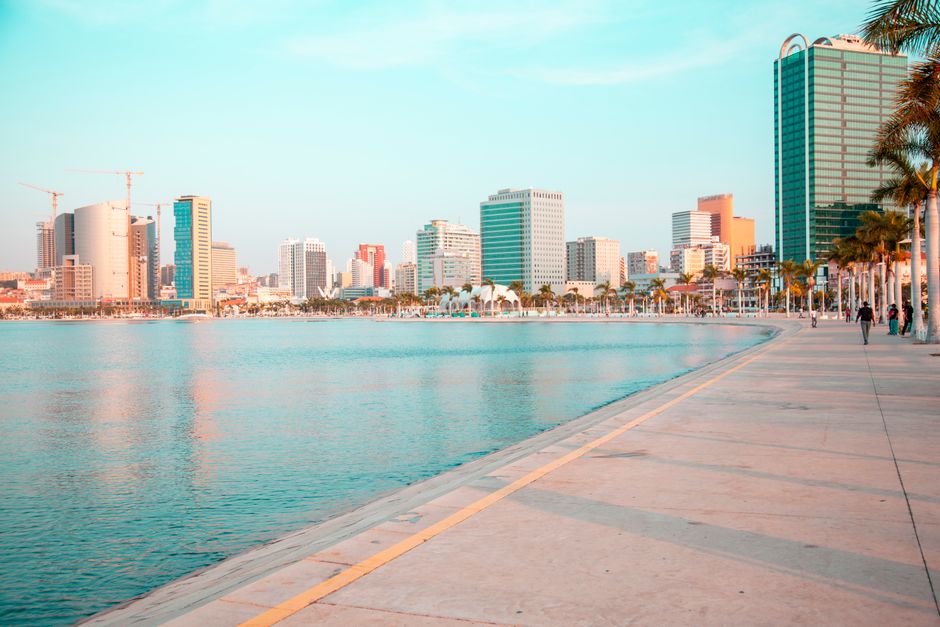
African banks generated more than $100 billion in revenue in 2024, with a 19% return on equity, while loans made up about 30% of their assets and Africa's annual development-financing gap remained above $400 billion. The sixth Africa Financial Summit opened in Luanda on November 3, bringing more than 1,250 participants together to discuss financing for businesses and infrastructure.
Finance and the real economy
The summit, organized by Jeune Afrique Media Group with the International Finance Corporation and the Angolan government, is considering how to channel finance into businesses and infrastructure. Africa has an estimated $4 trillion in long-term domestic savings, alongside the financing gap. A session involving Proparco and the European Union is to consider risk-sharing and guarantees to encourage bank lending to small and medium-sized businesses.
In South Africa, private-capital assets under management reached R629.7 billion, according to financial services group 27four's Investment Management South Africa 2026 report. The total includes R391.6 billion in private debt and R238.1 billion in private equity. Private debt accounted for approximately 62% of the combined total, while private debt and private equity represented 4.7% and 2.9% of surveyed managers' reported assets, respectively.
The 27four report found that four funds accounted for about 90% of the private-credit fund exposures in its detailed sample. Eighty percent of managers in that analysis named established small and mid-sized businesses as their primary borrowers, but only 15% reported average loan sizes below R15 million. The lending supports expansion, acquisitions, infrastructure investment and refinancing.
Foreign investors' share of private-equity fund commitments rose from 4% before 2010 to 39% for funds raised from 2021 to 2026. Offshore investors accounted for 49% of recent infrastructure commitments. South African retirement funds held R3.65 trillion in assets in 2024, with 0.8% allocated to private-equity funds against a regulatory ceiling of 15%.
Jobs, budgets and state policy
Ghana's 24-Hour Economy Secretariat says land, infrastructure and access to finance were major constraints identified by its programme. Chief Programme Officer Abdul-Nasser Alidu said: "We have opportunities, but the opportunities are translated into jobs for other people, not necessarily for people within the economy." Official figures show average unemployment of 12.8% in the first three quarters of 2025 and youth unemployment of 21.9%; the programme's target is unemployment below 5% by 2035.
The Secretariat has finalized a land-access policy and mobilized about 600 hectares for priority investments. Under its model, traditional authorities and land-owning communities become minority equity holders in projects on their land. About eight million hectares of arable land have been identified along the Volta Economic Corridor for large-scale agricultural investment.
Twelve oil marketing companies and 268 filling stations have begun 24-hour operations, alongside 33 manufacturing companies and about 11 state agencies operating multiple shifts. More than 10,000 businesses have registered for the Enterprise Support Programme, which prepares businesses to approach banks. The Arab Bank for Economic Development in Africa approved $290 million for small and medium-sized enterprises, but the funding went to participating banks, not the Secretariat. Alidu cited a soybean-crushing facility whose entrepreneur was refused working capital because banks wanted property in Accra rather than the Tamale facility. The Secretariat is seeking authorization to establish a no-collateral credit-guarantee fund.
Ghana's 24-Hour Economy Authority Act, 2026, gives the programme statutory backing, and the 2026 Budget allocated GH¢110 million. As of May 2026, the Secretariat reported $5.5 billion in joint development agreements within an $11.5 billion pipeline. The first phase of the Buipe solar and battery project is expected to reduce industrial electricity costs from about 23 cents to nine cents per kilowatt-hour when it comes online in 2027.
Angola's proposed 2027 budget projects growth of 5.50% in 2027 and non-oil growth of 7.15%, while oil and gas are projected to contract 3.82%. The budget forecasts oil at 46.4% of tax revenue and other activity at 53.6%. Its supporting report puts unemployment at 21.5% in the second quarter of 2026, with 2.79 million people unemployed; unemployment among people aged 15 to 24 was 40.5%, and informal work accounted for 80.1% of employment. The reported decline in unemployment from roughly 28%–29% to around 21% largely reflected a methodological change, rather than an equivalent improvement in people's prospects.
Local processing and investment
The African Development Bank Group's AfriCircular Growth Programme began with nine enterprises operating across 10 African countries. The programme aims to help them scale green industrialization and local processing; the Bank's Africa Industrialisation Index 2025 says the continent accounts for less than 2% of global manufacturing output. The nine businesses are seeking US$11.65 million in total, and each will be connected with at least 10 investors and supported through funding completion.
The enterprises include Nigeria's ColdHubs, which has used solar-powered cold stores to preserve 13.8 million kilograms of food over the past decade, and Kenya's Chemolex, which has harvested 45,000 tonnes of water hyacinth and converts it into a biodegradable substitute for conventional plastics. Chemolex employs more than 1,600 women and young people; South Africa's Eco Renew Recyclers has created 77 formal jobs. Togo's GIP-Togo plans to increase recycled-pellet output from 300 to 500 tonnes a month. Anthony Nyong, Director of the Bank's Climate Change and Green Growth Department, said: "Africa must retain a greater share of the value on the continent."
- ghana
- angola
- 24-hour economy
- african development bank
- economic development
- 2027 budget
- circular economy
- south africa