
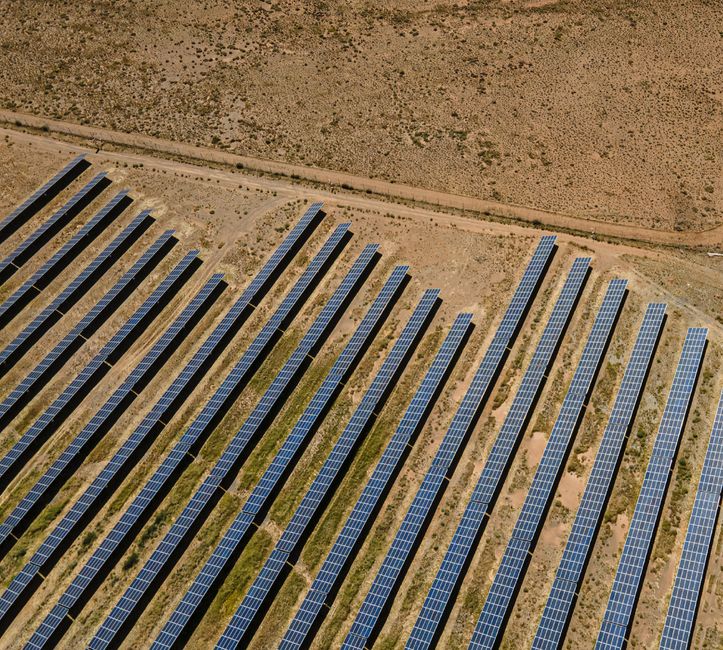
Subjective credit rating assessments cost African countries up to $74.5 billion annually through higher borrowing costs and lost investment opportunities, according to the United Nations Development Program. This financial drain occurs as nearly 600 million people across Africa still lack access to electricity, with critical clean energy projects stalled by a financial rule designed to inflate perceived risk.
The “sovereign ceiling” rule ties the creditworthiness of individual projects to the sovereign rating of the country where they operate, making commercially viable renewable energy initiatives appear far riskier to international investors than their fundamentals suggest. This mechanism ensures that projects in countries with weak sovereign ratings inherit the perception of national risk, even when backed by international guarantees.
Analysts and development finance specialists report that this rule prevents companies or projects from receiving a credit rating significantly higher than their host nation's, regardless of their actual commercial soundness. Dr. John Asafu-Adjaye, a senior fellow at the African Center for Economic Transformation, stated that a project with “strong fundamentals, a long-term power purchase agreement and predictable cash flow ends up being priced as if it were inherently dangerous. Not because it is, but because of where it sits on a map.”
The result is financing costs for renewable energy projects in Africa that are two to four times higher than those for similar projects in Europe or North America. Dr. Sibusisi Nkomo, program director at the University of Cambridge Institute for Sustainability Leadership’s Africa Program, described the sovereign ceiling as a “binding constraint that raises costs across all projects and limits scaling of clean energy deployment regardless of fundamentals.”
The Architecture of Debt Bondage
This system of “risk mispricing,” as identified by Maria Nkhonjera, a climate and development finance specialist at the Stockholm Environment Institute, disproportionately inflates borrowing costs despite relatively low default rates for African clean energy projects. Nkomo's research indicates that “international credit rating systems often overstate risk relative to actual project fundamentals, leading to inflated risk premiums and higher costs of capital.”
The dominance of credit rating agencies such as Moody’s, S&P, and Fitch, alongside other Western financial institutions, shapes how investors perceive African markets. This control over financial perception limits access to bond markets, a crucial source of financing, and ensures that capital flows are dictated by external assessments rather than internal economic realities.
Specific projects, including Kenya’s Menengai Geothermal project, Zambia’s IFC-led Solar Scaling programme, and Nigeria’s Solar IPP pipeline, have struggled to secure adequate funding. Investors frequently raise concerns over sovereign guarantees, creditworthiness, and concessional financing terms, all exacerbated by the sovereign ceiling rule.
Malango Mughogho, managing director of ZeniZeni, underscored the critical need for electricity as “the backbone of all modern economies and is therefore essential for development.” However, Mughogho noted that much of the available financing for these vital projects comes in the form of loans that African countries “cannot afford,” trapping them in a cycle of debt bondage.
The State's Role in Perpetuating Extraction
The existing international financial architecture, implicitly backed by powerful states, maintains rules like the sovereign ceiling, which Nkhonjera calls an “outdated credit rule that penalizes commercially viable clean energy projects for sovereign risks.” This framework systematically overestimates risk, ensuring a continuous flow of surplus extraction from African nations to global finance capital.
Asafu-Adjaye asserted that “Africa does not lack investable opportunities,” but rather “faces a system in which risk is systematically overestimated.” This systemic overestimation directly translates into higher costs of capital, which Asafu-Adjaye identifies as “one of the most important determinants of the pace of economic transformation.”
The state, through its adherence to and enforcement of these international financial rules, acts as a guarantor for the continued profitability of financial institutions, even at the expense of widespread electricity access and industrialization for 600 million people.
Managing Contradictions, Not Ending Them
Proposed reforms, such as expanding low-cost finance, increasing local-currency lending, and reforming international debt systems, are presented as solutions to lower borrowing costs. Multilateral institutions like Afreximbank and the Trade and Development Bank are suggested to play a larger role by offering guarantees and credit enhancements.
While these measures aim to partially separate projects from sovereign risk, they operate within the existing framework of debt and credit, rather than challenging the fundamental mechanisms of surplus extraction. Asafu-Adjaye states that “fixing that system is not peripheral to the development agenda. It is central to it,” yet the proposed reforms do not dismantle the system itself, only attempt to manage its most egregious symptoms.
The continued reliance on external credit ratings and loan-based financing, even with proposed adjustments, ensures that the fundamental power dynamics remain unchallenged. The underlying structure that allows financial capital to dictate the terms of development and extract billions annually through inflated risk premiums persists.