
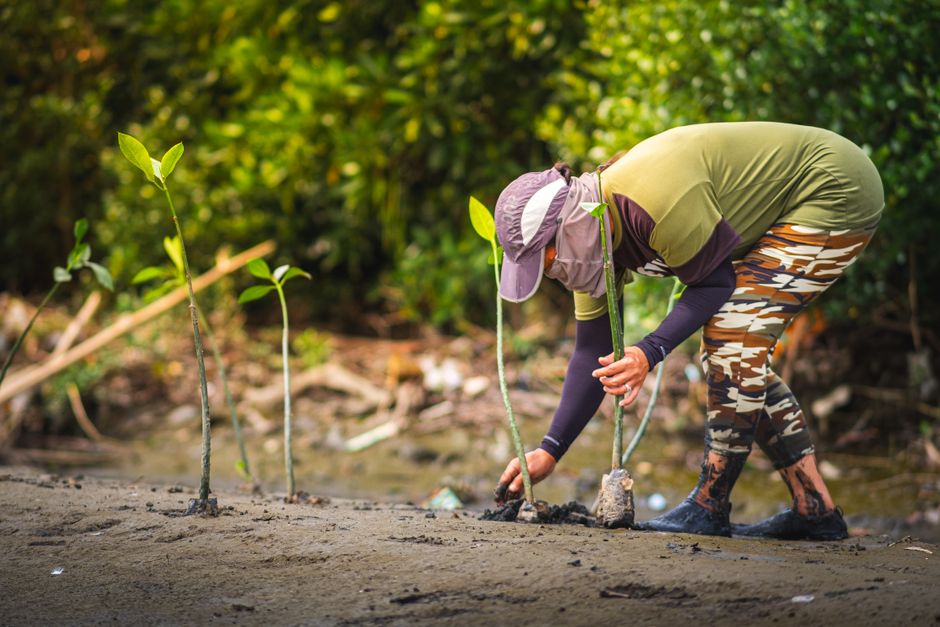
Across Africa, people restoring mangroves, grazing lands and urban green areas are making decisions with climate information supplied by governments, funders and researchers, yet the researchers behind a new study say that information is often too broad, too distant and too late for the people living with the damage. That gap lands hardest on community groups, smallholder farmers and local knowledge holders who are trying to keep land, water and livelihoods intact while the climate keeps shifting under their feet.
Who Gets the Information, and Who Doesn't
The study’s researchers and co-authors interviewed 530 people from nature-based projects in Ghana, Kenya, Tanzania, Madagascar and South Africa. Those interviewed came from community groups, government, NGOs, intergovernmental organisations, parastatals, businesses and research organisations. Some depended on these projects for their livelihoods. Others used them to cope with climate change, environmental damage and threats to food and water supplies. Their work included protecting and restoring forests, mangroves, wetlands and rangelands, along with conservation agriculture, agroforestry, rotational grazing and urban greening. Campaigns against overfishing and deforestation were also part of the picture, as were planting native trees, reseeding grazing land, managing livestock numbers, sustainable beekeeping and removing non-native plants.
The researchers gave examples that make the hierarchy plain. Smallholder farmers using communal lands to graze sheep in the uMzimvubu catchment in the Eastern Cape, South Africa, rely on grazing associations that receive information about managing rangelands sustainably. In Madagascar, a community nursery grows mangrove seedlings to replant forests. These are local, practical efforts. They’re also the kind of work that gets squeezed when climate services stay locked in the language and priorities of distant institutions.
The study asked what information people received about past, current and future climate conditions, how they used it and what else they needed. It found that people wanted existing climate services improved and also wanted new community-specific services combining weather and seasonal forecasts and projections about climate change with information about land, water, livelihoods and local knowledge. The researchers said simply asking people what climate information they need is not enough. Scientists, providers, users and local and Indigenous knowledge holders need time, resources and incentives to develop climate services together. Institutions and funders, they said, need to recognize that getting different types of people to work together matters as much as producing a final climate service product.
What People Already Do
People are already using climate information to make decisions. The study found they rely on rainfall and temperature forecasts and warnings about heatwaves, floods and droughts. In Ghana, Kenya, Tanzania, Madagascar and South Africa, those services reach people through mobile phones, websites, TV and radio. More than half of the people interviewed wanted better versions of the information they already use. More than 80% said existing climate services had limitations.
One major problem was the split between formal systems and local knowledge. Indigenous and local knowledge forecasting or decision making was not connected to formal climate services. In Turkana, Kenya, traditional seers known as Emuron use Indigenous practices to anticipate severe weather and other climate disasters, and elders send scouts to assess pasture and water before deciding where livestock should move. Those practices exist. They work in their own context. But they’re not connected to the formal climate services people are being asked to depend on.
People also said information was hard to access or arrived too late. Internet-based services don’t work where people can’t afford mobile data, reception is unreliable or they don’t have smartphones. Technical reports need to be simpler, or explained in person by experts. Existing community networks and trusted local people could receive information through formal channels and share it more widely. More than 60% of respondents said climate-change literacy needed strengthening, including understanding climate change and its impacts, knowing which services were available and having the skills to interpret and apply the information.
What They Asked For
Participants wanted climate information combined with data on river flow, soil moisture, vegetation and fire conditions. They wanted forecasts and projections paired with local social, health and economic information, such as how rainfall might affect animal health, livestock diseases and the movement of people and animals. They wanted information about their specific community, ward or municipality, not just general regional warnings, including which places faced the greatest flood risk and what action people should take.
They also wanted more climate information on mobile phones, community radio stations, organized community networks, social media and messaging apps, with more illustrations, animations and videos with figures and written explanations. People already used services covering heat, droughts and floods, but said those should be improved. They also saw opportunities for new services giving warnings and information about extreme heat and cold, erosion, landslides, wind and fires.
Nine in ten respondents, 91%, said new climate services must include Indigenous and local knowledge, including ways of forecasting. In Turkana, people suggested that seers meet with scientists to explain local forecasting methods and develop new services together. Others stressed the importance of local terms and languages. The researchers said the innovation people wanted was not simply more technical products, but better ways of bringing together different kinds of knowledge, people and technology.
The researchers said producing useful climate information takes more than asking people what they need. Scientists, climate information providers, local users and Indigenous knowledge holders need time and support to meet regularly, share what they know and develop the information together. Governments and funders must pay for this work, not only the final forecasts, maps or tools. They said governments and development funders could cover costs such as travel, community meetings, translation, training and ongoing cooperation, especially in places where local organizations cannot afford them. That’s the part the apparatus usually forgets: the labor of coordination, the unpaid glue that keeps community survival projects from falling apart while institutions congratulate themselves for producing another report.