
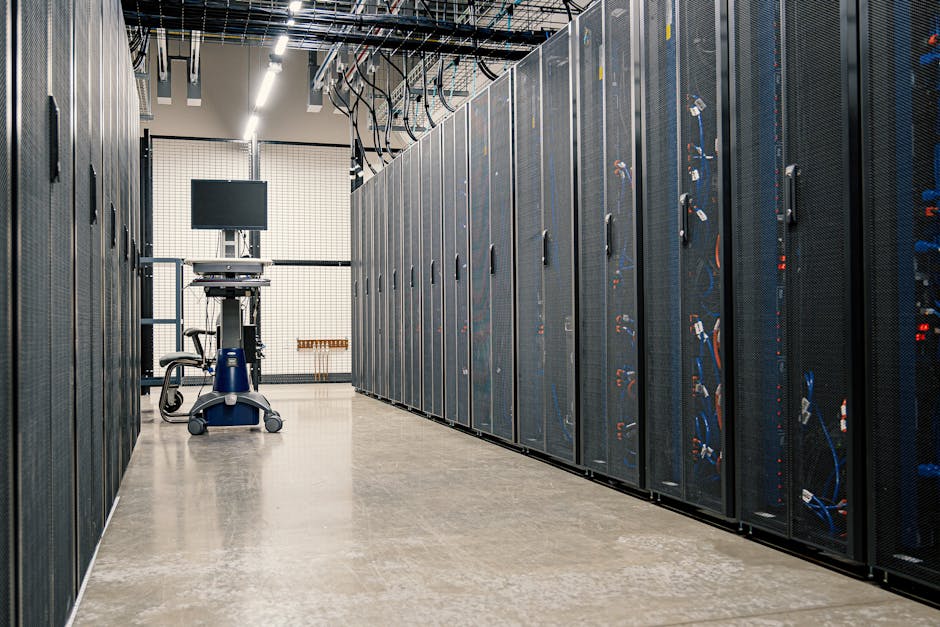
Amazon, Microsoft, Google and Meta plan to spend more than $720 billion this year on data centers and other capital expenses, roughly triple their spending two years ago. The four companies are expected to spend even more next year. Their buildout has become a major support for the U.S. economy: the artificial intelligence boom accounts for much of its resilience, according to the base article.
The spending is concentrated among four of the largest technology companies. They set a quarterly spending record as they raced to build AI capacity, and most are now spending more cash on data centers than they receive from operating their businesses. Some have borrowed or sold stock to finance the expansion. Their core businesses generally remain healthy, but investors are weighing whether the investments will produce returns.
Capital’s Bill Comes Due
Amazon spent more than $77 billion on property and equipment in the third quarter, far more than analysts had estimated. The company directed the spending toward data centers and meeting demand for AI services. The outlay contributed to a free cash outflow of $42.4 billion, even as Amazon reported revenue of $201.9 billion, up 12%.
Amazon Web Services sales accelerated for the sixth straight quarter. The company’s core online business, by contrast, showed signs of sluggish growth. The figures place the costly infrastructure expansion alongside a large revenue base and uneven performance across Amazon’s businesses.
Investor reactions reflected uncertainty over the return on the buildout. Google shares fell more than 12% the day after its quarterly earnings report, while Amazon shares fell more than 4% after its results showed heavy spending. Meta shares fell 7% the previous week after its results showed it was issuing new stock to raise funds.
“ Slight differences is causing a lot of volatility,” said David Tsui, a technology credit analyst at S&P Global Ratings. Tsui said uncertainty could last several more years because “you're spending now and a lot of the return is going to be years down the road.”
Oracle and SpaceX have also sharply increased spending and borrowing, bringing their capital expenses closer to those of their much larger rivals. The article identifies borrowing and stock sales as ways some companies are financing the buildout, while the expected returns remain years away.
Growth on an Uneven Base
The U.S. economy grew at a 3.4% annual pace from July through September, accelerating from 2.2% growth from April through June. The Commerce Department said Thursday that consumer spending rose at a 3.8% rate and business investment increased sharply, reflecting the AI boom. Economists surveyed by FactSet had expected third-quarter growth of 3%.
Business investment excluding housing rose 12.7%. Investment in information-processing equipment climbed 37.4%, software investment grew 9.6%, and research and development investment increased 7.5%. Those figures track the investment surge that accompanied the data-center expansion.
Housing investment moved in the opposite direction. Hurt by high mortgage rates, it fell 3.3% and had declined in six of the previous seven quarters. The Commerce Department’s Thursday report was the first of three estimates of third-quarter GDP growth. The U.S. economy had remained resilient amid higher energy prices caused by fighting with Iran.
- artificial intelligence
- data centers
- amazon
- microsoft
- meta
- capital spending
- u.s. economy