
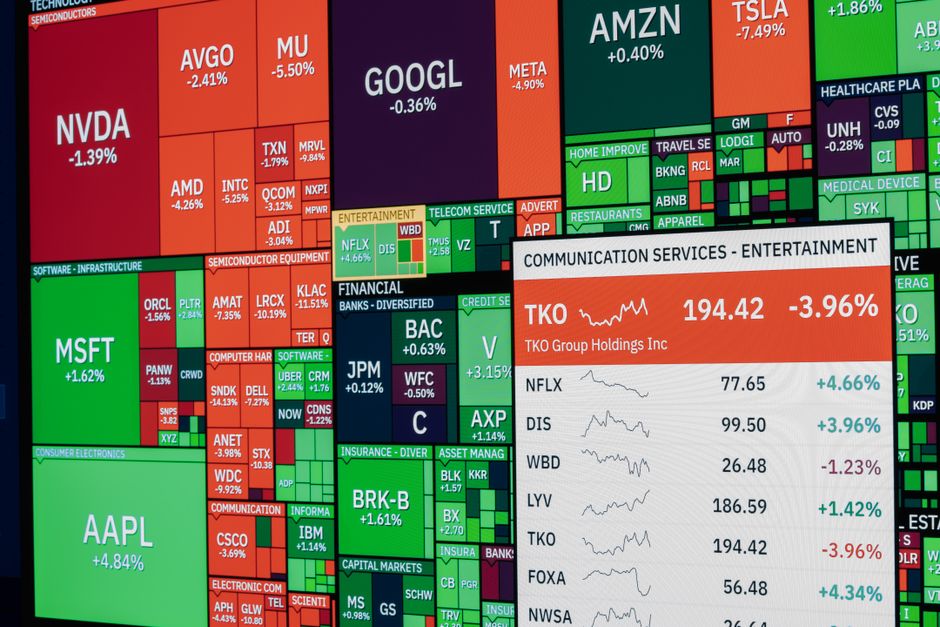
Technology stocks pulled U.S. markets back from the brink on Monday, Oct. 19, 2026, even as the Dow Jones Industrial Average slipped. The Nasdaq Composite jumped 290.85 points, or 1.11%, to 26,430.89, while the S&P 500 gained 31.29 points, or 0.41%, to 7,690.73. The Dow fell 36.38 points, or 0.07%, to 51,966.03. It was a rebound, plain and simple, after a week that rattled investors.
The Chip Rally
Chips led the charge. The sector posted its first gain in nine sessions, and the bounce reached across the group. Nvidia rose 1.4%, Tesla gained 3.8% and Alphabet advanced about 1%. Investors returned to technology and artificial-intelligence names after a sharp selloff the prior week, when worries mounted that companies were borrowing too heavily to fund AI infrastructure. Traders also pulled back their bets that CoreWeave and other firms chasing the AI boom had overextended themselves. Attention quickly turned to upcoming AI earnings reports.
The Philadelphia Semiconductor Index climbed 1.6% in early Tuesday trading, ending an eight-day losing streak. That kind of turnaround can lift sentiment. But it isn't a clean bill of health for the sector.
Debt Concerns Linger
CoreWeave, which the market has come to describe as a so-called neocloud company, offered a more cautious story. The stock fell more than 25% the previous week and touched a 52-week low during Monday's session. Goldman Sachs upgraded it to buy, but early gains faded and the shares closed slightly lower. The company's bond yields stayed high, and its five-year credit default swaps sat at distressed levels. Yields on Oracle debt also remained elevated. Credit worries haven't disappeared just because equity prices bounced.
Borrowing sits at the heart of the argument. Private firms are raising large sums of debt to build out AI capacity, and the market is asking who will hold the bill if demand disappoints. Investors pricing that risk through credit markets haven't been reassured by one good session.
Treasuries and the Wider Market
The tech rebound pushed Treasury yields higher. Worries about the AI trade had sent money into government bonds the previous week, so the reversal showed investors were willing to take on risk again. The yield on the benchmark 10-year Treasury note posted its biggest gain in nearly two weeks. Jose Torres, senior economist at Interactive Brokers, described the mood: "Improving moods regarding the prospects of modern technology have Wall Street breathing a sigh of relief as participants drop hedges, after the cost of volatility protection soared intraday on Friday, ahead of the intensifying selloff."
Futures pointed to a modestly higher open in U.S. trading Tuesday. Nasdaq-100 futures rose 0.2% after the index gained 1.2%, and S&P 500 futures added 0.1%. Dow futures traded 56 points higher, or 0.1%. Overseas, futures for Japan, South Korea and Australia pointed lower, while Hong Kong traders were set to return from a holiday.
Corporate earnings came next. United Airlines was scheduled to report after the bell Tuesday, and General Motors was due before the open. About 70 S&P 500 companies were set to report during the week, and housing starts and pending home sales figures were also slated for release Tuesday.
Why This Matters:
The rally is real, but it rests on a narrow base. A Nasdaq gain of more than a percentage point is welcome after a losing stretch, and the chip sector's end to its eight-day slide suggests some panic has drained out of the market. Yet the debt picture hasn't caught up. CoreWeave's bonds and Oracle's yields remained elevated even as shares recovered, suggesting lenders are weighing the cost of financing AI expansion more carefully than equity buyers are. For investors, that difference matters. Companies that borrow heavily to chase a technology wave answer to creditors as well as shareholders, and when credit spreads stay wide, the cushion under those firms is thinner than a single strong session implies. The Treasury move adds another layer: a shift from government bonds back into stocks means capital is choosing risk over safety again. Whether that choice holds depends on the earnings reports now arriving and on whether AI firms can show their borrowing is producing returns. Markets will deliver the verdict faster than any forecast.
- stock market
- technology stocks
- artificial intelligence
- nasdaq composite
- nvidia
- coreweave
- treasury yields
- corporate earnings