
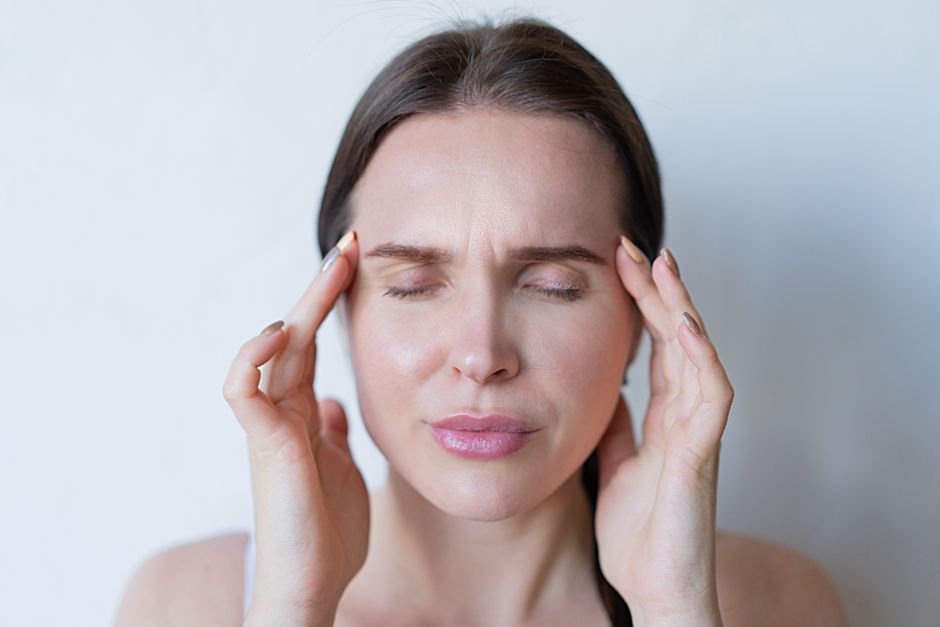
Researchers in Norway have used artificial intelligence and genetic data from more than 43,000 people to identify biological patterns that could change how migraine is diagnosed and treated. The study, published in the journal Neurology, says migraine may be "a spectrum disorder that can be identified and stratified using broad clinical and biological data—not solely through headache-specific symptoms." That’s the headline fact. The rest is the familiar machinery of modern medicine: large datasets, algorithmic sorting, and patients still waiting for a system that can do more than ask what hurts.
For decades, migraine has largely been diagnosed by asking patients what their headaches feel like. There is no blood test, scan or other established biomarker that can definitively identify the disorder. Clinicians instead rely on symptoms such as intense headaches, nausea and sensitivity to light or sound. In other words, the old method is still mostly testimony and guesswork, with the burden placed on the person in pain to describe themselves correctly enough for the clinic to believe them.
Anker Stubberud, a physician and headache researcher at the Norwegian University of Science and Technology (NTNU), said, "There are many inconsistencies with the diagnosis of migraines. It appears that AI could help us make the correct diagnosis." He said the findings could eventually help doctors predict which patients will respond to which therapies "so that people can receive the best possible treatment," rather than relying on trial and error. The promise is neat, clinical, and very 2026: feed the system enough data, and maybe it will stop misreading people. Maybe.
The Algorithm and the Body
The researchers analysed data from the Trøndelag Health Study, a large Norwegian population study whose clinical information was collected in the 1990s and 2000s. Their diagnostic analysis included 43,197 people, including nearly 9,000 classified as having migraine. They fed the AI model dozens of pieces of information about people's health and lives, including demographic characteristics, mental health, cardiovascular and musculoskeletal conditions, sleep, exercise, medication use and other factors, along with genetic information. The model was not given the defining characteristics of the headache itself.
Even so, the best-performing model achieved an area under the curve of 0.80 in the held-out test set, which the article says indicates reasonably strong discrimination between people with migraine and headache-free controls. Adding genetic information produced only a marginal improvement over clinical information alone. Stubberud said, "The fact that AI could identify migraine so accurately without knowing anything about the headache itself suggests that the condition leaves traces that extend far beyond the attacks." That’s the language of a system trying to read the body as a file. It can be useful. It can also be cold.
Age was the most important predictor, followed by neck pain, menstruation and nausea, according to the researchers' analysis of the features driving the model's predictions. The model didn’t just look for headaches. It looked for the social and bodily debris around them, the stuff medicine has often treated as background noise.
Sorting People Into Groups
The study then looked for naturally occurring groups within the data. Among 12,185 people with sufficiently complete headache information, the algorithm identified one cluster of 1,425 people in which 94% met the researchers' criteria for migraine. A much larger cluster contained people whose headaches were more often classified as non-migraine. The machine did what institutions love to do: divide, classify, separate, and call it insight.
The migraine-like group could be divided into four subgroups. One consisted exclusively of men. Another was characterised by prominent neck pain. A third had more musculoskeletal pain alongside anxiety and depression. The fourth looked more like what doctors might recognise as "classic" migraine, with people in this group experiencing migraine aura, described as a set of temporary neurological symptoms that can occur before or during an attack, such as flashing lights, zigzag patterns, blind spots or shimmering areas, and can also involve tingling or numbness and difficulty speaking.
Those groups also showed differences in their genetic signals. The researchers found that machine-learning-based genetic risk scores distinguished the groups better than conventional polygenic risk scores. Stubberud said, "This strengthens the hypothesis that migraine is not a single disease, but rather a diverse group of different biological conditions." The study’s own logic points away from one neat diagnosis and toward a messier reality, where the label migraine covers several different patterns that the old clinic-room script has struggled to hold together.
The article says the findings could help explain why a treatment that works well for one person with migraine can do little for another. That’s the practical payoff being sold here: better sorting, better matching, less trial and error. For patients, that may matter a great deal. For the health system, it’s another reminder that the body doesn’t always fit the forms.