
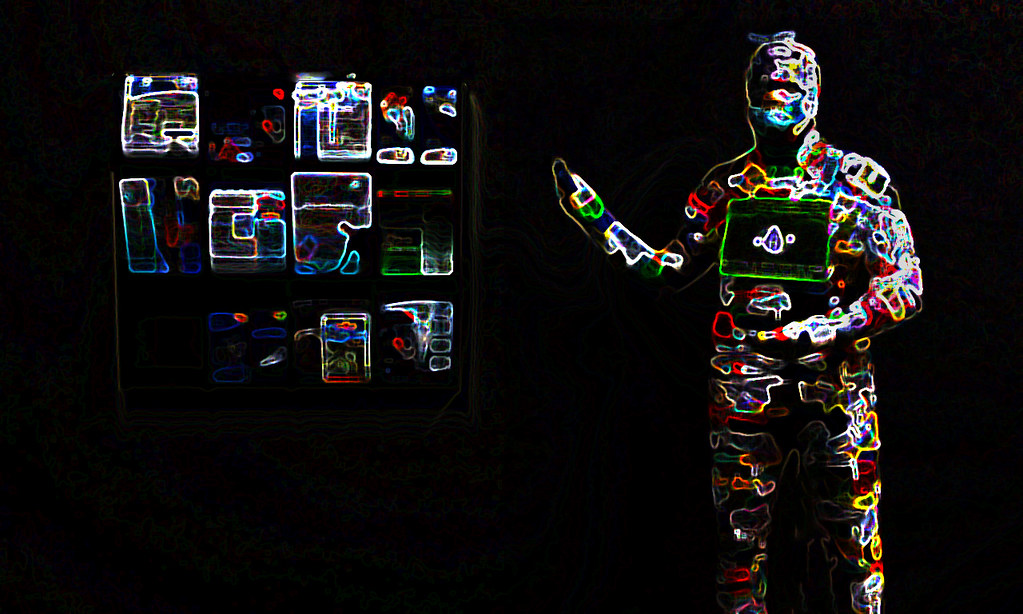
Chris Thomas, 43, wears Meta camera-equipped glasses, a Fieldy note-taking pendant and a wristband from Amazon's Bee. The Pittsburgh business owner and livestreamer says the devices record his daily life, and he depends on them to keep up. “I'm forgetful AF,” Thomas said in an interview. “My life is so crazy that not having to remember to remember is fantastic.”
But the glasses make some people uneasy. Earlier this week, a bystander at a local bar noticed Thomas's Meta glasses and told him, “I don't feel comfortable,” he said. Thomas doesn't just switch them off anymore. “I don't turn it off, I take it off completely because people don't really believe it's off.” The encounter points to a tension spreading as technology companies roll out always-listening devices for transcribing meetings, tracking conversations, setting reminders and making personalized recommendations.
The Devices Multiply
Amazon's Bee Frontier wearable and Bee Eclipse, a card-shaped device that attaches to a smartphone, arrived Thursday. Both are built to record, transcribe and analyze a user's day. Apple unveiled its latest Apple Watch Series 12 in September; it will include Siri Recap, which “ambiently” takes notes throughout the day and creates conversation summaries. Live Rewind, another feature, can recap 15 seconds of a conversation through a text transcription. Meta's smart glasses take photos, capture video and record voice notes or reminders. Startups Plaud and Pocket have made card-sized note-taking devices, while Friend offers an AI necklace.
This matters even to people who never bought one of these devices. Anyone sharing a room with a wearer has no say over whether their words get captured, summarized or filed away.
The Law Lags Behind
Regulators have dealt with similar concerns before. Amazon, Google and other makers of voice-activated smart speakers faced scrutiny when those products first appeared, and some cases led to lawsuits and regulatory fines. Newer devices go further. Earlier smart speakers relied on a “wake word” and sometimes stored recordings or sent audio to the cloud. Some new products can listen continuously, interpret speech and extract meaning without keeping the underlying audio. Whether that processing itself counts as unlawful interception remains largely untested.
“With new technology like this, my statement is always to embrace with caution,” said Karen Panetta, dean of graduate education at Tufts' School of Engineering and a fellow at the Institute of Electrical and Electronics Engineers. She added, “If I'm giving permission for myself to be recorded, or for everything I look at to be recorded, that doesn't mean everybody else around you has given that consent.”
Companies say they protect the data. Apple says Siri Recap doesn't store audio, send recordings to its servers or involve human review. Amazon has said it doesn't store audio from Bee devices and that conversations are processed in a secure environment “where no one, including Amazon, can access your data.” Those assurances may not resolve the legal question. Many state wiretap and eavesdropping laws ask whether someone intercepted a private communication or acquired its contents, not whether a conventional audio recording was made.
Colin Zick, a privacy and data security attorney at Foley Hoag, said Apple appears to have learned from the first wave of litigation over voice assistants. The new technology raises a question earlier cases didn't answer: can continuously listening, interpreting speech and turning it into a summary count as interception if the audio itself is never saved? Massachusetts, for example, defines an intercepting device to include equipment capable of “transmitting, receiving, amplifying, or recording” a communication, and the “contents” of a communication can include its substance and meaning. Zick said a device that receives speech continuously and produces a written summary could potentially fall within that language, even without keeping an audio file.
Who Bears the Risk
The legal exposure may fall on users, not companies. “A non-wearer did not buy the watch, agree to Apple's terms, or choose to have their conversation summarized in the app,” Zick said. In some states, the wearer carries the risk.
Daniel Pi, an associate professor at the University of New Hampshire Franklin Pierce School of Law, said New Hampshire's statute is broad enough that he believes the Watch's audio-intelligence features qualify as interception. The law covers recordings and the “aural or other acquisition” of a communication's contents. A consumer who enables such a feature during a private conversation without everyone's consent could, at least technically, violate state law. Pi said a New Hampshire user could potentially face civil or criminal liability, though he stressed that prosecution is far less likely in practice. He said he would be surprised to see prosecutors pursue a bare statutory violation where no one was harmed.
Earlier voice-assistant cases often involved devices activating by mistake. These features, by contrast, are designed to acquire and interpret a conversation's substance, and users deliberately opt in. Pi said that distinction could shift responsibility toward the wearer rather than the technology company.
The Bystander Problem
Michael Stokes, a former CIA officer and senior vice president of emerging technologies at Veilant, said people can be swept into AI-powered surveillance without owning or knowingly interacting with the device collecting information. “I think the bystander problem is really the concern I have — that you can be surveilled without owning the technology,” he said. Stokes pointed to cameras, microphones and sensors in smart glasses, watches and AI recorders. He warned that AI can draw meaning from far larger volumes of information than earlier consumer technology.
At the CIA, Stokes helped develop the concept of ubiquitous technical surveillance. The problem, he said, isn't only that more data gets collected. Making sense of it has become much cheaper. Intelligence collection once could require thousands of hours to gather, sort and analyze information about a person. AI increasingly handles that work. “We no longer have these pockets of small privacy that we thought we did in the past,” Stokes said.
Some founders are creating tools to push back. Aida Baradari, founder of startup Deveillance, made the hockey puck-shaped Spectre I, which uses AI to scan for nearby devices and emits “adversarial signals” that scramble speech before microphones can process it. Baradari said she watched more AI wearables enter the market and felt users should have more say in how they interact with them. “We need to be able to use technology while not giving up our core values or rights,” she said.
Why This Matters:
The question isn't simply whether one gadget is convenient or creepy. It asks who gets to decide when a private conversation becomes a data point. Right now, that choice largely belongs to the person wearing the device, while the people being recorded have no part in it. State wiretap laws were written for phone taps and hidden microphones, and they're now being asked to cover systems that listen, interpret and summarize without keeping a single audio file. Courts and legislatures will need to decide whether that counts as interception. Until they do, bystanders must notice a device, ask about it and hope the answer is honest. Privacy in a shared public space shouldn't depend on whether a stranger in a bar feels comfortable enough to speak up.
- ai wearables
- privacy law
- meta smart glasses
- apple watch
- amazon bee
- covert recording
- wiretapping laws
- bystander consent