
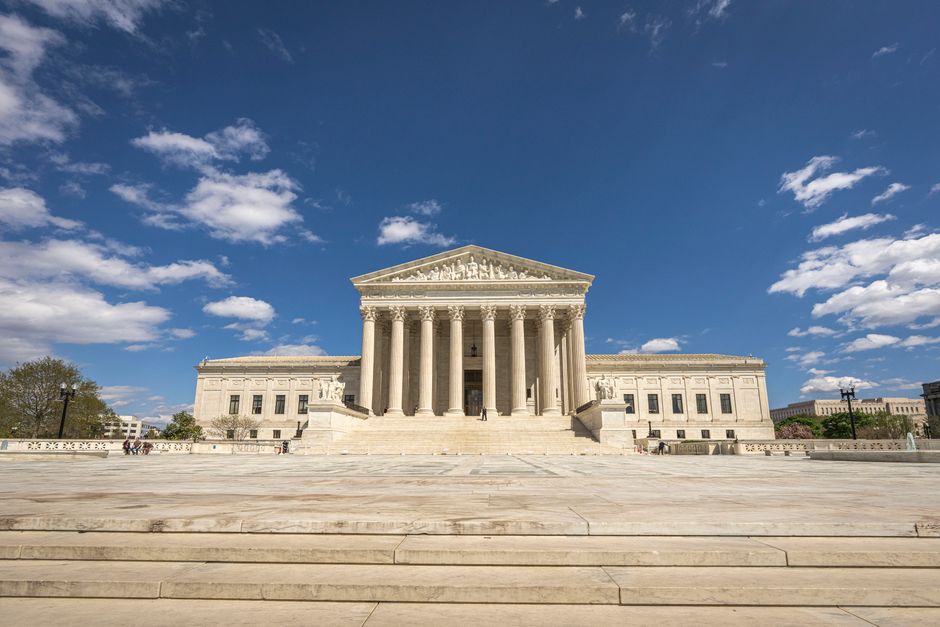
Alabama on Wednesday asked the Supreme Court to let it use a congressional map favoring Republicans in this year’s elections, even after a lower court ruled the redistricting plan intentionally discriminates against Black people. The state’s Republican leadership filed an emergency appeal a day after a three-judge court refused to let Alabama use a map it adopted three years ago that gives Black voters a majority in only one of its seven congressional districts.
Who Gets to Draw the Lines
The fight is over who controls the map and, with it, who gets a meaningful say in elections. The judges instead ordered Alabama to keep using a court-ordered map put in place for the 2024 elections, one that includes two districts where Black residents make up a majority or come close to it. That map was used in 2024 and led to the election of U.S. Rep. Shomari Figures, a Black Democrat.
Attorney General Steve Marshall told the court that the state did not intentionally discriminate against Black residents and should be allowed to hold elections this year under a map chosen by lawmakers, not judges. That is the familiar language of power defending itself: lawmakers want the map they drew, judges say the evidence showed intentional racial discrimination, and ordinary voters are left to live under whichever version of the apparatus wins.
The case has been moving through the courts for several years. In 2023, a three-judge panel ruled that a map drawn by Republican state lawmakers intentionally diluted the voting power of Black citizens. The court said Alabama, which is about 27% Black, should have two districts where Black voters are the majority or close to it. Instead, the state pushed a plan that left Black voters with just one majority-Black district out of seven.
The Fallout From the Louisiana Ruling
The latest appeal comes after last month’s Supreme Court ruling that struck down a Black-majority district in Louisiana and weakened the federal Voting Rights Act. That ruling has already triggered a scramble by Republicans in several Southern states, including Alabama, to reshape voting districts with large minority populations that have elected Democrats.
The redistricting frenzy is part of a broader push by President Donald Trump to try to hold on to Republicans’ slim House majority in the November elections. Trump’s Justice Department backed Alabama’s appeal, saying Alabama is “highly likely to succeed” in its bid to implement a map the administration says would favor Republicans 6-1 instead of a court-ordered “racial gerrymander.”
That is the hierarchy in plain view: a state, backed by the federal executive branch, trying to lock in a map that would tilt representation 6-1, while the people most affected by the lines are the ones with the least control over them. The court-ordered map was put in place because the judges found the state’s plan had intentionally diluted Black voting power. Alabama officials moved to revive the 2023 state-drawn map after the Supreme Court’s Louisiana ruling, and the Supreme Court’s conservative majority agreed to lift the injunction that had blocked its use and sent the case back for reconsideration.
What the State Is Doing to Voters
In the meantime, voters cast ballots in Alabama’s May 19 primaries, and Republican Gov. Kay Ivey set new special primaries for Aug. 11 in four congressional districts affected by the map switch. The judicial panel later said it was standing behind its initial finding that there was “undisputed evidence” of intentional racial discrimination, and said that holding was independent of and unaffected by the Supreme Court ruling on the Voting Rights Act.
The panel said the special congressional primaries should instead proceed under the previous court-approved districts. Alabama is now asking for Supreme Court action by Monday as it prepares for the August vote.
The state’s push is not just about one map. It is about whether lawmakers can use district lines to preserve power after courts found intentional discrimination, and whether the weakening of federal voting protections will let that project move forward under a legal veneer. The appeal places the machinery of elections, courts, and executive power in direct conflict over who gets represented and who gets packed, split, and managed out of the picture.