
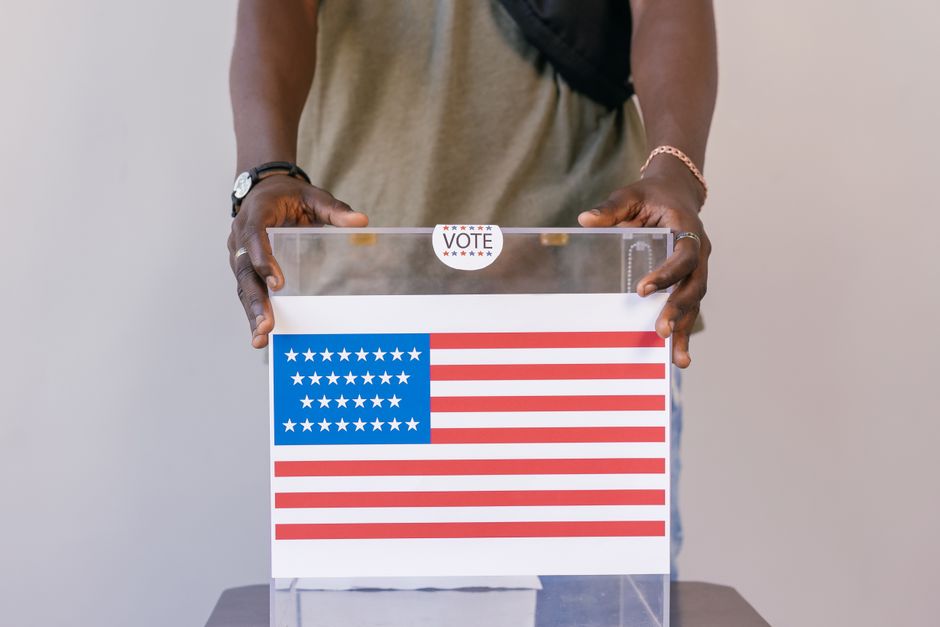
Americans' faith in their democracy has plummeted to historic lows, with new polling revealing that only 28% now feel proud of how the nation's democratic system works — down 14 percentage points from 42% in February 2017. The findings, drawn from an AP-NORC poll conducted in April and new Gallup data, paint a picture of a country grappling with deep disillusionment across multiple fronts, from democratic institutions to military engagement.
The erosion of confidence isn't limited to democracy. Pride in the U.S. armed forces has dropped 19 percentage points since 2017, and pride in the nation's history has fallen 14 percentage points during the same period. The AP-NORC survey was conducted during a prolonged war that started with U.S. and Israeli strikes on Iran and continued as the United States and Iran fought over the Strait of Hormuz.
Who's Lost Faith
Only 53% of U.S. adults now say they're "extremely" or "very" proud to be an American, according to Gallup — the lowest reading in a trend dating back to 2001, 25 years ago. The decline reflects a tumultuous period that included most of President Donald Trump's first term, the COVID-19 pandemic, rising inflation that contributed to a backlash against President Joe Biden, and Trump's return to the White House, where he's taken more aggressive actions on immigration and issues abroad.
Much of the falling positivity comes from Democrats, who've become increasingly disenchanted with the country since Trump's first term. Only 14% of Democrats and 28% of independents say they're "extremely" proud to be an American, compared with 70% of Republicans. Republicans are especially likely to be proud of the nation's armed forces, with about 9 in 10 saying the military makes them "extremely" or "very" proud, compared with about 6 in 10 U.S. adults overall.
Karla Galdamez, a 48-year-old Democrat who used to teach U.S. history, said America has regressed under the Trump administration. She's not proud of Trump, but she is pleased with how far the U.S. has come in 250 years. "It's a country that really wanted to be different and really wanted to be better," she said. "Despite some of the very ugly history that we have of segregation and slavery ... if you look at the trajectory of the last 250 years, we've done nothing but get better and move toward a more egalitarian nation."
Identity and Inequality
The poll found that Republicans are much likelier than Democrats or independents to say being an American is "extremely" or "very" important to their personal identity. Younger people are also much less likely than older people to say being an American is highly important to their personal identity. About three-quarters of Americans ages 60 and older say being an American is highly important to them, compared with only about one-third of U.S. adults under 30.
The AP-NORC survey found that the vast majority of Black Americans — 73% — say their race or ethnicity is "extremely" or "very" important to how they see themselves, higher than the share that say that about being an American. Vincent Harris, a 60-year-old in California, said his identity as a Black man rises above other attributes for him because of how Black men are treated in America. "A lot of people are scared of Black men just because we are Black and we are male. And that's crazy," he said. "People don't even take you for who you are as a person; they just look at your race."
About half of Hispanic Americans say their race or ethnicity is highly important to them, compared with 22% of white Americans. Black and Hispanic adults are also more likely than white adults to say their family's ancestry or country of origin is highly important to their personal identity.
Harris, who identifies as a gay man, said being an American is "a wonderful thing" because of the freedoms Americans have, despite the obstacles he's had to overcome. "It's great to be an American — regardless of race, gender, sexual orientation, religion, or whatever. As long as you have that freedom of choice as an American, that's a great thing," Harris said. "Right now, I wouldn't live in any other country in the world. I'm here. I love it."
Divided Visions Ahead of 250th Anniversary
In a USA Today opinion collection tied to the approach of the nation's 250th anniversary, readers offered sharply different views of America and patriotism. One reader said, "The best things to come out of our history is the defeat of England and Lincoln winning the Civil War. The worst is Trump and how he is defiling our world and country." Another wrote that the best thing about the United States is that with hard work and a dream, people can succeed at whatever they set their mind to do, while the worst thing is people's need for social media and the influence it has created on critical issues.
Jimmy Waggoner of Colorado wrote that the first 240 years of the country's existence were pretty outstanding for the most part, but that with the election of Trump in 2016, the government has shown itself to be racist, shortsighted and cruel agitators in world events and no longer the shining light to the world. He said he's not proud to be an American, that there's no more patriotism in the country, and that the people who elected Trump need to apologize to the children of the country. He said he won't watch, attend or acknowledge the festivities and is retiring and taking his money out of the country.
Nolan Willis of Alaska wrote that the worst thing might be how America treated some Native American groups, including the Trail of Tears and other situations where the U.S. government broke treaties and treated Native Americans as if they were inferior. He said the most systemic abuses were against Native Americans and that some of those abuses continue to present. Willis said different factions want to weaponize the government to control people they don't like, which is fundamentally un-American, and that younger people have been indoctrinated into believing that even the best qualities of America don't redeem it because the only thing that matters is its sin. He said the left and the right need a truce, need to work together and permit accommodations for differences, and that if they can't do that, the country won't survive.
Matt Stafford, a 39-year-old in Massachusetts, said he's proud of being an American even if the U.S. political system frustrates him. He has a bald eagle tattooed on his back to represent the United States, its freedoms and "all the things we're supposed to stand for as a country." Stafford, a centrist who identifies as "politically homeless," said he wants Democrats and Republicans to come together to look out for their constituents in middle America. "I love America, but our biggest problem is how we're pushing both sides — like the left and the right — to the extremes," he said.
The AP-NORC poll of 2,596 adults was conducted April 16-20 using a sample drawn from NORC's probability-based AmeriSpeak Panel, which is designed to be representative of the U.S. population. The margin of sampling error for adults overall is plus or minus 2.6 percentage points.
Why This Matters:
The historic decline in Americans' pride in their democracy and institutions reflects more than partisan frustration — it reveals deep structural concerns about whether the country's systems are delivering on their promises. When only 28% of Americans feel proud of how democracy works, and when communities of color report that their racial or ethnic identity matters more to them than their national identity, it signals that significant portions of the population feel excluded from the American project. The generational divide, with only one-third of adults under 30 saying being an American is highly important to their identity, suggests that without meaningful reforms to address inequality, democratic dysfunction and systemic injustices, the social contract that binds the nation together may continue to fray. These aren't abstract numbers — they represent millions of Americans who've lost faith that their government serves their interests or protects their rights.