
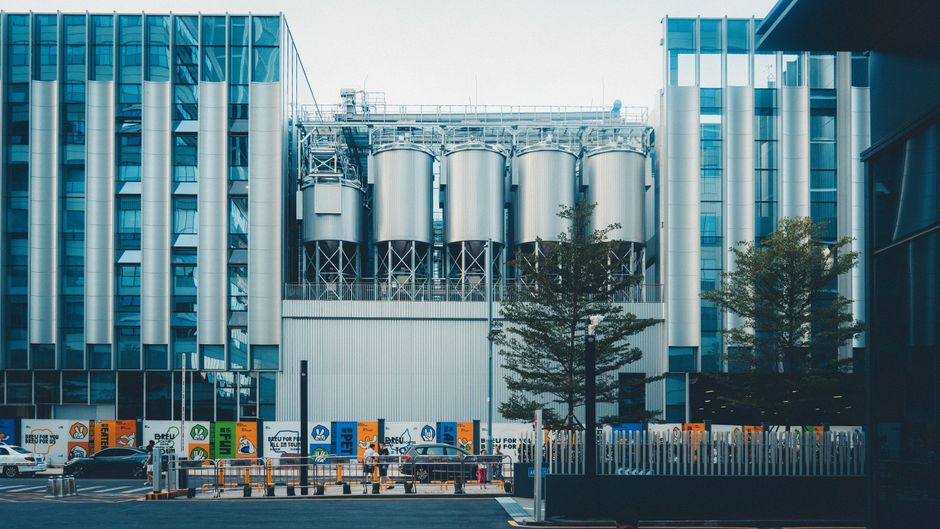
Merck opened a $334 million bioprocessing plant in Daejeon on Thursday, bringing production closer to regional drugmakers while expanding the German company’s reach into Asia-Pacific’s biopharmaceutical supply chain. The 44,500-square-meter facility in Dungok will make materials used to develop and produce biologic medicines. The investment puts corporate production capacity and supply decisions at the center of a regional industry that also involves local universities, research institutions and businesses.
Who Controls the Supply Chain
The plant will manufacture dry powder and liquid cell culture media, process liquids, cleaning solutions and single-use sterile sampling systems. It will also supply customized materials for early-stage drug development. Merck said making these products locally would shorten supply chains and improve the reliability of materials needed throughout biologics production.
“Reliable access to critical materials is essential at every stage of biologics manufacturing,” said Jean-Charles Wirth, CEO of Merck’s life science business. “Daejeon brings advanced production closer to biopharma manufacturers across Asia-Pacific, giving them greater supply confidence as they move from development to commercial scale.” The company’s stated strategy is “in-region-for-region”: bringing production closer to customers and strengthening regional supply resilience. Merck has also invested in drug-testing facilities in Darmstadt, Germany, and filtration manufacturing in Blarney, Ireland.
The facility will use raw materials free of animal-derived components in its cell culture media and process liquids. Automated digital systems will track production batches and support quality control and regulatory compliance. Merck said the plant was designed to operate without on-site fossil fuel use, using solar power, heat pumps and energy recovery systems. Rainwater reuse systems will help reduce water consumption.
City Hall and Corporate Plans
Daejeon Mayor Heo Tae-jeong pledged to strengthen cooperation between Merck and local universities, research institutions and businesses to support the city’s biotechnology industry. At the opening ceremony, Heo, Merck Life Science CEO Jean-Charles Wirth and E. Merck KG Executive Board Chairman Johannes Baillou posed with other officials. The ceremony placed city leadership and company executives together around a major investment; the article describes no community-led decision-making role in the project.
A separate business forum in Seoul put executives and institutional representatives in the room to discuss how companies should respond to artificial intelligence. The fifth weekly session of the 10th edition of the Global Business Forum was organized by The Korea Herald and Herald Business under the theme “Connecting People and Technology, Opening New Possibilities.”
Sheikh Saleh Alsharqi, counselor and head of economic affairs at the United Arab Emirates Embassy in Seoul, called for closer cooperation between Korean and Emirati businesses in emerging industries and overseas markets. “I therefore invite Korean businesses, investors and innovators to look to the UAE not only as a market, but also as a platform for cooperation and expansion into new markets,” he said. He named AI, green hydrogen, space technology and advanced manufacturing as fields for cooperation, including joint investment and expansion into third-country markets.
Executives Set the Terms for AI
Choi Eun-soo, CEO of Korean AI video analytics firm Intellivix, urged business leaders to use AI themselves rather than leave its adoption entirely to employees. “Don’t leave AI to your employees. Use it yourself as an expert assistant to build a better business,” she said. Choi demonstrated tools that could draft proposals, create presentations and marketing materials, and summarize meetings. She encouraged companies to use internal documents and manuals to build AI assistants tailored to their operations. Intellivix’s video analytics technology can identify fires, intrusions and traffic accidents in camera footage and generate automated alerts.
Park Jae-hee, director of Seokcheon Academy, argued that established strategies can become liabilities as conditions change. “Don’t let your strategy hold you back. Find a new way to play the game,” Park said, identifying timing, direction and speed as essential elements. He said leaders must assess circumstances and resources rather than rely on past successes, and that decisions should consider an organization’s long-term survival. “A victory today does not mean the same approach will work again,” he said. “You have to find the answer that best fits the circumstances you face now.”
- merck
- daejeon
- biopharmaceutical manufacturing
- bioprocessing plant
- artificial intelligence
- intellivix
- global business forum
- korea