
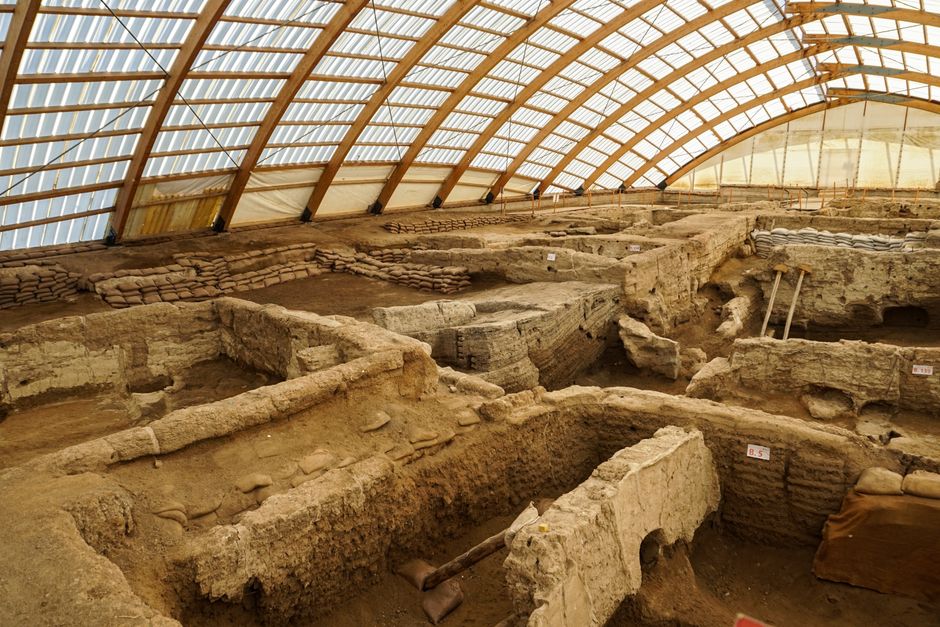
Archaeologists working at the historic site of Malazgirt in eastern Türkiye have uncovered nearly 2,000 artifacts since 2020, officials said, in finds that are offering new insights into the region's long history and the site of the 1071 Battle of Manzikert. The discoveries were made as part of the "Malazgirt Battlefield Identification, Historical and Archaeological Survey Project," carried out with the support of the Culture and Tourism Ministry's General Directorate of Cultural Heritage and Museums in partnership with Muş Alparslan University.
A multidisciplinary team of archaeologists, anthropologists, art historians and historians has been conducting excavations in Afşin, about 7.5 kilometers from Malazgirt, at a site believed to be a Seljuk martyr cemetery. The battlefield survey, launched in 2020 and now in its 6th year, together with the Historic City of Malazgirt Excavation Project that began in 2025, has yielded around 2,000 archaeological finds, according to Muş Provincial Director of Culture and Tourism Mehmet Şengül.
Roman Coins and Military Relics
Among the discoveries are Roman- and Byzantine-era coins, numerous arrowheads and spearheads and other military-related metal objects uncovered during surface surveys. Excavations have also revealed a previously unknown structure within the castle's Inner Fortress, while graves at the historic Muslim cemetery known as the Arab Cemetery have been scientifically documented and recorded. During the 2025 excavation season, archaeologists uncovered a previously unknown room near the entrance of the Inner Fortress. At the nearby Arab Cemetery, seven graves were excavated and documented using scientific methods.
Şengül said the projects are crucial both for identifying the battlefield where the Battle of Manzikert was fought and for uncovering the historic urban fabric of the medieval settlement. He said the project's primary goal is to determine the exact location of the 1071 battle using scientific methods, uncover its archaeological traces and better understand the historical development of the surrounding area.
Broad Survey Across Historic Plains
The battlefield survey is led scientifically by professor Adnan Çevik of the History Department at Muğla Sıtkı Koçman University under the supervision of the Ahlat Museum Directorate. Researchers have carried out extensive surveys across a broad area, including the town center of Malazgirt and the surrounding localities of Harabesor, Örenşar, Kanlıdere, Aydınlık, Afşin, Ziyarettepe, Aytaç Plain, Gezo Plain and Çivi Plain.
Excavations inside Malazgirt Castle are being directed by Dr. Ahmet Oğuzhan Karaçetin of Muş Alparslan University with the permission and support of the General Directorate of Cultural Heritage and Museums. Şengül said the findings from both the Inner Fortress and the cemetery are helping researchers better understand Malazgirt during the medieval period.
The nearly 2,000 artifacts recovered so far are being preserved at a newly constructed excavation house, which is nearing completion. Officials plan to eventually display the finds both in Malazgirt and at the Muş Archaeology Museum. Şengül said the work extends beyond archaeological excavation and forms part of broader efforts to strengthen Malazgirt's role as a destination for history, culture and tourism.
"Our main objective is to investigate the historical heritage extending from the 1071 Victory of Malazgirt to the present through scientific methods, pass these findings on to future generations and strengthen public awareness of history," he said. "We will continue expanding our research and share the results with both the academic community and the public."
Çevik also provided technical information about the ongoing archaeological investigations at the site.
Why This Matters:
The excavations at Malazgirt represent a significant effort to connect contemporary communities with their medieval past through rigorous scientific inquiry. By uncovering artifacts from Roman, Byzantine and Seljuk periods, researchers aren't just documenting ancient battles — they're revealing the layered human history of a region that has seen empires rise and fall. The methodical approach, combining surface surveys with targeted excavations at burial sites and fortifications, demonstrates how archaeology can serve both scholarly understanding and public heritage. As these nearly 2,000 artifacts move toward public display, they'll offer residents and visitors alike a tangible link to the lives lived centuries ago on these plains. The project's emphasis on sharing findings with both academic and general audiences reflects a commitment to making history accessible, not exclusive — a reminder that the past belongs to everyone willing to learn from it.