
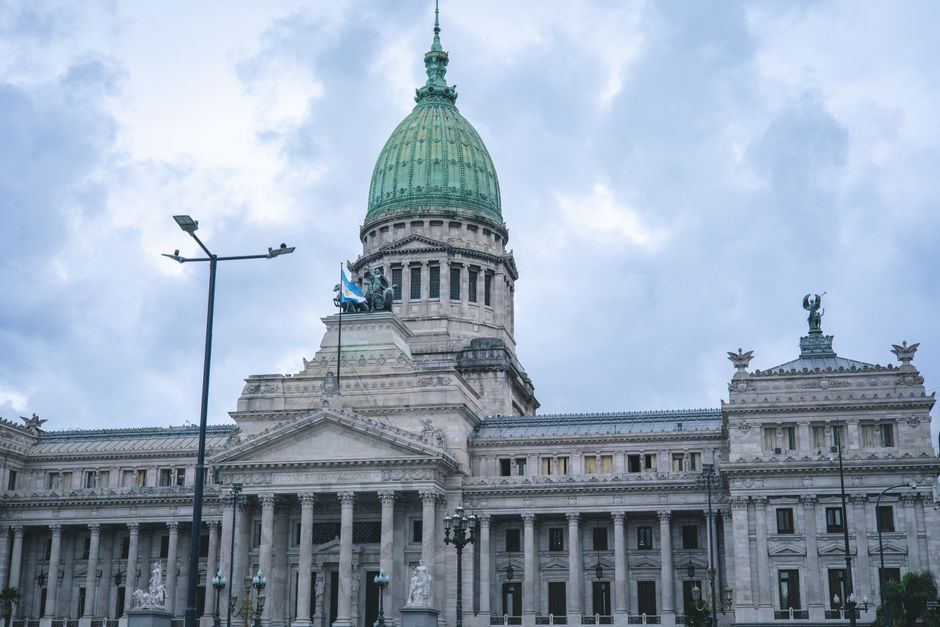
Argentina formally designated Iran’s Islamic Revolutionary Guard Corps (IRGC) as a terrorist organization, aligning its foreign policy with Washington’s long-standing posture toward Tehran. The move was announced without public debate on the domestic consequences or regional implications. The designation follows years of U.S.-led pressure campaigns against Iran, including sanctions and military threats, all aimed at isolating the Islamic Republic and securing energy corridors for Western capital.
Washington’s Hemispheric Enforcer
Argentina’s government justified the IRGC designation by invoking alignment with U.S. policy, signaling deeper integration into a bloc of states enforcing Washington’s global order. The IRGC, a branch of Iran’s armed forces, has been a primary target of U.S. sanctions since 1984, with successive administrations citing its role in regional military and political operations. The designation places Argentina among allies such as Saudi Arabia, Bahrain, and the United Arab Emirates, all of which have similarly labeled the IRGC as a terrorist entity under U.S. pressure. The move comes amid ongoing U.S. efforts to consolidate control over global energy flows and military logistics, particularly in regions where rival powers maintain influence.
Oil as Weapon: Russian Cargo Arrives in Cuba
In a parallel development, a Russian oil tanker began discharging cargo at a Cuban port, reinforcing energy ties between Moscow and Havana. The shipment underscores the endurance of bilateral trade despite decades of U.S. embargoes and financial blockades aimed at isolating Cuba. The tanker’s arrival follows years of Russian investment in Cuba’s energy sector, including infrastructure upgrades and debt restructuring agreements. These exchanges occur as both countries face intensified U.S. sanctions and geopolitical isolation, prompting deeper coordination in energy, trade, and military logistics.
The IRGC designation and the Russian oil delivery reflect competing imperial blocs maneuvering for control over global resources and trade routes. Argentina’s alignment with Washington’s Iran policy serves the strategic interests of U.S. capital by weakening a regional counter-hegemonic force. Meanwhile, Russia’s energy shipments to Cuba sustain an ally resisting U.S. domination, reinforcing a multipolar challenge to Western financial and military supremacy. Both developments unfold within a global order where states act not as neutral actors but as executors of capital accumulation and geopolitical power.
No details were provided on domestic opposition to the IRGC designation in Argentina, the legal framework behind the move, or the specific port or terms of the Russian oil delivery in Cuba. The absence of transparency reflects the closed nature of decision-making in both cases, where strategic alignments are made without public consultation or accountability to working-class populations.