
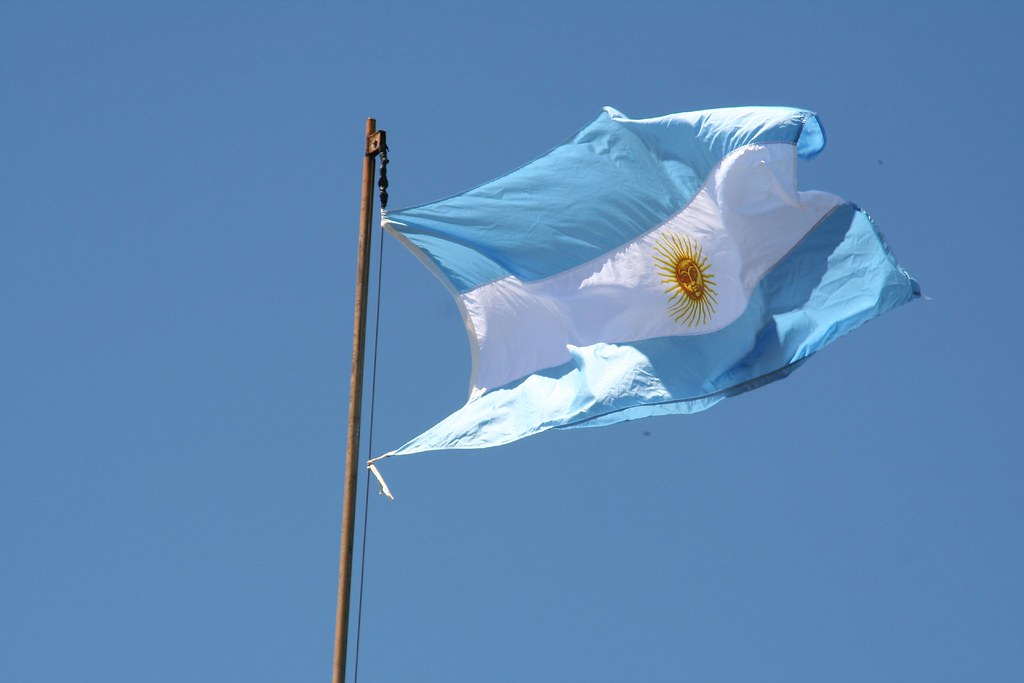
Argentina’s country-risk measure climbed to 939 basis points on Friday, Nov. 6, as investors weighed whether the U.S. political apparatus would keep backing the government of President Javier Milei. The reading was 152 points above the prior Friday’s close, raising the premium demanded on Argentina’s dollar bonds over U.S. Treasury bonds to 9.39 percentage points. No official source tied the rise to one cause.
The market’s daily moves tracked the uncertainty after U.S. midterm elections in which President Donald Trump's party suffered heavy losses. Argentina’s gauge stood at 805 basis points on Monday, Nov. 2, rose to 831 on Tuesday and 852 on Wednesday, then jumped 8.6% to 925 on Thursday before closing at 939 on Friday. Possible concerns included a Democratic-controlled Congress leaving the Trump administration less room to assist Argentina.
Who Pays When the Numbers Move
While bond markets priced political risk, prices inside Argentina kept rising as the peso moved little against the dollar. The central bank’s wholesale reference rate, Communication A 3500, stood at 1,545.40 pesos per U.S. dollar on Thursday, Nov. 5, compared with 1,517.52 on Sept. 30. The dollar was up about 1.8% across those readings. On Nov. 5, 2025, the rate was 1,447.50 pesos per dollar, a 6.8% increase in the dollar’s value.
INDEC, the national statistics office, reported consumer-price growth of 33.4% and monthly inflation of 1.9% in September. With local prices rising faster than the exchange rate, goods and services became more expensive in dollar terms. The figures put the cost of the country’s financial uncertainty on people buying goods and services, not just investors trading bonds.
Juan Manuel Franco, chief economist at the Argentine consultancy Grupo SBS, said the inflation-adjusted real exchange rate was at its lowest since May 2025. He expected trade flows to keep supplying dollars, while saying supply and demand would determine what happened next. Solana Cucher, an economist at the Argentine investment firm PPI, said dollar hoarding tends to increase in election years and that balance-of-payments flows can anticipate a change in exchange-rate rules. Argentina’s 2027 election year is approaching, but the key election dates and any exchange-rate rule changes hadn’t been announced.
Jerónimo Bardin, head sales trader at the brokerage Balanz, said a strong real peso didn’t by itself mean the dollar was about to jump. He cited export strength and dollar-bond sales by companies and provinces as supports for the peso. None of the three analysts forecast a sudden jump. No official data showed how much Argentine savings had recently shifted into dollars.
Support With Conditions
The Milei government has relied on foreign investment and U.S. political support, leaving Argentina’s financial prospects exposed to decisions made beyond its borders. In October 2025, the U.S. Treasury, led by Secretary Scott Bessent, finalized a $20 billion currency swap with Argentina’s central bank. The arrangement exchanges dollars for pesos to help the central bank defend its reserves.
That backstop isn’t guaranteed to expand. It’s unknown whether the new U.S. Congress will try to limit support after taking office in January 2027, or whether the Treasury would provide further help if Argentina needed it. The arrangement puts the limits of national control in plain view: access to support depends on decisions made by U.S. officials and a Congress whose composition has just shifted.
At the 16th Abeceb Forum, held on Nov. 5 by a Buenos Aires economics consultancy, Deputy Economy Minister José Luis Daza, central bank vice-president Vladimir Werning and Gary Litman, a senior vice president for global initiatives at the U.S. Chamber of Commerce, discussed the stakes. Daza said U.S. interest in Argentina reaches beyond which party holds power, pointing to energy and critical minerals, including copper and uranium. He said about $75 billion in projects under Argentina’s large-investment incentive regime, RIGI, had been approved, though the speed at which those projects become spending is uncertain.
Litman warned that an adverse Congress would leave the Trump administration less room to rescue economies in crisis. Daza described the environment Argentina was entering as “positive and more durable than changes in political ‘colour.’” The bond-market reading, the conditional swap and the uncertain pace of investment leave the final measure of that durability outside the hands of people facing rising prices.
- argentina
- country risk
- us midterm elections
- javier milei
- donald trump
- currency swap
- inflation
- argentine peso