
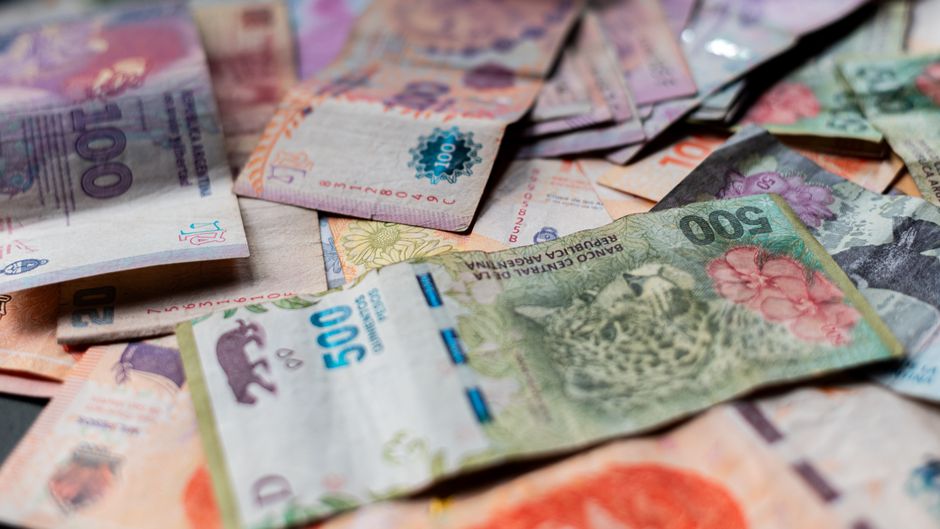
The World Bank lowered Argentina’s 2026 growth forecast to 2.1% from 3.6%, pointing to spending cuts, redirected energy subsidies and incentives for large investments as elements of the country’s economic adjustment. Its October 6 update projects growth of 3.0% in 2027 and 3.5% in 2028, but didn’t explain the reduced 2026 estimate.
The forecast and the adjustment
The bank expects Argentina’s economy to grow for three straight years through 2027. That would be the first such stretch in nearly 20 years. It reported growth of 4.5% in 2025. In its June 2026 outlook, the bank projected growth of 3.6% in 2026 and 3.7% in 2027.
The October 6 forecast appeared in the World Bank’s biannual Latin America and the Caribbean Economic Update, which used data through September 23. The report said a strong harvest supported current activity, but didn’t explain the 1.5-percentage-point cut to its 2026 forecast.
The World Bank credited Argentina’s improvement to “fiscal consolidation, tax reforms and a more open economy.” It described a “decisive fiscal-led adjustment” that shifted the country from a large deficit in 2023 to a primary surplus and an overall fiscal balance. A primary surplus means the state collects more than it spends before interest payments on debt.
The report credited tighter spending, “cuts to waste and administrative inefficiencies,” and redirected energy subsidies. It said those measures “helped anchor inflation expectations and compress sovereign risk.” The bank also said real output in 2027 should stand 9.9% above its 2024 level. Argentina’s economy in 2024 remained 0.4% smaller in real terms than in 2011.
Household costs and investment rules
The World Bank identified redirecting “price-based energy subsidies away from higher-income households” as part of the budget adjustment. Across the region, it said, governments were moving from “generalized price protections toward targeted mitigation.” The report noted that YPF, Argentina’s state-controlled oil company, uses symmetric price buffers to smooth fuel-price spikes for consumers.
A University of Buenos Aires tariff observatory said in September that utility and transport bills made up 14.6% of an average wage in greater Buenos Aires. Households there paid tariffs covering about 54% of costs on average, while the state covered the remaining 46%. For years, Argentine governments held down power and gas bills and paid the difference from the budget.
A strategic framework for critical-mineral supply chains, launched by the United States and Argentina on February 5, 2026, connects U.S. financing tools and demand with RIGI, Argentina’s large-investment incentive scheme. Law 27,742 created RIGI in 2024. It guarantees participating projects stable tax, customs and currency rules for 30 years.
The bank counted a US$186.5 billion project pipeline, with US$49.8 billion approved and US$136.7 billion under evaluation. It also cautioned that most projects in the pipeline “have yet to materialize.” The report cited large-scale energy and critical-mineral exports as a “structural take-off.” It said concerns about external financing needs had receded alongside those exports and rebuilt reserves.
Regional risks and unanswered questions
The bank said Argentina’s country-risk premium, measured by the EMBIG spread, averaged about 2,000 points in 2022–23 and about 500 points in 2026, equivalent to roughly 5 percentage points. It also cited recent upgrades by S&P, Fitch and Moody’s. The central bank built up reserves through 2026, the report said, reducing near-term default risk.
The report forecast regional growth of 2.2% in 2026, down from 2.4% in 2025. It warned that energy-price volatility and El Niño could fuel inflation and disrupt agriculture and hydropower. Latin America and the Caribbean “urgently requires new engines of productivity,” the bank said, identifying AI technology as a possible contributor. The update discusses investment policy, public finances and household tariffs; it offers no demographic projections or account of popular opposition to the measures.