
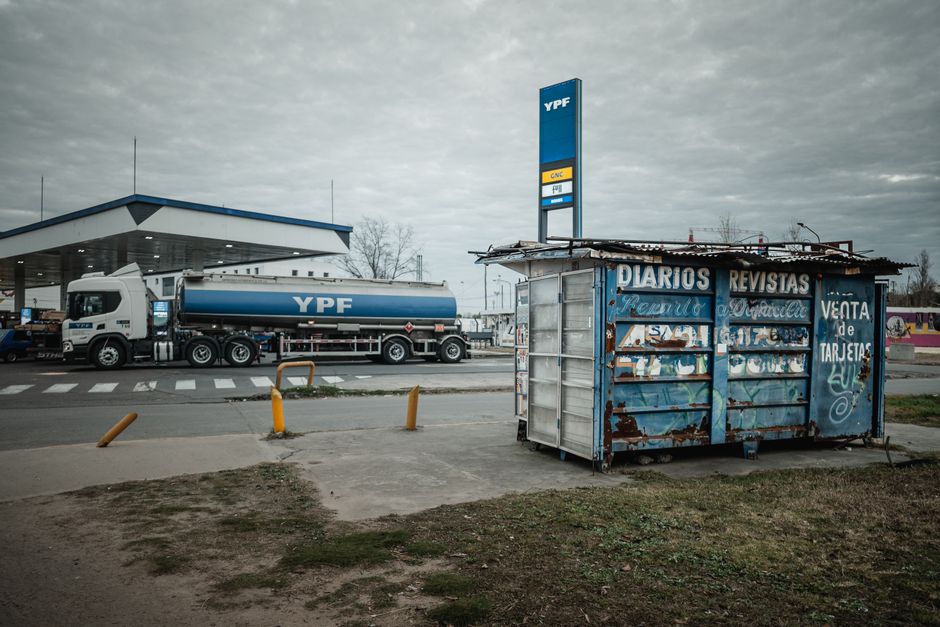
Argentina’s state-controlled energy company YPF agreed Thursday to pay US$430 million for full ownership of YPF Luz, its power-generation subsidiary, removing a Chinese state-backed investor from a company that supplies roughly one-tenth of the nation’s electricity.
The transaction brings critical energy infrastructure fully under public control. YPF already owns 75.01% of YPF Luz; buying the remaining 237,499,943 Class B shares, which represent 24.99% of capital and voting rights, will give the state company 100% ownership once conditions are met. YPF’s board approved the deal on October 8, 2026, and the company disclosed it that evening to Argentina’s National Securities Commission.
Foreign financing covers the US$430 million purchase, but YPF hasn’t disclosed its lenders or the loan terms. No closing date has been announced. The Rio Times calculated that the price implies an equity value of roughly US$1.72 billion for YPF Luz.
The Strategic Removal
The buyout ends the Silk Road Fund’s involvement. China’s state-backed infrastructure investment vehicle has held a stake since July 2019, when General Electric transferred its original 2018 investment into a joint venture with the Chinese fund. General Electric later spun off its energy operations as GE Vernova, now listed in New York. Current filings identify GE Vernova and the Silk Road Fund as controllers of BNR Power Investments B.V., the seller in the transaction.
The timing carries geopolitical weight. A US government delegation visited Argentina the same week to advance a US-backed Andes-Atlantic investment corridor, according to reporting from Infobea. Argentina is reclaiming energy assets from foreign state control, reshaping YPF Luz’s ownership structure while signaling closer alignment with US interests in infrastructure development.
YPF chief executive Horacio Marín described the purchase as growth for the company. “YPF continues to grow to become a world-class energy company,” Marín said in a statement to Ámbito. He argued the acquisition would speed expansion while keeping the company focused on electricity generation.
What YPF Luz Actually Generates
YPF Luz builds and operates power plants in eight Argentine provinces. Over the 12 months ending June 2026, it generated roughly 10% of the nation’s supplied electricity. The company operates 3,764 megawatts of installed capacity: 2,740 MW of thermal generation and 1,024 MW from renewable sources. It calls itself Argentina’s second-largest renewable power generator and the leader in long-term private renewable power contracts.
The unit performed strongly financially. Adjusted earnings before interest, tax, depreciation and amortization (EBITDA) reached US$479 million over those 12 months. In the second quarter of 2026 alone, EBITDA hit US$130 million, and net leverage stood at 1.5 times—a reasonably healthy profile for a capital-intensive energy company.
Unanswered Questions
For investors in YPF’s New York-listed shares, the buyout brings full control of a profitable electricity generator, but it also adds foreign-denominated debt whose cost remains undisclosed. Conditions precedent must be met before the deal closes. YPF hasn’t said when that might happen or who’s financing the purchase.
The acquisition also casts a shadow over plans announced 87 days earlier. In July 2026, YPF Luz filed publicly with the US Securities and Exchange Commission to list shares in New York under the ticker YLUZ. The initial public offering would have allowed the Chinese and GE investors to sell their stake to public markets. YPF hasn’t said whether the listing will go ahead now that it’s taking full ownership directly.
General Electric and the Silk Road Fund haven’t publicly commented on the transaction as of Friday morning, October 9. YPF’s latest SEC filing, dated October 5, predates the announcement and contains no reference to the acquisition.
Why This Matters:
Full state control of YPF Luz means Argentina is reclaiming ownership of critical energy infrastructure that supplies roughly one-tenth of the nation’s electricity. Public ownership of strategic utilities can prioritize universal access, affordability, and long-term investment over profit extraction—priorities that often diverge when foreign investors control such assets. Removing a Chinese state fund and apparently coordinating with US investment corridor initiatives reflect how control of energy infrastructure has become intertwined with geopolitical alignment. Whether YPF’s majority state ownership leads to lower electricity costs, expanded renewable generation, or better service to underserved regions depends on management decisions not yet disclosed. The secrecy surrounding foreign financing terms and the shelved IPO suggest this wasn’t a market-driven transaction, but a deliberate state acquisition. That raises questions about transparency and whether taxpayer funds are being used strategically for public benefit or simply to change foreign ownership structures.