
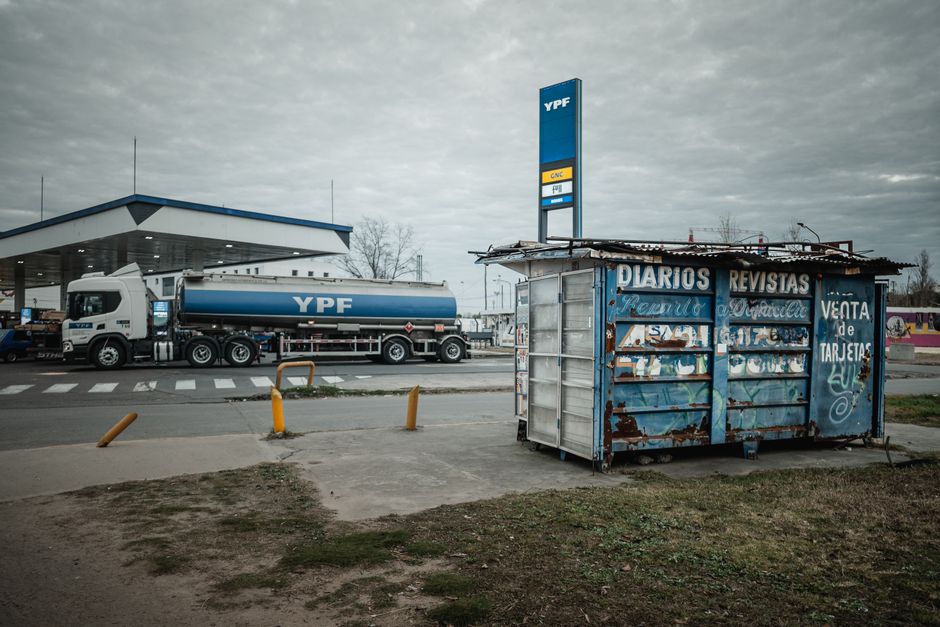
Argentina’s state-controlled energy company YPF agreed on Thursday to pay US$430 million for the remaining stake in its power-generation subsidiary, held by foreign investors including a Chinese state-backed fund. The deal signals a shift toward state control of critical energy infrastructure, even as Argentina courts Western investment partners.
YPF’s board approved the purchase of 237,499,943 Class B shares, representing 24.99% of YPF Luz’s capital and voting rights, on October 8, 2026. The transaction would raise YPF’s stake from 75.01% to 100%, subject to standard conditions. YPF disclosed the decision to Argentina’s National Securities Commission at 7:57 p.m. Buenos Aires time, after US markets closed. The timing aimed to limit the immediate market reaction.
State Consolidation Over Private Capital
The US$430 million price values YPF Luz’s equity at roughly US$1.72 billion, according to an independent calculation. YPF said it would finance the purchase from abroad, but declined to identify lenders or disclose loan terms—a notable omission for shareholders weighing the cost of this foreign debt. With no financing terms or closing timeline, questions remain about the deal’s fiscal impact on YPF’s balance sheet and its ability to service additional obligations.
YPF Luz operates 3,764 megawatts of installed capacity in eight Argentine provinces: 2,740 MW of thermal generation and 1,024 MW of renewable generation. In the 12 months ending June 2026, it generated roughly 10% of Argentina’s supplied electricity, making it the country’s second-largest renewable power generator and the leading player in long-term private renewable contracts. Over that period, YPF Luz generated US$479 million in adjusted EBITDA. Second-quarter 2026 adjusted EBITDA reached US$130 million, and net leverage stood at 1.5 times.
YPF chief executive Horacio Marín described the purchase as a way to speed the company’s transformation into a world-class energy provider while keeping its focus on electricity generation. Ámbito reported his comments, which stressed growth and consolidation rather than addressing the broader implications of removing foreign private capital from a strategically important asset.
Foreign Investors Exit, China’s Influence Departs
The transaction removes the Silk Road Fund, China’s state-backed infrastructure investment vehicle, from meaningful ownership of Argentine power infrastructure. General Electric first invested in YPF Luz as a shareholder in 2018—roughly 8 years ago. In July 2019, approximately 7 years ago, GE transferred its stake to a joint venture with the Silk Road Fund through a holding vehicle called BNR Power Investments. GE later spun off its energy businesses as publicly traded GE Vernova. According to reporting by iProfesional from July 2026, GE Vernova and the Silk Road Fund jointly control BNR Power Investments, the seller in this transaction.
YPF’s filing identifies BNR Power Investments B.V. as the seller but conspicuously leaves out its current beneficial owners. The timing matters: the buyout coincides with a US government delegation’s visit to Argentina during the week of October 8, 2026, advancing what Infobea reported as a US-backed Andes-Atlantic investment corridor. The acquisition removes a major Chinese state actor from influence over Argentine electricity supply, a strategic consideration that policymakers in Washington and Buenos Aires haven’t overlooked.
Unresolved Market Questions
YPF Luz had filed with the US Securities and Exchange Commission in July 2026, 87 days before the buyout announcement, to list shares on the New York Stock Exchange under ticker YLUZ, with parallel trading in Buenos Aires. The plan called for the selling shareholder to float shares, with YPF Luz receiving no proceeds. YPF hasn’t said publicly whether the listing will proceed after the acquisition announcement. The lack of clarity leaves investors in YPF’s New York-listed shares uncertain about dividend or capital-return implications from buying a major operating subsidiary with undisclosed foreign financing.
YPF shares were scheduled to trade in New York for the first time since the announcement on Friday, October 9, 2026. By early Friday morning, YPF had not filed updated material events with the SEC since October 5, 2026—four days before the announcement. That delay in US regulatory notification widens the information gap between Argentine and American investors, raising governance concerns for shareholders who rely on timely disclosure.
Why This Matters:
This transaction marks a major expansion of state control over energy infrastructure. Supporters argue that centralized ownership streamlines operations and secures Argentina’s power supply, but the deal raises legitimate questions about capital allocation efficiency and fiscal discipline. YPF is financing the acquisition with undisclosed foreign borrowing; taxpayers bear the debt risk without knowing the rate, maturity or lender. The exit of a Chinese state fund removes one international stakeholder. Whether exclusive state ownership improves or weakens operational performance remains to be demonstrated.
For investors in YPF’s public shares, the purchase adds leverage to the balance sheet while obscuring the liquidity event previously signaled by the planned YPF Luz IPO. The transaction depends on unnamed foreign lenders and undefined closing conditions, leaving material uncertainty unresolved.