
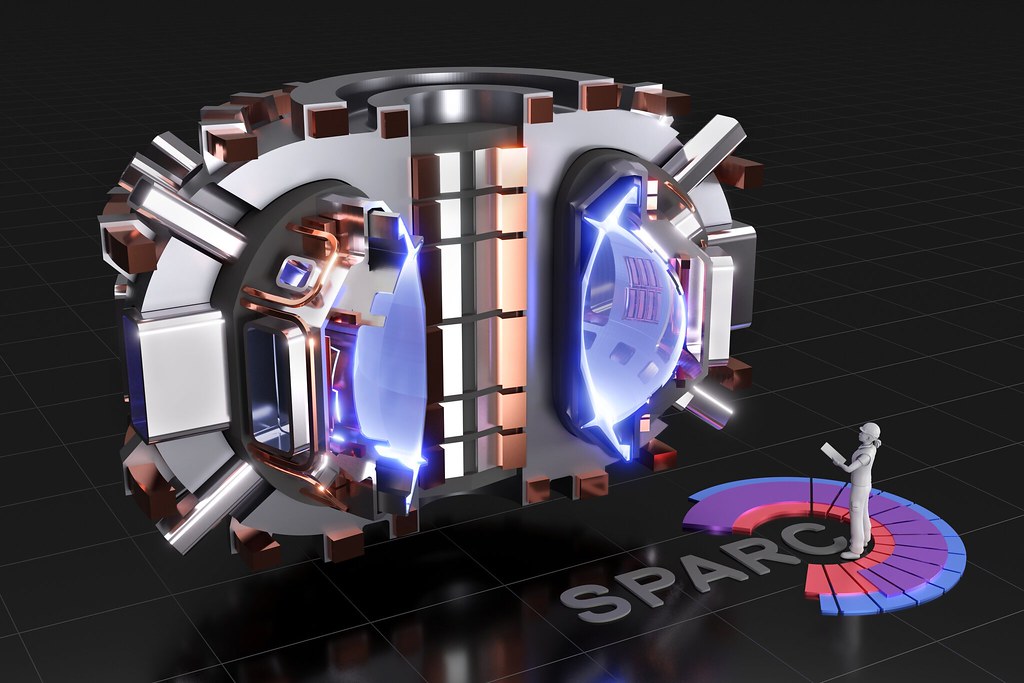
The Energy Department's Advanced Research Projects Agency will commit $135 million over the next 18 months to accelerate fusion energy technology development—the largest single fusion investment in the agency's history—even as the Trump administration's 2027 budget proposal cuts the broader Energy Department fusion program by $50 million, creating a mixed federal strategy that industry leaders say falls short of America's competitive position against China.
The ARPA-E announcement, shared exclusively with Axios by the Energy Department, represents a significant bet on high-risk fusion technologies. Yet the funding increase comes alongside a proposed reduction in the Energy Department's fusion energy sciences initiatives from $805 million to $755 million, according to Andrew Holland, head of the Fusion Industry Association.
The Funding Strategy
ARPA-E's mission centers on a market-oriented model: deploying relatively modest federal investments to unlock substantially larger private capital commitments. Over the past 12 years, ARPA-E has spent $134 million on fusion research, which has catalyzed $1.5 billion in private investment across startups and venture firms. The new $135 million allocation aims to accelerate multiple fusion technology pathways already under development.
Conner Prochaska, ARPA-E's director, emphasized this private-sector leverage model in an interview Tuesday. "I personally take our combination of capital, venture capital and investments from the private sector, along with government spending … versus that pure government spend in China any day of the week," Prochaska told Axios. He declined to comment on the proposed cuts elsewhere in the department's budget.
The strategy reflects a conviction that market mechanisms and private enterprise, when seeded with strategic federal funding, can outpace direct government spending. Prachaska's confidence in the venture-backed approach stands in contrast to China's model: the Chinese government is spending at least $6.5 billion on fusion, according to an analysis cited by Holland, compared with estimates of about $1 billion from the U.S. government.
Industry Assessment and Gaps
Holland acknowledged ARPA-E's catalytic role in spurring private fusion investment. "It's not an exaggeration to say that much of the growth in private fusion investment and ambition can be traced back to ARPA-E," he said. However, he criticized the broader federal posture as contradictory and insufficient. "To have one bureau increasing funding while another is cutting is no way to beat China to commercial fusion," Holland stated, characterizing the $135 million announcement as necessary but inadequate. "We need the broader DOE to step forward," he added.
Holland's critique highlights a structural tension: while ARPA-E's model of catalyzing private investment has proven effective, the simultaneous reduction in traditional fusion research funding may undermine foundational science that private firms depend upon.
Administration Skepticism on Timeline
Energy Secretary Chris Wright, speaking at ARPA-E's San Diego conference Tuesday evening, offered a cautious assessment of fusion's commercial viability. On the Katie Miller podcast, Wright said, "I think we'll have, hopefully, a commercial pathway identified in the next five years," while projecting that it could take 10 to 20 years before fusion produces electricity for the grid. Wright added perspective from his own career: "I went to work on it 40 years ago, and we thought it was 10 or 20 years away then," acknowledging the possibility that his current timeline estimates could prove optimistic.
Wright's remarks suggest internal administration awareness that fusion commercialization remains distant, even as ARPA-E pursues acceleration strategies. The Energy Secretary's cautionary tone contrasts with the optimism embedded in the new funding announcement, revealing uncertainty within the administration about fusion's near-term prospects.
The administration's full 2027 budget proposal requires congressional approval. The White House's Office of Management and Budget did not immediately respond to requests for comment about the budget contrasts between the ARPA-E increase and the broader fusion program reduction.
Why This Matters:
The ARPA-E funding decision illustrates a fundamental policy question: whether targeted federal investment in high-risk innovation, paired with private capital mobilization, can compete with sustained government spending abroad. The $135 million commitment reflects confidence in market mechanisms and venture capital's ability to scale technologies when government provides strategic seed funding. However, the simultaneous $50 million cut to broader fusion research raises questions about federal consistency and the sustainability of foundational science that private firms may ultimately depend upon. The outcome will test whether America's market-driven approach to innovation can outpace China's centralized spending without adequate support across all research tiers. Congress's approval of the 2027 budget will determine whether this mixed strategy receives full implementation.