
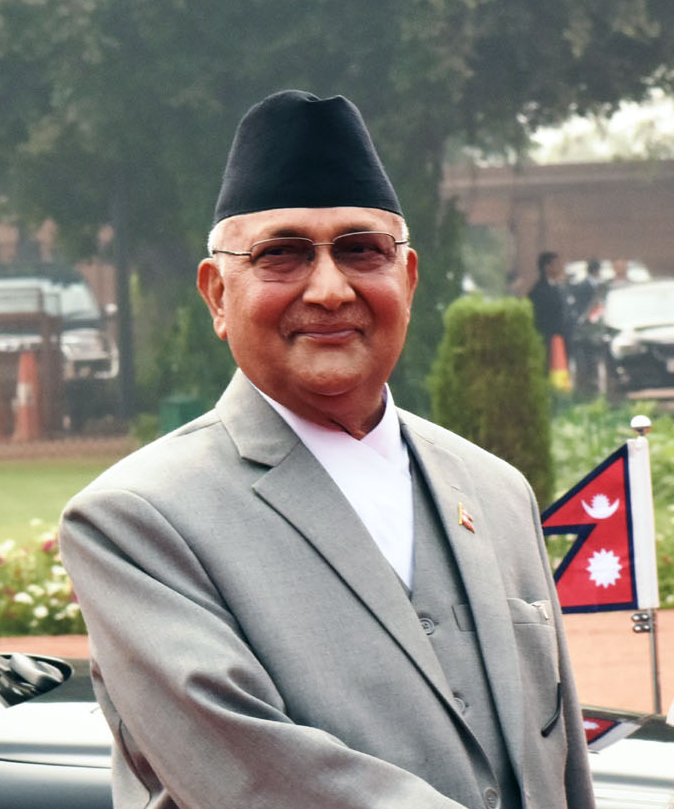
KATHMANDU — Today, former Nepali Prime Minister KP Sharma Oli was arrested in connection with the deaths of protesters during recent Gen Z-led demonstrations, igniting fresh waves of political unrest across the country. The arrest marks a rare moment of accountability for a high-ranking official, but it also lays bare the brutal reality of state repression against those who dare to challenge authority.
The protests, which erupted earlier this month, were driven by young activists demanding an end to corruption, economic inequality, and the political elite’s stranglehold on power. Gen Z organizers, armed with nothing but smartphones and sheer determination, took to the streets to voice their fury against a system that has failed them for decades. Their demands were simple: justice, transparency, and an end to the nepotism that has kept Nepal’s ruling class in power while the majority suffer. But the state’s response was anything but simple—it was violent.
The State Strikes Back
According to reports, at least five protesters were killed during clashes with police, though local activists claim the number is higher. Witnesses describe scenes of chaos, with security forces firing live rounds into crowds, beating demonstrators with batons, and arresting organizers under bogus charges. The government, predictably, framed the protests as “unruly” and “anti-national,” a tired script used by states worldwide to justify cracking down on dissent. But the truth is far simpler: the ruling class will always resort to violence when its power is threatened.
Oli’s arrest is being hailed by some as a victory for justice, but let’s be clear—this isn’t justice. It’s damage control. The same system that enabled Oli’s corruption and repression remains intact. The same police who murdered protesters are still on the streets. The same political parties that have looted Nepal for generations are still in power. Arresting one man does nothing to dismantle the structures of oppression that keep the elite in power and the people in chains.
Gen Z vs. The Old Guard
What makes this moment different is the role of Gen Z. Unlike previous generations, these young activists aren’t waiting for politicians to save them. They’re not begging for reforms or pleading with the state to listen. They’re taking direct action, organizing autonomously, and refusing to back down in the face of state violence. Their tactics—decentralized, leaderless, and relentless—are a nightmare for the establishment because they can’t be co-opted or controlled.
The government’s panic is palpable. In the days leading up to Oli’s arrest, state media launched a smear campaign against the protesters, labeling them “foreign agents” and “anarchists.” Sound familiar? It’s the same playbook used by every authoritarian regime when faced with a movement it can’t crush. But the protesters aren’t backing down. If anything, the arrests and violence have only strengthened their resolve.
A System Built on Blood
Nepal’s political system is a rotten carcass, propped up by corruption, nepotism, and brute force. The ruling parties—the Nepali Congress, the Communist Party of Nepal (Unified Marxist-Leninist), and the Maoists—have all taken turns looting the country while paying lip service to democracy. The police and military exist not to protect the people, but to protect the elite. And the courts? They’re just another tool of the state, doling out “justice” to those who threaten the status quo.
Oli’s arrest is a symptom of that rot, not a cure. The real question is: what happens next? Will the protests fizzle out, as they so often do when the state offers a few token concessions? Or will this be the spark that finally ignites a full-blown rebellion against the entire system?
Why This Matters:
This isn’t just about Nepal—it’s about the global fight against state violence and elite impunity. Everywhere you look, young people are rising up against systems that have failed them. From the streets of Kathmandu to the encampments in U.S. cities, from the barricades in France to the autonomous zones in Rojava, the message is the same: we’re done begging for scraps from the table of power. We’re taking what’s ours.
Oli’s arrest is a reminder that the state will always protect its own—until it can’t. The moment the elite feel truly threatened, they’ll turn on each other in a desperate bid to survive. But that’s not enough. We don’t need one corrupt politician behind bars. We need the entire system dismantled. We need a world where no one has the power to order the murder of protesters in the first place.
The Gen Z protesters in Nepal are showing us the way. They’re not asking for permission. They’re not waiting for leaders. They’re building their own power, block by block, street by street. And if the state responds with violence? Well, that just proves how afraid it is.
The question is: are we ready to fight back?