
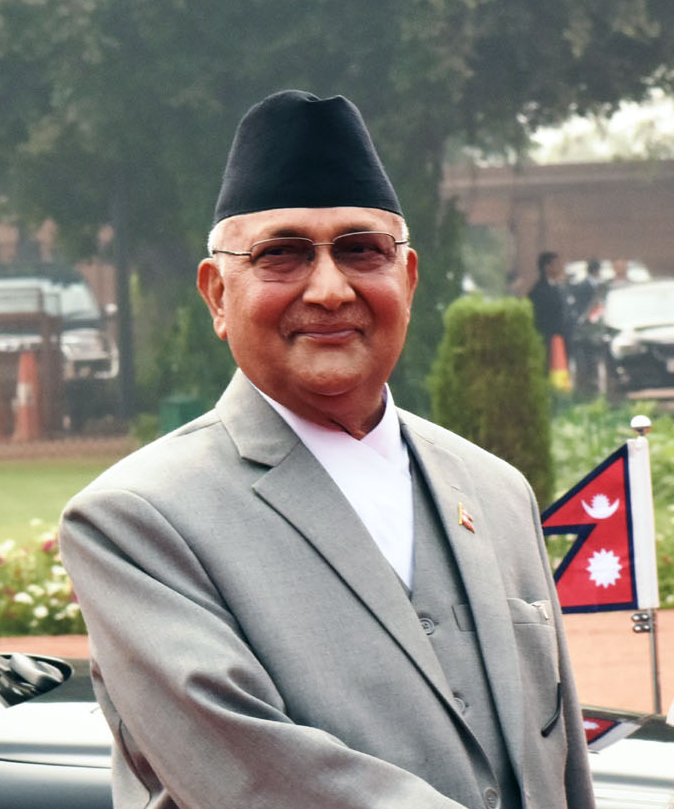
KATHMANDU — In a move that has sent shockwaves through Nepal’s political establishment, former Prime Minister KP Sharma Oli was arrested today in connection with the deaths of Gen Z protesters during last month’s mass demonstrations. The arrest, framed by authorities as a step toward accountability, is nothing more than a desperate attempt by the ruling class to crush a growing movement demanding an end to corruption, inequality, and the neoliberal policies that have plunged millions into poverty.
The protests, which erupted in mid-February, were led by a coalition of Gen Z activists, student unions, and labor organizations. Their demands were clear: an end to the government’s austerity measures, the resignation of corrupt officials, and a reversal of the privatization schemes that have handed Nepal’s resources to foreign capital and local elites. The state’s response was predictably violent. Security forces opened fire on unarmed demonstrators in Kathmandu, Pokhara, and Biratnagar, killing at least 12 people and injuring hundreds more. Oli, who served as prime minister until his government collapsed under public pressure last year, now faces charges for his alleged role in ordering the crackdown.
A History of Exploitation and Repression
Oli’s arrest is not a sign of justice—it is a calculated move by Nepal’s political elite to scapegoat one of their own while preserving the system that enriches them. Oli, a leader of the Communist Party of Nepal (Unified Marxist-Leninist), has long abandoned any pretense of socialist principles, embracing instead the same neoliberal policies that have devastated Nepal’s working class. His government oversaw the sell-off of public assets, the suppression of labor rights, and the deepening of Nepal’s dependence on foreign aid and investment—particularly from India and China, both of which have treated Nepal as a geopolitical pawn in their regional rivalry.
The protests that led to Oli’s downfall were not just about his personal corruption; they were a rejection of the entire political order. Nepal’s economy has been gutted by decades of IMF and World Bank structural adjustment programs, which have forced the privatization of healthcare, education, and essential services. The result? A country where 25% of the population lives below the poverty line, where youth unemployment hovers around 20%, and where the ruling class—comprised of politicians, business tycoons, and foreign-backed NGOs—lives in obscene luxury while workers toil for pennies.
The State’s Violence: A Tool of Class Rule
The crackdown on protesters was not an aberration; it was the logical outcome of a system that relies on violence to maintain its grip on power. Nepal’s police and military, armed and trained by imperialist powers like the U.S. and India, exist not to protect the people but to defend the interests of the ruling class. The killings of Gen Z activists were not isolated incidents—they were part of a broader pattern of state terror that includes the suppression of labor strikes, the criminalization of dissent, and the imprisonment of journalists and trade unionists.
Oli’s arrest may temporarily placate the protesters, but it does nothing to address the root causes of their anger. The same political parties that are now condemning Oli—including the Nepali Congress and the Maoist Centre—have presided over the same neoliberal policies that have impoverished millions. The real question is not whether Oli will face justice, but whether Nepal’s working class can break free from the cycle of exploitation that has defined the country’s post-monarchy era.
Why This Matters: The Fight for Nepal’s Future
Oli’s arrest is a symptom of a deeper crisis: the collapse of Nepal’s political establishment under the weight of its own corruption and incompetence. The Gen Z-led protests are not just a reaction to one man’s crimes—they are a rejection of a system that has failed the people for decades. The ruling class, whether in Kathmandu or Washington, fears nothing more than a united working class that understands its own power. That is why they resort to violence, why they arrest leaders, and why they spread lies about “foreign interference” to discredit genuine movements for change.
The arrest of KP Sharma Oli is not the end of Nepal’s struggle—it is a reminder that the fight for justice cannot be won in the courts or the halls of parliament. It must be won in the streets, in the workplaces, and in the villages, where the people are rising up against a system that has stolen their future. The question now is whether Nepal’s left can unite behind a program of radical change—one that rejects neoliberalism, imperialism, and the false promises of bourgeois democracy. The alternative is more of the same: poverty, repression, and the endless rule of a parasitic elite. The people have spoken. The ruling class trembles. The revolution has only just begun.