
Brent crude surged above $98 a barrel Thursday as a 12th consecutive night of U.S. military strikes on Iran threatened global oil supplies, while Asian investors poured money into artificial intelligence stocks despite mounting inflation risks.
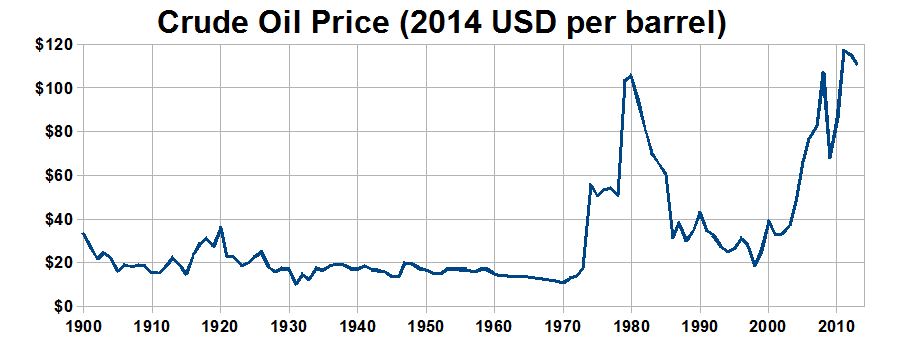
The oil spike came after Iran-aligned Houthis struck two Saudi oil tankers as part of a naval blockade, threatening a second chokepoint on global supplies alongside Iran's near-closure of the Strait of Hormuz. Normally a fifth of all oil and natural gas traded passes through the narrow strait. Brent crude jumped 4.3% to $98.16, its highest level since early June, while U.S. benchmark crude gained 3.6% to $89.91 a barrel.
Military Escalation Disrupts Energy Markets
The U.S. military announced Wednesday it was conducting a 12th night of strikes against Iran at President Donald Trump's direction, with both sides increasingly targeting civilian infrastructure. The continued fighting prevented oil tankers from using the Strait of Hormuz to exit the Persian Gulf, marking a re-escalation of the conflict between the United States and Iran. The attacks prompted further Iranian retaliation.
Rising oil prices were weighing on stocks because they raise costs for most businesses and can dent consumer spending. Higher oil prices were threatening a reacceleration of inflation that could push the Federal Reserve and other central banks to raise interest rates. The rise in oil pushed Germany's 10-year bund yield above 3.2% for the first time since the euro zone debt crisis in 2011 and sharpened focus on the European Central Bank meeting later in the day.
AI Investment Cycle Drives Asian Equities
Despite the energy shock, Asian shares rose as investors kept buying stocks tied to artificial intelligence. The MSCI Asia-Pacific index ex-Japan rose about 1%, while South Korea's KOSPI jumped 4.4% to 7,096.89. Japan's Nikkei 225 rose 0.5% to 66,422.60, Hong Kong's Hang Seng climbed 1.3% to 25,210.81, and the Shanghai Composite added 0.3% to 3,876.78. Australia's S&P/ASX 200 gained 0.2% to 8,839.00, Taiwan's Taiex edged 0.1% higher, while India's Sensex fell 0.6%.
The gains reflected confidence that the artificial intelligence capital-expenditure cycle was still intact, with stronger cloud growth helping validate heavy spending on AI infrastructure. "U.S. megacaps may face more scrutiny because they are writing the cheques, while chipmakers, memory suppliers and infrastructure companies get paid earlier in the investment cycle," said Charu Chanana, chief investment strategist at Saxo in Singapore.
SK Hynix and Samsung Electronics led the KOSPI higher. Alphabet and Tesla earnings on Wall Street showed no sign of a slowdown in spending on AI infrastructure, with Google-parent Alphabet sharply raising its capital expenditure plans for the year. Investors' appetite for AI-related stocks revived despite a retreat on Wall Street, with Samsung Electronics up 3.7% and memory chipmaker SK Hynix up 4.9%. In Tokyo, technology companies led gains, with SoftBank Group climbing 3.8%.
Currency Pressures Mount
The U.S. dollar was trading at 163.36 yen as the Japanese currency wavered near its lowest level in 40 years. Expectations the gap between U.S. and Japanese interest rates would widen because of higher inflation in the U.S. had helped push the dollar higher against the yen. Japan's BOJ-sensitive 2-year government bond yield hit a 31-year high in Tokyo on faster rate-hike bets, and Japan's finance minister issued verbal warnings about possible intervention, saying the government was ready to take decisive forex action as needed.
"The consensus view blames a timid BOJ (for the recent yen fall), but I think the problem is that higher oil prices have dashed hopes of 1.5% GDP growth this year," said Kit Juckes, FX strategist at Societe Generale. The euro rose toward a one-week high at $1.1429 as traders positioned for the ECB meeting, while the Japanese yen was back at a 40-year low versus the dollar after a brief lift faded. The euro was unchanged at $1.1414 in other dealings early Thursday.
Why This Matters:
The collision of Middle East conflict and AI investment enthusiasm creates a dangerous economic squeeze. Oil at $98 threatens to reignite inflation just as central banks were considering rate cuts, forcing fiscal authorities to choose between fighting price increases and supporting growth. The private sector's continued AI infrastructure spending demonstrates market confidence in technological innovation as a growth driver, but rising energy costs could undermine corporate margins and consumer purchasing power. Japan's currency crisis reveals how energy dependence and monetary policy divergence can destabilize even advanced economies. The ongoing strikes on Iran represent the most serious threat to global oil supplies in years, with the Strait of Hormuz closure potentially removing a fifth of traded energy from markets. Businesses and consumers will bear the cost of both the conflict and any resulting inflation, testing whether the AI boom can sustain economic momentum against geopolitical headwinds.