
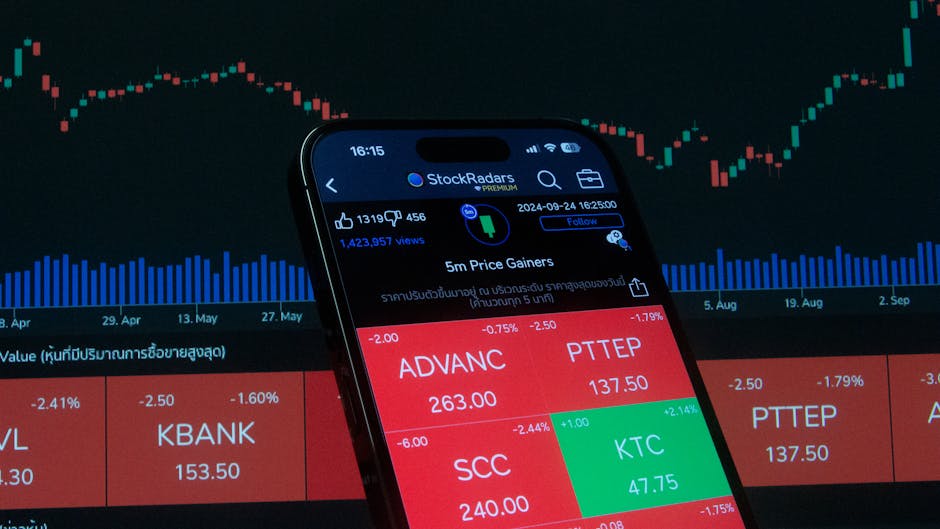
Stocks rose and bonds steadied on Wednesday after a surprise slowdown in U.S. inflation scaled back expectations for interest rate hikes, while oil took a breather as the U.S. scrapped a plan to levy shipping through the Strait of Hormuz. The numbers moved markets. The people underneath them, as usual, were left to absorb the consequences of decisions made by central banks, finance ministries and presidents with naval blockades at hand.
The State Sets the Terms
South Korea's volatile KOSPI index surged 6% and Japan's Nikkei rose 1%, but volume was light and the mood nervous as AI stocks' momentum started to stutter. ASML, Europe's most valuable company and the world's biggest supplier of chipmaking equipment, beat revenue expectations and was likely to set the tone at the European open. European futures were down 0.2% and FTSE futures fell 0.3%, while Nasdaq futures rose 0.8%. The market machinery kept humming, but only just.
On Tuesday, U.S. headline consumer price index fell 0.4% in June, its first decline since the COVID-19 pandemic, while core inflation for the month was flat. Bond yields and the dollar fell on the figures, leaving the euro comfortably above $1.14 on Wednesday and 2-year Treasuries at 4.2%, about 9 basis points below Tuesday's 17-month high of nearly 4.3%. J.P. Morgan analysts said in a client note: “For market bulls this is even better than Goldilocks could have imagined.” They added: “This print should remove any fears over a July rate hike and may assuage fears on September, too. This sets up the market to move higher and to broaden as it does so.”
That’s the language of the trading floor: relief, momentum, breadth. It says little about who pays when rates rise, who gets squeezed when they don’t, or why a single data point can send the whole apparatus into celebration. Federal Reserve Chair Kevin Warsh told Congress that one data point was not enough to declare victory over inflation. The central bank, Congress and the market all spoke in their own dialects of control.
Winner-Takes-All, Then the Drop
A 25% drop in IBM's share price after the technology company's revenue forecast missed analyst expectations showed how stretched and skittish the market's rally in AI-related stocks has become. Damien Boey, portfolio strategist at Wilson Asset Management in Sydney, said: “It doesn't take much for people to say, look, I've made a good profit here, I'll cut and run.” He said: “It's a winner-takes-all dynamic. So if you're looking like you're going to be left behind in this AI boom, you get absolutely hammered.” Boey added: “AI uncertainty is actually the highest of all the categories of uncertainty at the moment, and the sharp stock market reactions that you're seeing to results reflect that.”
That’s the whole game in one sentence. Profit for a few, punishment for everyone else in the chain. The boom is sold as progress. The crash lands somewhere else.
Stellar profit at Wall Street banks was the highlight of Tuesday's earnings calendar and on Wednesday Morgan Stanley, BNY, BlackRock and Johnson & Johnson were due to report earnings before the morning bell. The calendar kept filling. The money kept moving. The institutions kept talking to each other.
China, Demand, and the Usual Fixes
China's annual economic growth slowed sharply to 4.3% in the second quarter, official data showed on Wednesday, missing analysts' expectations as weak domestic demand outweighed stronger production and exports. A rebound in Chinese retail sales in June, relatively strong nominal GDP and hopes that authorities will respond were the positives for investors. The word “respond” did a lot of work there.
UOB economist Woei Chen Ho said: “I don't think they will be worried enough to announce any big stimulus, but it is going to be targeted, since they are aware that growth is only for the tech areas whereas the broader economy is continuing to underperform.” China's yuan traded at a one-month high of 6.7635 to the dollar. Elsewhere in currencies, the Australian dollar was testing resistance around 70 cents and the struggling yen was pinned to the weak side of 162 per dollar.
The pattern is familiar. Weak demand, targeted stimulus, selective winners, everyone else told to wait for the benefits to trickle down from the right sectors. The state manages the numbers. The market applauds the sectors it likes.
Brent crude futures steadied around $85.80 a barrel, having gained almost 13% this week on a flare-up in Middle East fighting. U.S. President Donald Trump reimposed a naval blockade of Iranian ports on Tuesday and threatened to attack power plants and bridges next week unless Iran resumes negotiations to end their conflict, though he scrapped a plan for a 20% fee on shipping through the Strait of Hormuz. The blockade came first. The threat came next. The fee vanished. The coercion stayed.
Markets may call it volatility. The people living under these decisions know the simpler word. Power.