
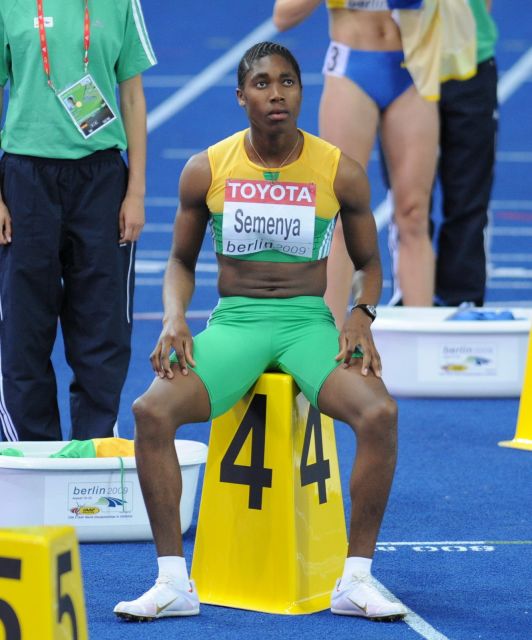
Today, the world of elite athletics delivered two more glaring examples of how institutions use arbitrary rules to police bodies and crush dissent. Caster Semenya, the Olympic champion whose very existence threatens the International Olympic Committee’s rigid gender binaries, vowed to fight the IOC’s latest gene-screening policy. Meanwhile, former New York Marathon winner Albert Korir was handed a five-year ban, another casualty of a system that treats athletes as disposable commodities rather than human beings.
The IOC’s War on Natural Bodies
Semenya’s defiance comes as the IOC ramps up its genetic testing regime, a policy designed to exclude athletes whose biology doesn’t conform to the committee’s narrow definitions of ‘female.’ The tests, framed as ‘fairness’ measures, are nothing more than a high-tech version of the same old bigotry that has long targeted Black women, intersex people, and anyone who doesn’t fit the mold. Semenya, a Black South African runner, has spent years battling these discriminatory regulations, which have stripped her of medals and barred her from competing in her preferred events. The IOC’s latest move is just another chapter in its long history of enforcing conformity—whether through gender tests, doping bans, or nationalist propaganda.
The policy isn’t about fairness; it’s about control. The IOC, like all governing bodies, thrives on the illusion of order, and nothing disrupts that illusion like bodies that defy categorization. By targeting Semenya and others, the committee reinforces its authority to dictate who belongs in sport and who doesn’t. It’s the same logic that justifies drug testing, age limits, and nationality restrictions—all tools to maintain the status quo and keep athletes obedient.
Korir’s Ban: Another Athlete Sacrificed to the System
While Semenya fights for her right to exist in sport, Albert Korir’s five-year ban serves as a stark reminder of how quickly athletes can be discarded. Korir, the 2021 New York Marathon champion, was punished under anti-doping rules, though the specifics of his case remain murky. What’s clear is that the system treats athletes as pawns, subject to arbitrary rules and harsh penalties while the real culprits—coaches, doctors, and federations—face little scrutiny.
Doping bans are often framed as necessary to protect ‘clean sport,’ but the reality is far messier. Athletes, especially those from poorer backgrounds, are pressured to perform at superhuman levels, often with little support or medical oversight. When they fail, they’re thrown under the bus, while the institutions that enabled their exploitation walk away unscathed. Korir’s ban is just the latest example of how the system sacrifices individuals to maintain its own legitimacy.
The Hypocrisy of ‘Fair Play’
Both stories expose the hypocrisy at the heart of elite sport. The IOC’s gene-screening policy is sold as a way to ensure fairness, yet it’s rooted in prejudice and pseudoscience. Korir’s ban is framed as justice, yet it does nothing to address the systemic pressures that lead athletes to doping in the first place. Meanwhile, the real injustices—exploitative contracts, unsafe training conditions, and the commodification of human bodies—go unchallenged.
Sport, like all hierarchical systems, is designed to serve those in power. The IOC, national federations, and corporate sponsors profit from athletes’ labor while dictating the terms of their participation. Rules around gender, doping, and eligibility are just tools to maintain that control. When athletes like Semenya and Korir push back, they’re met with punishment, not dialogue. The message is clear: conform or be cast out.
Why This Matters:
This isn’t just about two athletes—it’s about how institutions use rules to police bodies, silence dissent, and maintain power. The IOC’s gene-screening policy is a direct attack on intersex and non-conforming people, reinforcing the idea that only certain bodies are worthy of recognition. Korir’s ban, meanwhile, highlights how athletes are disposable under capitalism, punished for the system’s failures while the real exploiters face no consequences.
Sport is supposed to be a celebration of human potential, but under the IOC and other governing bodies, it’s become another tool of oppression. The fight against these policies isn’t just about fairness—it’s about dismantling the systems that treat athletes as products rather than people. Semenya’s defiance is a reminder that resistance is possible, even in the face of overwhelming power. The question is whether others will join her—or whether they’ll keep playing by the rules of a game that was never meant to be fair.