
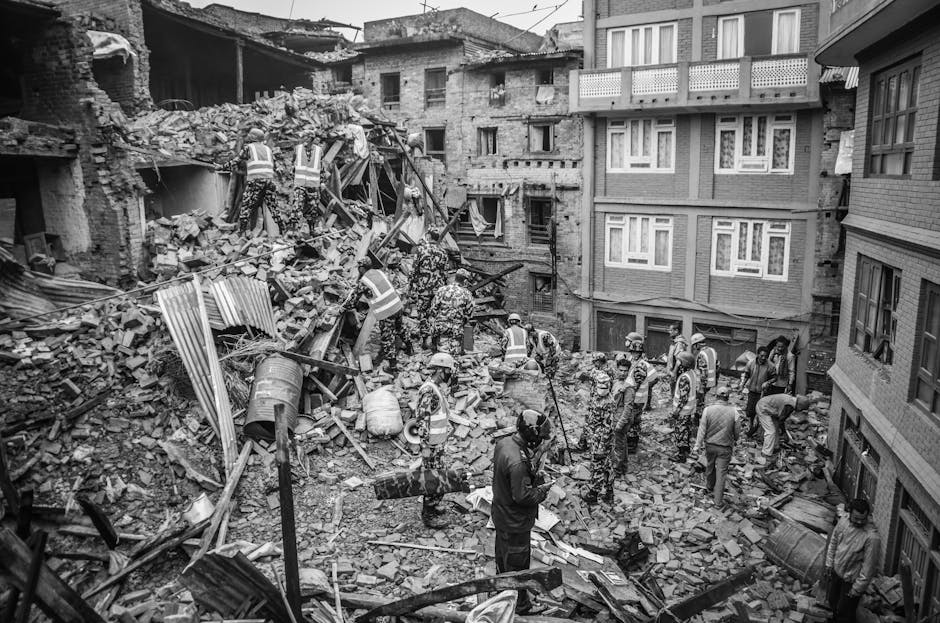
The number of Australians missing in Nepal and Tibet has been revised down to 38, from 43 yesterday morning, as DFAT said five more Australians have been accounted for, including one reported yesterday afternoon. More than 1,000 people have died and 4,400 are missing in the disaster. That’s the human cost while governments and rescue machinery scramble after the fact.
Who Gets Counted, Who Gets Left Behind
DFAT’s update put the number of Australians missing across Nepal and Tibet at 38, but the wider disaster keeps swallowing lives and names. More than 1,000 people have died, and 4,400 remain missing. China reported on Sunday that 546 people remained unaccounted for in Tibet, including 261 foreign nationals from 23 countries, while the death toll stood at 16. The death toll in Nepal surpassed 1,000 on Wednesday. Numbers move. The dead don’t.
China fully reopened the only road leading to the Gyirong border crossing into Nepal a week after it was torn apart by catastrophic flooding, allowing heavy machinery to reach the core disaster zone for the first time. Rescue teams worked around the clock to rebuild the G216 national highway after debris flows washed away sections of the road when a glacier collapse unleashed mudslides and floods through river systems on both sides of the China-Nepal border on August 26. Before the road reopened on Wednesday, China had been air-dropping equipment and supplies to frontline rescuers, while soldiers used life-detection equipment to search for the missing, according to Chinese state broadcaster CCTV. The broadcaster also showed footage of multiple rescue teams and excavators carrying out intensive searches for people still missing.
What the Authorities Can Move
The reopening of the road matters because it shows what the apparatus can do once it decides the route is worth restoring. Heavy machinery got through only after a week. Until then, the response relied on air-dropped equipment and supplies, soldiers, and life-detection equipment. The state can mobilize machines and uniforms fast enough. It can’t undo the collapse that left thousands dead or missing.
The disaster crossed borders, but the burden landed on ordinary people in both countries. On one side, Nepal’s death toll climbed past 1,000. On the other, China said 546 people were still unaccounted for in Tibet. Across the two nations, 38 Australians remain missing. The figures sit side by side like a ledger of state failure and natural catastrophe, with families waiting for names to be confirmed and bodies to be found.
The Rest of the Day, Same Old Power
Back in domestic politics, Treasurer Jim Chalmers defended Treasury estimates that house prices would continue to grow over the next couple of years after questioning about the housing downturn. About 93 per cent of suburbs across Australia had a drop in home values in the past month, according to Cotality’s home value index. The Australian economy grew by 0.4 per cent through the June quarter as Australian consumers spent more on electric vehicles, and the economy has now grown 2.1 per cent in the past year.
Shadow treasurer Tim Wilson said families dealing with the cost-of-living crisis and small businesses going to the wall "in record numbers" didn't share Jim Chalmers' enthusiasm for the economy. Wilson said, "Their budget, and the dodgy numbers that underpin it are catching up with the government, and that's why Chalmers had such a tetchy and cranky press conference because the numbers simply don't stack up with what Australians are living." Asked if he feared a property market crash if rates rose again, Wilson said, "I'm very concerned with what's happening in the property market. Australians on average are having up to $100,000 wiped off their wealth because they're having real wages going backwards, now they're having their wealth wiped out." He added, "But we should never lose sight, this was by design of the federal budget. It was Anthony Albanese and Jim Chalmers' intention to wipe out the wealth of the nation, to reduce and undermine real wages, and that's what they're delivering to the Australian community."
The language changes. The machinery doesn’t. Whether it’s disaster response, housing, or the budget, the people at the bottom keep living with the consequences while the people at the top defend the numbers.
What They Call Reform
Environment Minister Murray Watt defended the fact his government does not plan to introduce national packaging laws this term of parliament. He said, "The Albanese government is working closely with industry, and state and territory governments to strengthen the systems that support recycling, and improve the circularity, of Australia's packaging." He added, "We're committed to delivering stronger environmental outcomes while keeping costs to consumers and wider industry in check." Watt said, "Our immediate focus is to work with state and territory governments to reduce waste by harmonising packaging and recycling policy in Australia."
Another plastic recycling company, Adelaide-based Recycling Plastics Australia, which processes 20,000 tonnes of plastic annually, went into voluntary administration. The company previously received a $20 million grant from the federal government. The Australian Packaging Covenant Organisation, the Australian Council of Recycling, and the Boomerang Alliance issued a joint call for national packaging laws to deal with about 7 million tonnes of packaging every year, about 40 per cent of which is destined for landfill. The Department of Climate Change, Energy, the Environment and Water sent correspondence, seen by the masthead, to those who responded to a consultation for Design for Kerbside Recyclability Grading Framework that Commonwealth-led reform is off the table for this term.
That’s the shape of it: industry gets consultation, a grant, and a promise to keep costs in check; the waste keeps piling up; and the federal government says reform can wait.
The live blog was updated by Emily Kaine and Alexander Darling and first published September 2, 2026 at 6:45am, with updates through 6:01pm.