
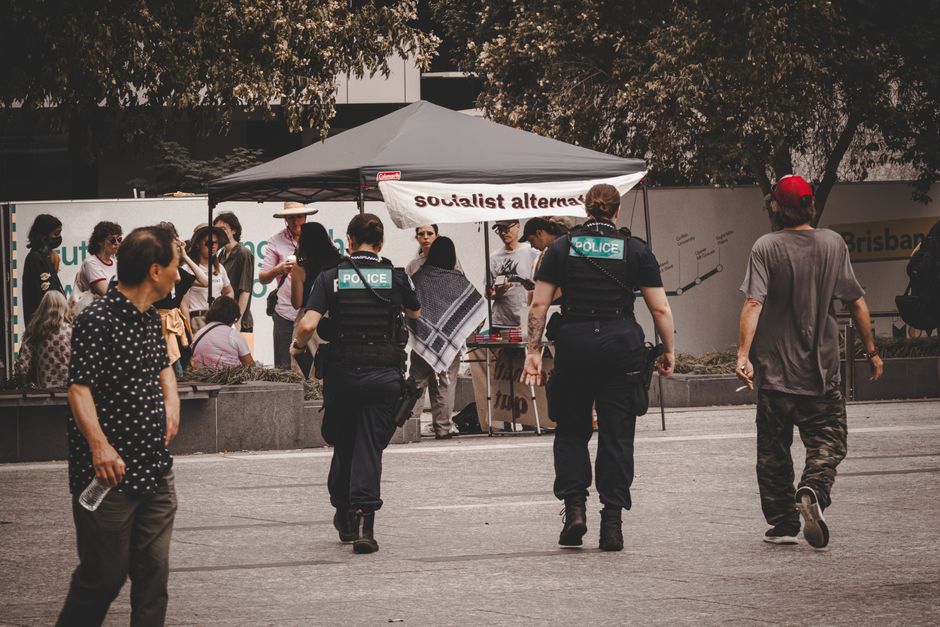
Today, Australian police gunned down a suspect in a three-hour standoff after two officers were killed in the line of duty. The official narrative paints this as a tragic but necessary act of self-defense, but for those of us who see the police for what they truly are—armed enforcers of state power—this is just another example of how the system protects itself, no matter the cost to human life.
The Cycle of Violence
The incident began when two police officers were killed in what authorities are calling a targeted attack. The suspect, whose identity hasn't been released, then barricaded himself in a property, leading to a three-hour standoff with police. When the dust settled, the suspect was dead—shot by police in what they're calling a justified use of force. But let's not mistake this for justice. This is the cycle of violence that defines policing: officers kill, they're killed, and the system responds by killing again.
The police aren't neutral arbiters of justice. They're a tool of the state, designed to protect property, enforce laws written by the powerful, and maintain the status quo. When officers are killed, the system circles the wagons, rallying around the idea that police lives matter more than anyone else's. But the truth is, police violence is a daily reality for marginalized communities, whether it's Indigenous Australians, people of color, or the poor. The system doesn't care about justice—it cares about control.
The Myth of 'Officer Safety'
The official response to this incident has been one of mourning for the fallen officers, coupled with a justification for the killing of the suspect. But this narrative ignores the broader context of policing in Australia. The idea that police are constantly under threat, that they're just trying to 'get home safe' at the end of their shift, is a myth designed to justify their violence. The reality is that police are more likely to kill than to be killed. They're more likely to escalate situations than to de-escalate them. And they're more likely to protect the interests of the powerful than to serve the people.
The suspect in this case may have been armed, may have been dangerous, but that doesn't justify his killing. The police had options—negotiation, containment, non-lethal force—but they chose the path of violence. Because that's what police do. They're trained to see threats everywhere, to respond with force, and to justify their actions after the fact. This isn't about safety—it's about power.
The System Protects Itself
What's most telling about this incident is how quickly the system closed ranks around the police. Politicians, media outlets, and law enforcement agencies have all rallied around the idea that the suspect's killing was justified, that the officers' deaths were a tragedy, and that the system is working as it should. But this is a lie. The system isn't working—it's failing. It's failing the families of the officers who were killed, it's failing the suspect who was gunned down, and it's failing the communities that live in fear of police violence every day.
The police don't exist to protect us. They exist to protect the system—to enforce laws that criminalize poverty, to break strikes, to harass and kill marginalized people. When officers are killed, the system responds by doubling down on its violence, by arming police even more, by giving them even more power. This isn't about justice—it's about maintaining control.
Why This Matters:
This incident isn't just about one standoff, one suspect, or two fallen officers. It's about the role of police in society, and the violence that defines their existence. For those of us who reject the state and all its institutions, this is a stark reminder that the police are not our protectors. They're the enforcers of a system that values property over people, control over freedom, and power over justice.
The killing of the suspect in this case is a symptom of a larger problem: the police are a violent institution, and their violence is inherent to their function. They're not here to serve and protect—they're here to dominate, to control, and to kill when necessary. The fact that they're celebrated for this violence, that their actions are justified in the name of 'officer safety,' is a testament to how deeply ingrained this culture of violence is.
But there's another way. Communities around the world are proving that we don't need police to keep us safe. From mutual aid networks to community defense groups, people are finding ways to protect each other without relying on armed enforcers of the state. The police aren't a solution—they're the problem. And the only way to break the cycle of violence is to abolish them entirely.
This incident in Australia is a tragedy, but it's not an isolated one. It's part of a pattern of state violence that plays out every day, in every country. The question is, how long are we going to tolerate it? How long are we going to let the system protect itself at the expense of human life? The time for change is now. The time to abolish the police is now.