
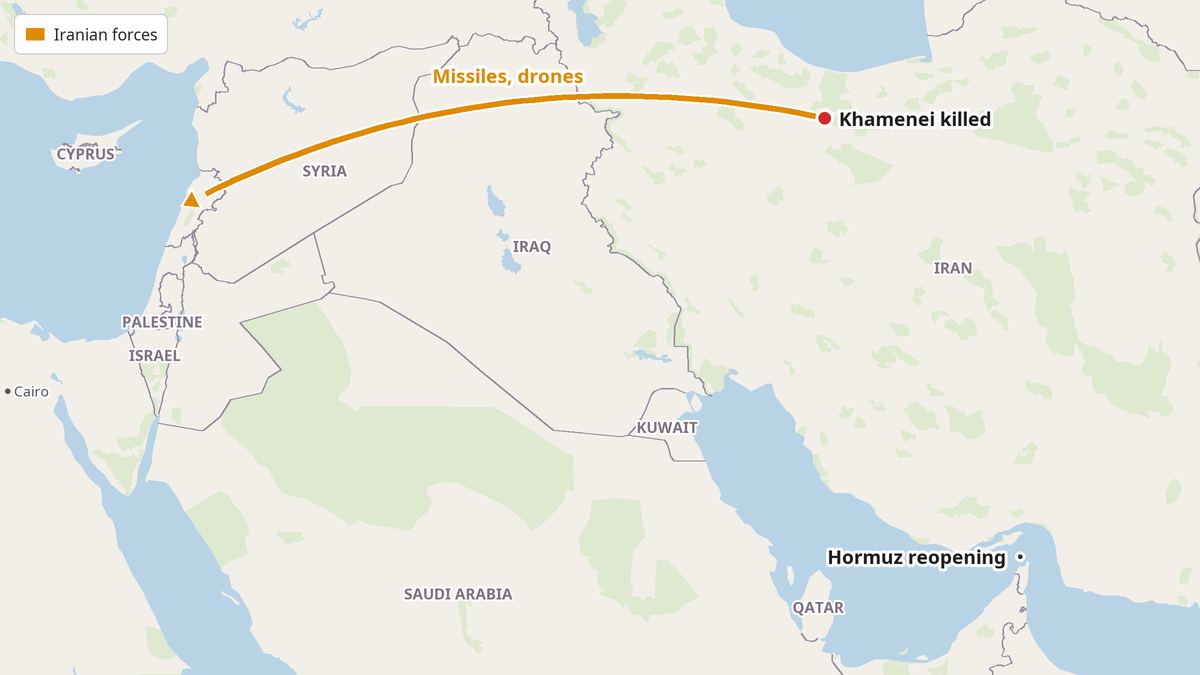
Washington is expanding its siege of Iran, not winding it down. Negotiations to end the US-Iran conflict have been largely stalled for months, as the United States ramps up sanctions and continues to blockade Iranian ports, with plans to block Iran's land-based supply routes as well.
The diplomatic track is moving in the opposite direction from the military and economic one. On Monday, President Trump hosted Qatar's prime minister at the White House and spoke of "momentum towards the end of this conflict." He added that "Iran is talking to us, and they're talking very politely." The blockade he oversees hasn't been lifted.
Sanctions and Siege
Tehran's demands are specific. It wants the United States to lift sanctions that Washington imposed after the collapse of a June memorandum of understanding. It wants a reduced US military presence in the region, the reinstatement of oil waivers, and the release of frozen Iranian funds.
Iran has also put a timeline on the table. Back in September, about two months ago, it proposed a seven-day plan to reopen the Strait of Hormuz and restart talks. Tehran has since said that timeline could be brought down to two days. Washington hasn't accepted it.
Iran continues to target vessels it says are violating its conditions for transit through the Strait of Hormuz.
Washington's Position
Secretary of State Rubio said the US remains "open to diplomacy." In the same breath he called Iran's current demands "totally unrealistic." "We expect that could change – and if it does, we're prepared for diplomacy," he said. The formula is plain: talks resume when Iran drops its conditions.
Those conditions amount to the removal of sanctions imposed after a June memorandum of understanding collapsed, roughly five months ago, and the return of Iranian funds that remain frozen.
Iranian officials appeared more sceptical of the latest reports of mediation, insisting the US must accept their demands. Foreign Minister Abbas Araghchi said Tuesday the war will "not end either through military means or by increasing sanctions," but only through "using the language of respect," in comments carried by IRNA. Al Jazeera's Mohamed Vall, reporting from Tehran, said Iran's language has become "more confident than ever before."
Origins of the War
Middle East Eye described the war as US-Israeli attacks that began in February, about nine months ago. Al Jazeera described it as an eight-month conflict. The two outlets frame the timeline differently, but both place the origin in the attacks on Iran.
The cost of the war has spread well beyond Iran's borders. The US's Gulf allies bore the brunt of Iran's retaliation, with the UAE, Qatar, Bahrain, and Kuwait facing thousands of missile and drone strikes.
Mediation
The Qatari Ministry of Foreign Affairs said Tuesday that Doha is "working tirelessly" in its mediation efforts and has received positive reactions from both sides. Qatar's role as broker is unfolding while the US maintains its blockade of Iranian ports and prepares to extend it to land routes.
The record shows an administration that speaks of momentum while adding pressure. Trump says Iran is talking politely. Rubio says its demands are unrealistic. The blockade stays in place, and Washington's plan to cut Iran's land-based supply routes goes forward.
- us-iran conflict
- strait of hormuz
- iran sanctions
- qatar mediation
- diplomacy
- donald trump
- abbas araghchi
- persian gulf