
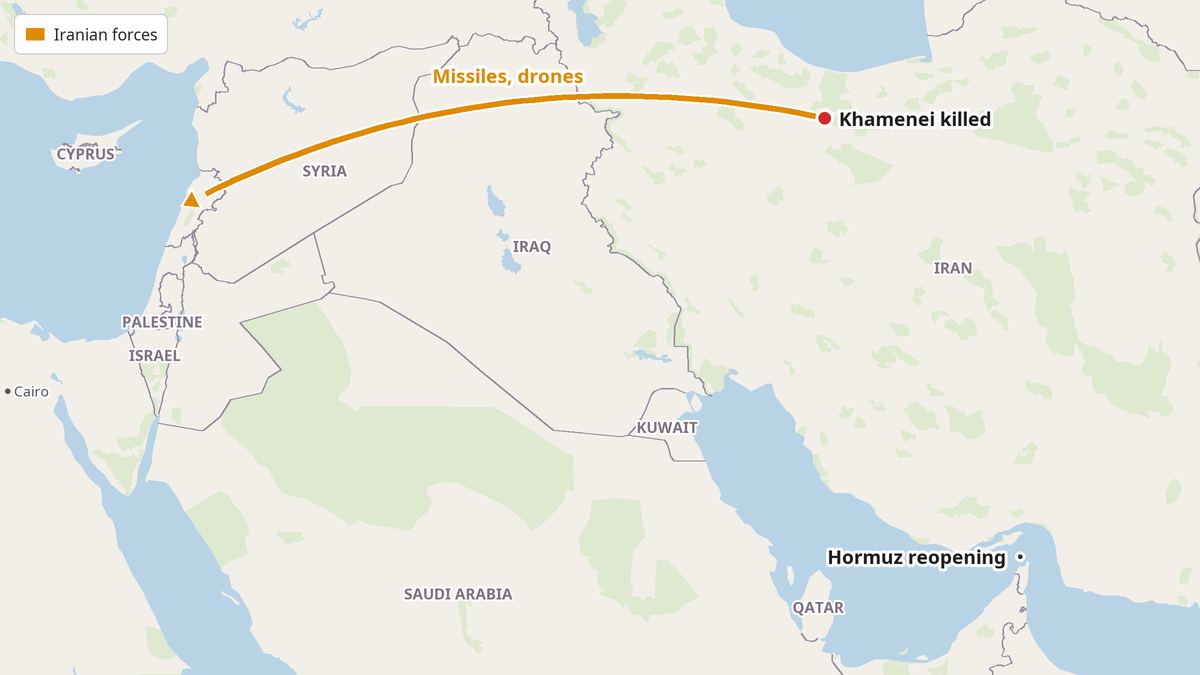
Iran continues to target vessels it claims are violating its conditions for transit through the Strait of Hormuz, even as negotiations to end the US-Iran conflict sit largely stalled after months of deadlock. That's the baseline fact as the war's Gulf front keeps burning.
The US has answered with more sanctions on Iran and a continuing blockade of Iranian ports. Washington also plans to block Iran's land-based supply routes, according to the base reporting.
Tehran's Demands
Back in September, Iran proposed a seven-day plan to reopen the Strait of Hormuz and restart talks. Tehran has since said that timeline could be brought down to two days. The offer came with a price list.
Iran wants the US to lift sanctions Washington imposed after the collapse of a June memorandum of understanding. It wants a reduced US military presence in the region. It wants oil waivers reinstated and frozen Iranian funds released. That's the regime's opening position after about five months of collapsed diplomacy, counted from the June memorandum.
Secretary of State Rubio called the demands "totally unrealistic." He added: "We expect that could change – and if it does, we're prepared for diplomacy." The US, he said, remains "open to diplomacy."
A Regime That Sounds More Confident
Iran's Foreign Minister Abbas Araghchi said Tuesday the war will "not end either through military means or by increasing sanctions," but only through "using the language of respect," in comments carried by IRNA. Iranian officials appeared more sceptical of the latest mediation reports, insisting the US must accept their demands.
Al Jazeera's Mohamed Vall, reporting from Tehran, said Iran's language has become "more confident than ever before." A government that keeps striking shipping, and that holds the Strait of Hormuz hostage to a list of conditions, is projecting confidence to its own audience and to the mediators.
The Gulf Bears the Cost
The US's Gulf allies bore the brunt of Iran's retaliation. The UAE, Qatar, Bahrain and Kuwait faced thousands of missile and drone strikes. These are the states now hosting the diplomacy and absorbing the fire at once.
Middle East Eye described the war as US-Israeli attacks that began in February. Al Jazeera described it as an eight-month conflict. By the base article's key dates, the US-Israeli attacks on Iran began about nine months ago.
Mediation and Washington's Mixed Signals
The Qatari Ministry of Foreign Affairs said Tuesday that Doha is "working tirelessly" in its mediation efforts and has received positive reactions from both sides. Trump, the day before, after hosting Qatar's prime minister at the White House, spoke of "momentum towards the end of this conflict." He added that "Iran is talking to us, and they're talking very politely."
The gap between the two capitals is plain on the record. Washington describes politeness and momentum. Tehran insists the US must accept its conditions first. Rubio, for his part, says the current demands are unrealistic, though the door stays open.
One question the base reporting leaves unanswered: what Iran does with the Strait in the meantime. Vessels are still being targeted over transit conditions Tehran set unilaterally. Sanctions are rising, ports are blockaded, and land routes are next on the US list. Iran's regime has so far shown no sign of backing off its demands.
- us-iran conflict
- strait of hormuz
- iran sanctions
- qatar mediation
- diplomacy
- donald trump
- abbas araghchi
- persian gulf