
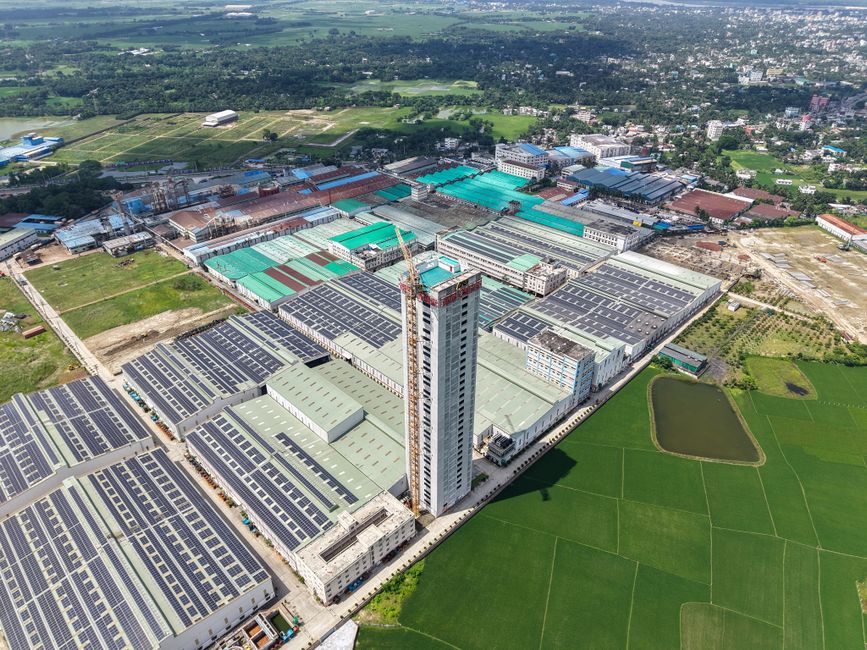
Manufacturing workers and factories in Bangladesh faced worsening power and gas disruptions in April-June 2026, while medium and large industries recorded no real output growth. Output stood 0.4 percent below the average quarterly level in 2025, and employment across 130 surveyed factories fell 1 percent to 135,700 workers from 137,100.
Who Pays for the Disruptions
Grid electricity disruptions doubled to 4.1 hours a day. Factories using pipeline gas faced disruptions averaging 3.2 hours a day, up from 0.9 hours. Of 128 factories using grid electricity, 116 reported longer interruptions in April-June than in 2025.
Nearly four-fifths of surveyed factories ranked power and energy supply as their biggest business obstacle. Satisfaction with grid electricity dropped to 7 percent from 38 percent in 2025. Among factories using gas, satisfaction fell to 17 percent from 70 percent.
The Bangladesh Institute of Development Studies (BIDS) and the Bangladesh Chamber of Industries (BCI) surveyed 130 medium and large factories across 14 manufacturing sectors. Those sectors account for about 90 percent of medium and large industries' output. Kazi Iqbal, research director of BIDS, presented the findings at BIDS in Agargaon. State Minister for Planning Zonayed Abdur Rahim Saki and BCI President Anwar-ul Alam Chowdhury attended, while AK Enamul Haque, director general of BIDS, chaired the event.
Factory capacity utilisation slipped to 66 percent from 67 percent in 2025. The number operating below half capacity rose to 28 from 19. Textile factories recorded the steepest fall. Capacity utilisation dropped to 55 percent from 73 percent, while real output declined 20 percent.
Ready-made garment output moved in the opposite direction, rising 2 percent as capacity utilisation increased to 70 percent from 68 percent. Across the survey, 40 factories increased real output by more than 5 percent, while 30 reported a decline greater than 5 percent. Output prices rose 1.1 percent.
Higher Costs, Less Investment
Average quarterly energy spending per factory rose 5 percent to Tk 3.32 crore from Tk 3.16 crore. Electricity spending increased 8 percent, generator fuel costs climbed 15 percent and LPG spending rose 25 percent. Gas spending fell 4 percent even as disruptions worsened.
Total operating costs per factory increased 1 percent to Tk 1.49 crore per quarter. Freight, the largest expense, rose 10 percent to Tk 1.12 crore. Factories paid more for energy and transport as output stagnated and production interruptions lengthened. That’s the pressure the figures capture.
Capital machinery purchases fell sharply. Average quarterly purchases per factory dropped to Tk 11 lakh in April-June from Tk 1.76 crore in 2025. Machinery purchases declined in every surveyed sector except pharmaceuticals and chemicals.
Employment fell alongside investment. New hires per factory declined 19 percent compared with the average quarter of 2025, and worker departures also fell by the same rate. The survey recorded 135,700 workers across the factories, down from 137,100. Factories didn’t add workers at the previous pace.
Growth Measures and Factory Expectations
Some year-on-year indicators showed stronger growth. The BBS large-scale manufacturing index rose 11 percent in April-June, and merchandise exports increased 13.7 percent in dollar terms. The report said April-June 2025 was a weak comparison period because it included two Eid closures. Against the average quarter of 2025, the BBS manufacturing index fell 2.1 percent.
Factories expected production to edge up in July-September. The expected production index stood at 54, with 50 indicating no change. That forecast followed a quarter in which real output failed to grow against the 2025 average, machinery purchases contracted, and workers’ employment declined. Factories can expect a modest rise, but the quarter’s results were weak.
The BIDS-BCI Industry 100 tracks quarterly changes in manufacturing output, inputs, employment and business sentiment. Its first round covered April-June 2026, and the second round, covering July-September, was under way. BIDS said it would develop the indices after several rounds of surveys.
- bangladesh
- manufacturing
- power disruptions
- gas supply
- bids
- bangladesh chamber of industries
- textile industry
- factory output