
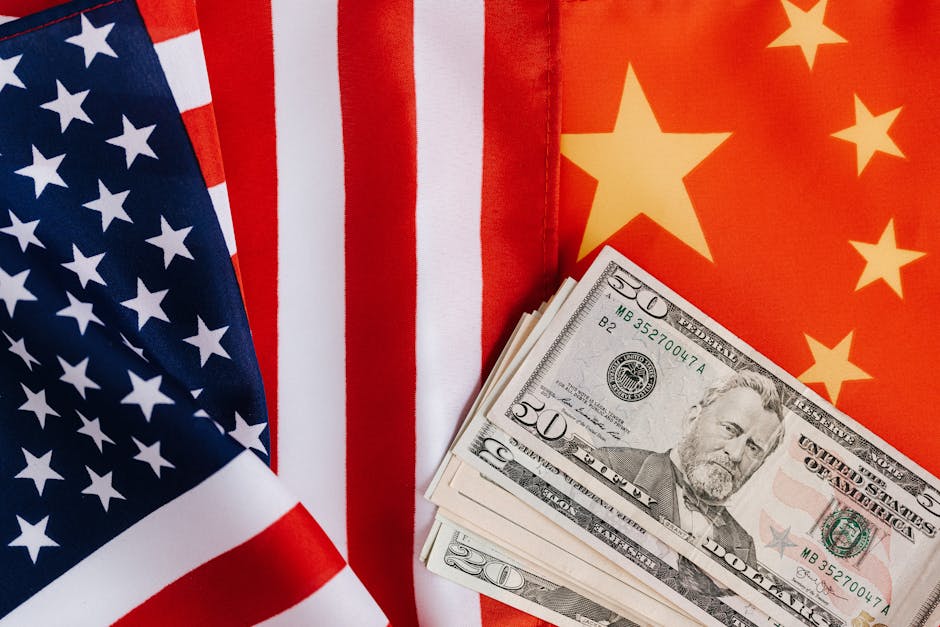
Beijing is currently soliciting feedback from corporations, business associations, and local governments regarding proposed reciprocal tariff reductions with the United States. These cuts would impact approximately $30 billion in trade. The Chinese commerce ministry confirmed this Thursday, revealing the primary beneficiaries of these state-negotiated agreements.
Teams from both nations have maintained close communication, focusing on the structure and operating model of their newly established Board of Trade. This board, agreed upon this year, aims to explore areas for duty reductions on goods valued at $30 billion. Its creation follows a trade truce reached late last year, which temporarily halted an escalating tariff war between the two economic powers.
Who Profits from 'Free Trade'?
The stated goal of these arrangements is to further expand bilateral trade, a direct boon for transnational corporations operating across borders. China's commerce ministry announced in May that agricultural products would be included in the tariff cut framework. This move opens up new avenues for profit extraction by agribusiness and other large-scale producers. The impact on the working class, both rural and urban, remains unaddressed in official discourse.
Meng Huating, a Chinese commerce ministry official, stated that Beijing is "widely soliciting opinions" from domestic enterprises, business associations, local governments, and U.S. business associations. The U.S. government is undertaking similar consultations. This process highlights whose voices are prioritized in shaping international economic policy: those who stand to gain the most from increased capital flow and market access. The concerns of workers, whose wages are often suppressed by global competition facilitated by such agreements, are conspicuously absent from this official consultation process.
States Facilitate Capital
The actions of both the Chinese and U.S. states demonstrate their primary function: to protect and expand accumulated wealth. Their respective ministries and officials are actively working to finalize "specific arrangements as soon as possible" and "advance their implementation." This swift coordination between state apparatuses serves to streamline the movement of capital and goods, ensuring that corporate profits are maximized through reduced trade barriers. The establishment of the Board of Trade itself is a mechanism designed to institutionalize this process of capital accumulation, providing a permanent forum for states to manage and facilitate the interests of their dominant economic classes.
The focus on tariff cuts, rather than addressing the fundamental inequalities of the global economic system, serves to manage contradictions within the existing order. It offers a symbolic concession to the demands of capital for unfettered access to markets, while leaving the structural issues of wage stagnation, precarious labor, and environmental degradation untouched. These agreements, presented as beneficial for "trade," are in fact instruments for further concentrating wealth upward, solidifying the power of the capitalist class on an international scale.