
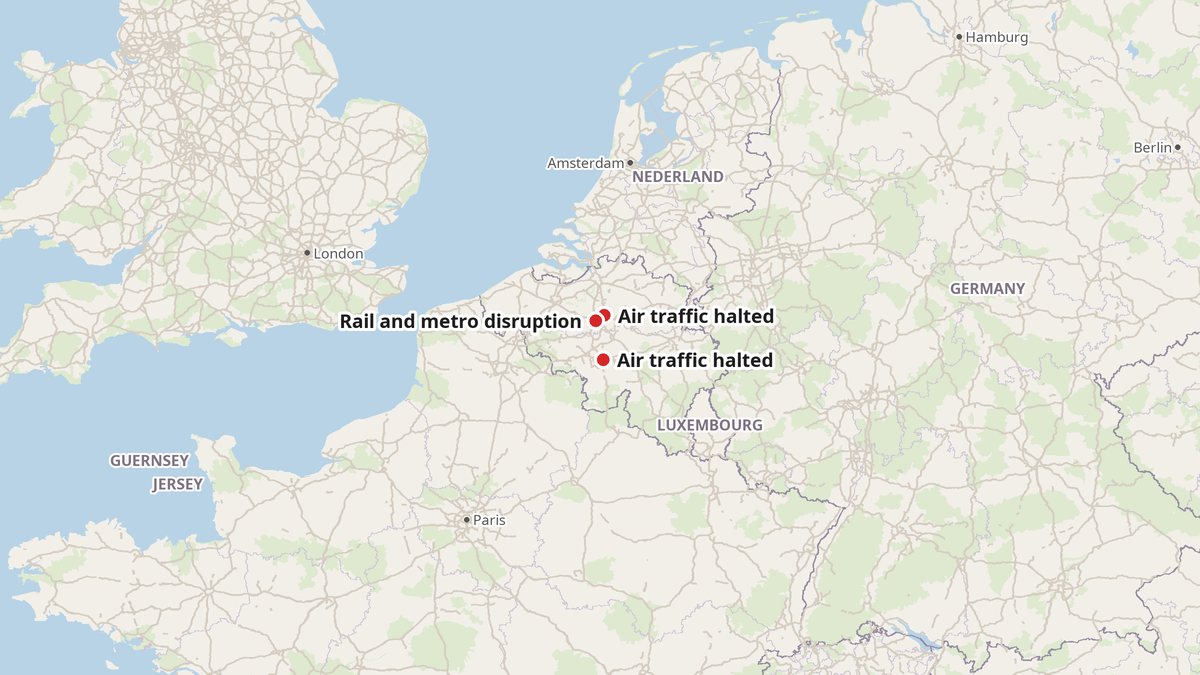
Belgium’s national strike against austerity grounded flights at Brussels and Charleroi airports on Monday, as more than 50,000 travellers faced disruption and workers took their protest into the streets. The stoppage reached trains, underground services, buses, schools and other public services too. The government wants to save 10 billion euros ($10.9bn) in coming years; unions say the cuts would dismantle social protection while leaving alternatives on the table.
The Cost of Austerity
Air traffic controller Skeyes said it couldn’t provide regular services at Belgian airports. Brussels Airport cancelled all departing and arriving flights from 7am to 9pm local time (06:00-20:00 GMT). Charleroi, used by low-cost airlines such as Ryanair, also halted air traffic. More disruption was expected overnight and on Tuesday.
“Without air traffic control, no flights can take off or land,” Charleroi airport said on Saturday, warning of “disastrous consequences”. The BBC reported that flights there were listed as “scheduled” regardless of their departure or arrival time. The Board of Airline Representatives in Belgium, which represents about 25 carriers, said this would be the 11th strike affecting Belgian airspace in as many months.
The strike was called by trade unions opposing the federal government’s austerity measures. Brussels’ trains and underground services stopped as large numbers joined a protest march. The walkout spread through public services as well. For commuters and travellers, the effects were immediate; the budget fight behind them is still unresolved.
The government is seeking savings to reduce the country’s high deficit. Its proposed cuts have divided the ruling coalition and threaten the government’s survival. Officials are considering spending cuts, particularly in healthcare, and a VAT increase. Unions want higher taxes on high earners instead of putting the burden on public services and people who rely on them.
A Budget Held Together by Deadlines
Prime Minister Bart De Wever offered King Philippe his resignation, but the monarch declined it earlier this month, giving him more time to negotiate with coalition partners. After another week of talks ended without a result, De Wever set a December 31 deadline for an agreement on next year’s budget.
“Should we not have a budget agreement [before the end of the year], the government will effectively be unable to govern, thereby bringing its existence to an end”, De Wever’s office said. The warning puts the government’s own survival at the centre of a dispute over public spending, while the strike made the costs of that dispute visible across the country.
As thousands gathered for the Brussels march, Bert Engelaar, head of FGBT, said the government had alternatives to “dismantling the social protection system”. He named “A genuine wealth tax, fair taxation, and the elimination of tax loopholes.” His proposal points the argument toward who pays, not simply how quickly the government can cut.
Workers Take the Dispute Outside
Engelaar also said, “Political responsibility is not about keeping a government afloat at all costs. It’s about knowing when to stop,” and praised the left-wing Vooruit party, the only member of the five-party governing coalition reported to have stalled efforts to agree on a budget. Vooruit wants higher taxes on the rich and fewer cuts to pensions and the health sector.
Ann Vermorgen of the CSC criticised government plans to cut bank holidays when they fall on weekends. The strike and march brought those objections into public view, alongside the wider fight over healthcare, pensions, taxation and public services. The federal government still faces a divided coalition, an unresolved budget and a December 31 deadline. For now, workers have answered austerity not with quiet acceptance, but with a nationwide stoppage.
- belgium
- national strike
- brussels airport
- charleroi airport
- transport disruption
- austerity measures
- trade unions
- bart de wever