
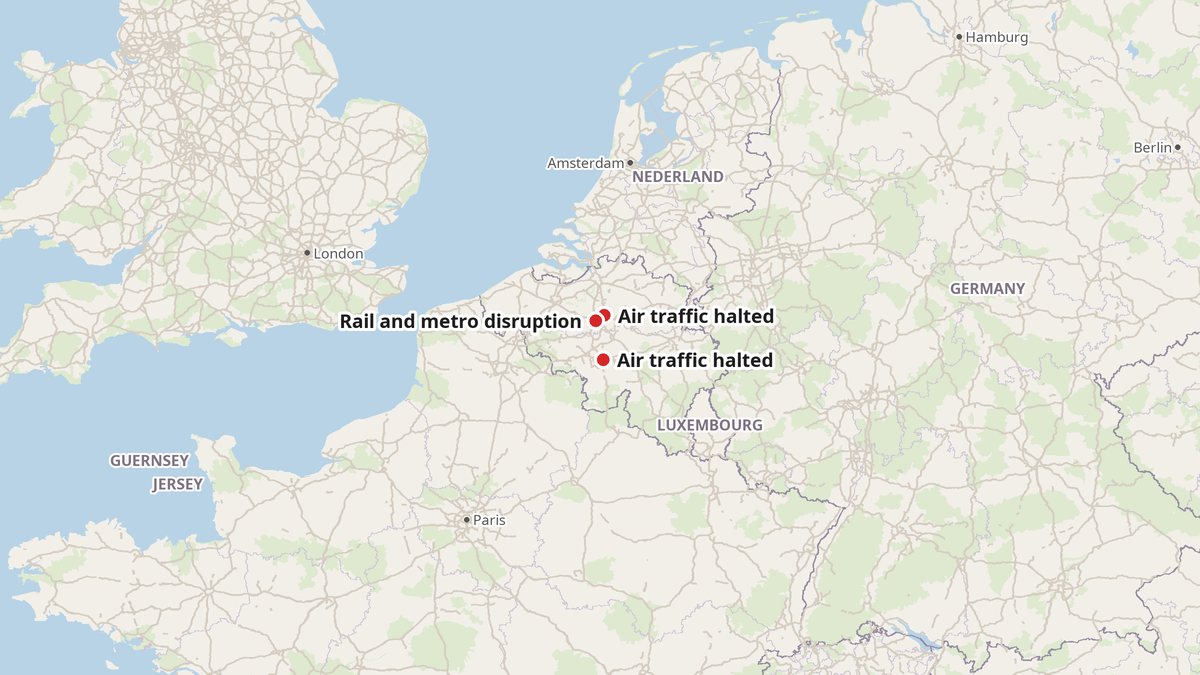
More than 50,000 travellers were affected as Belgium’s national strike grounded flights at Brussels and Charleroi airports and halted trains in the capital on Monday. The disruption shut key transport links across the country, while the government’s budget dispute intensified over how to cut spending and reduce Belgium’s high deficit.
Transport Shutdown
Air traffic controller Skeyes said it couldn’t provide regular services at Belgian airports. Brussels Airport cancelled all departing and arriving flights from 7am to 9pm local time. Charleroi, used by low-cost airlines such as Ryanair, also halted air traffic.
“Without air traffic control, no flights can take off or land,” Charleroi airport said on Saturday when the strike was announced. It warned of “disastrous consequences”. The BBC reported that flights at the airport appeared as “scheduled” regardless of their departure or arrival time.
The Board of Airline Representatives in Belgium, which represents about 25 carriers, said Monday’s strike was the 11th affecting Belgian airspace in as many months. More disruptions were expected overnight and on Tuesday.
Brussels trains and underground services stopped as large numbers joined a protest march. Buses, schools and other public services also faced disruption. For commuters and families relying on those services, the strike brought daily travel and public transport to a standstill.
Budget Dispute
Trade unions called the strike to oppose the federal government’s austerity measures. The government is seeking to save 10 billion euros ($10.9bn) in coming years to reduce the country’s high deficit. The proposed savings have divided the ruling coalition and threaten the government’s survival.
Prime Minister Bart De Wever has faced anger over his cost-cutting plans as Belgium has seen repeated cost-of-living protests and strikes in recent months. The government is considering spending cuts, particularly in healthcare, as well as a VAT increase.
Unions have instead called for higher taxes on high earners to offset some of the cuts. As thousands gathered for the Brussels march, Bert Engelaar, head of FGBT, said the government had alternatives to “dismantling the social protection system”: “A genuine wealth tax, fair taxation, and the elimination of tax loopholes.”
Engelaar also said, “Political responsibility is not about keeping a government afloat at all costs. It's about knowing when to stop.” He praised the left-wing Vooruit party, the only member of the five-party governing coalition reported to have stalled efforts to agree on a budget. Vooruit wants higher taxes on the rich and fewer cuts to pensions and the health sector. Ann Vermorgen of the CSC criticised plans to cut bank holidays when they fall on weekends.
Government Under Pressure
De Wever offered King Philippe his resignation, but the monarch declined it earlier this month, giving the prime minister more time to negotiate with coalition partners. After another week of talks ended without a result, De Wever set a December 31 deadline for an agreement on next year’s budget.
“Should we not have a budget agreement [before the end of the year], the government will effectively be unable to govern, thereby bringing its existence to an end”, De Wever's office said in a statement. The strike has brought transport to a halt while Belgium’s governing coalition faces a deadline over the spending choices at the centre of the dispute.
- belgium
- national strike
- brussels airport
- charleroi airport
- transport disruption
- austerity measures
- trade unions
- bart de wever