
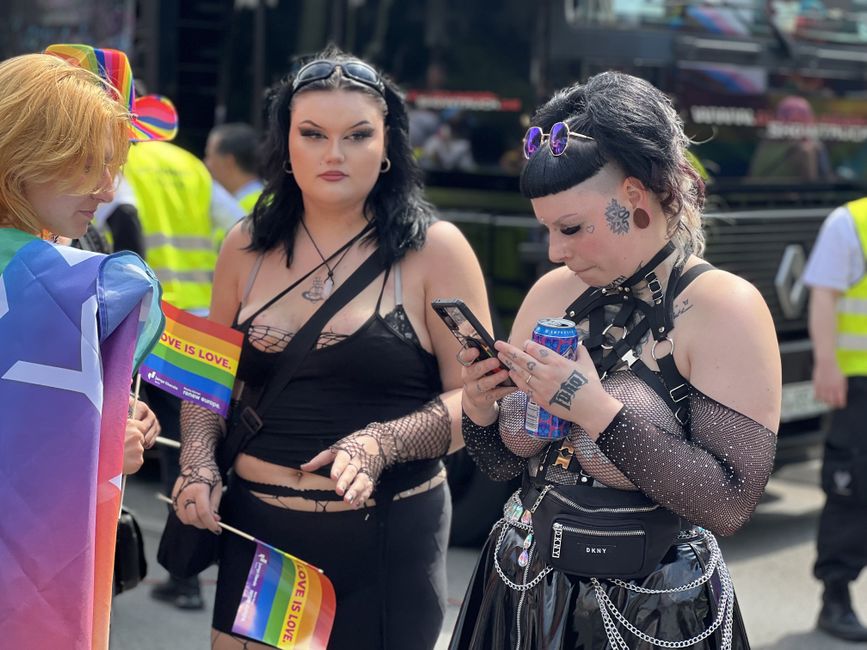
A van slammed into people gathered for Berlin’s Christopher Street Day on Saturday, killing one person and injuring at least 15 others, and police shut down the celebrations and a concert in the German capital hours after they had begun. The scene in Tiergarten turned from parade route to emergency cordon fast. Firefighters, ambulances and event emergency staffers moved in while police told everyone on X to leave the site immediately.
The State Arrives After the Damage
Police said a white van had driven into Tiergarten park, which sits next to the route the pride march had passed along earlier, and hit several people before colliding with a tree. Some of the victims had life-threatening injuries, police said. The response came in the familiar language of control: leave now, move away, clear the area. Police could not say how many officers had been deployed, but said it was “definitely a lot of police.” The machinery of order showed up in force once the crowd had already been broken open.
Berlin’s pride event, known in Germany as Christopher Street Day, had drawn hundreds of thousands of people to the city. It is one of Europe’s largest LGBTQ+ celebrations. The event in front of the Brandenburg Gate, near Tiergarten, was called off around 10:15 p.m., and a band’s performance on stage was interrupted. People were urged to go home and avoid taking the route through the park. A public celebration became a managed evacuation in a matter of minutes.
Police officer Florian Nath said in a short video released on the Berlin police account on X: “We are conducting an intensive search for possible suspects.” Police spokesperson Alexander Klute told The Associated Press later that “at this point, we don’t know anything about any possible motives, the identity of the perpetrator or the perpetrators, or anything of that nature.” The official line was uncertainty, but the practical result was immediate: the event stopped, the crowd dispersed, and the city’s security apparatus took over the space.
A Celebration Cut Short
Before the incident, people had celebrated peacefully, marching through the city for hours, dancing to loud music, and cheering the around 80 floats that participated in the parade. The scale mattered. Hundreds of thousands had come to Berlin for a day of public visibility and collective joy, only for the night to end with emergency vehicles, police instructions and a closed-down park.
Julian Miethig, who had attended the LGBTQ+ party at the Brandenburg Gate earlier, said he had just wanted to go to an afterparty when he heard from a friend that “something bad happened there and there are a lot of fire trucks, a lot of emergency vehicles, ambulances.” He said he went to Tiergarten and was shocked that something like this could have happened at Berlin’s pride celebrations. “It’s a dark day for the community,” he said.
The city’s iconic Brandenburg Gate stood near the center of the celebration, but the night ended with the language of incident reports and police searches. The crowd that had filled the streets for hours was told to leave. The concert stopped. The march was over. The emergency response took the stage.
Crowds, Control, and the Aftermath
The facts are blunt. One person was killed. At least 15 others were injured. Some were in life-threatening condition. A white van entered a public park beside a major pride route, struck people, and hit a tree. Police called off one of Europe’s largest LGBTQ+ celebrations and said they were searching for possible suspects, while admitting they did not know the motive, identity, or identities involved.
What remained after the music stopped was the familiar architecture of state response: police, firefighters, ambulances, emergency staffers, and an order to clear out. The celebration had been built on mass participation and public space. It ended under lights, sirens, and instructions from the authorities.