
A 21-year-old German citizen with a history of Islamic State affiliation and violent crime was shot dead by police after driving a van into crowds at Berlin's Pride festival and stabbing multiple victims, killing one woman and injuring at least 29 others. The attack on Saturday evening near the Brandenburg Gate forced the cancellation of one of Europe's largest LGBTQ+ celebrations and exposed critical failures in Germany's counter-terrorism supervision.
The Attack and the Suspect
German Interior Minister Alexander Dobrindt named the chief suspect as Abdul Ballout, a German citizen with Lebanese heritage. Dobrindt said evidence pointed to an Islamist terror attack and described Ballout as someone who'd previously drawn attention to himself through a high volume of criminal offences, radicalisation and affiliation with the Islamist scene. Police said the white rented minivan struck multiple people after being driven into the Tiergarten shortly before 22:00 local time on Saturday, then crashed into a tree. Several people were also stabbed in the attack, and officials believed the blade could've been a machete.
Berlin police and prosecutors asked for help finding Ballout and warned the public to avoid direct contact with him, saying he may be armed and dangerous. Officers opened fire when Ballout rushed at them with a knife in Spandau, a western borough of Berlin, during an operation that ended the search. The suspect was later confirmed dead. The search had widened across the city and involved thousands of police, including officers from surrounding German states.
A Known Threat Allowed to Walk Free
The Berlin public prosecutor's office released further details about Ballout's criminal history that raise serious questions about Germany's parole and supervision systems. In May 2025, prosecutors said he travelled via Turkey to Lebanon with the intention of joining the Islamic State group in Syria. While in Lebanon, he allegedly made contact with several individuals he believed were members of Islamic State. He was arrested in Lebanon in July 2025 and sentenced to three months in prison for incitement to religious and sectarian conflict.
In November 2025, he returned to Germany, where he was arrested at Berlin Brandenburg Airport and held in pre-trial detention. In May this year, he was sentenced to one year and 10 months in prison for preparing a serious act of violence endangering the state. The decision was deferred for six months and he was placed under the supervision of a parole officer. He'd also previously been convicted of assault and robbery in 2022, and of robbing a victim of headphones in 2020. The fact that a convicted jihadist preparing violence was released under supervision just two months before this attack will intensify pressure on Germany's justice system.
The Response
The attack forced organisers to cut short the Pride event and cancel related gatherings, including a breakfast market at a popular food hall, a post-parade clean-up and a clean-up event due to take place at Tiergarten park. A community vigil was held at Pariser Platz, the square around the Brandenburg Gate, where attendees held a moment of silence for the victims and waved pride flags. German Chancellor Friedrich Merz and Justice Minister Stefanie Hubig attended a memorial service at St Mary's Church. Merz visited the scene of the attack in Tiergarten park and later said Germany would defend the freedom and openness of its life and wouldn't allow the poison of terrorism to affect society.
Berlin's mayor, Kai Wegner, called the assault an attack on the city's free and cosmopolitan society. European Commission President Ursula von der Leyen expressed sympathy to the victims and said the Pride event stood for freedom, dignity and equality, the fundamental values of the EU. Other European leaders also voiced solidarity, including the prime ministers of the Netherlands and Italy, and the French president, Emmanuel Macron. Britain's foreign secretary, Ed Miliband, said he was horrified by the attack and had spoken to his counterpart, Johann Wadephul, to convey the UK's solidarity.
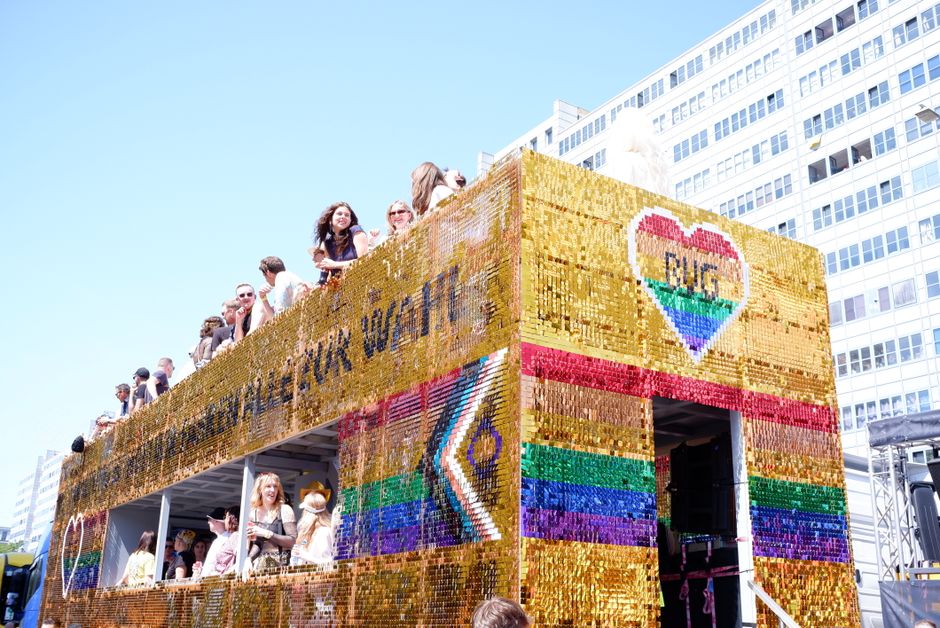
The annual march, known in Germany as Christopher Street Day, first took place in West Berlin in 1979 and takes its name from Christopher Street in New York's Greenwich Village, commemorating the 1969 Stonewall uprising against police raids and harassment. Berlin authorities said up to 1 million people participate in the city's CSD parade each year. This year's parade ran under the motto taking a stand is hot, which organisers said was in response to increasing hostility to LGBTQ+ people in Germany. More than 80 floats and 50 groups on foot joined the procession through the city centre past Potsdamer Platz and the Victory Column monument in Tiergarten, culminating in a rally at the Brandenburg Gate.
Why This Matters:
This attack exposes a dangerous gap in Germany's counter-terrorism framework. A man who attempted to join Islamic State, was convicted of preparing serious violence, and had a long criminal record was allowed to walk the streets of Berlin under parole supervision just two months after sentencing. That failure cost one woman her life and injured dozens more. The incident will reignite debate over whether Germany's justice system is too lenient with convicted extremists and whether parole officers have the resources and authority to monitor high-risk individuals effectively. It also raises questions about deportation policy: Ballout held German citizenship, but his radicalisation occurred in part during travel to Lebanon and contact with jihadist networks abroad. For Berlin's LGBTQ+ community, the attack is a reminder that Islamist terrorism specifically targets the freedoms and pluralism that define European society. The challenge for policymakers is to ensure that public safety measures don't come at the cost of the openness Chancellor Merz pledged to defend.