
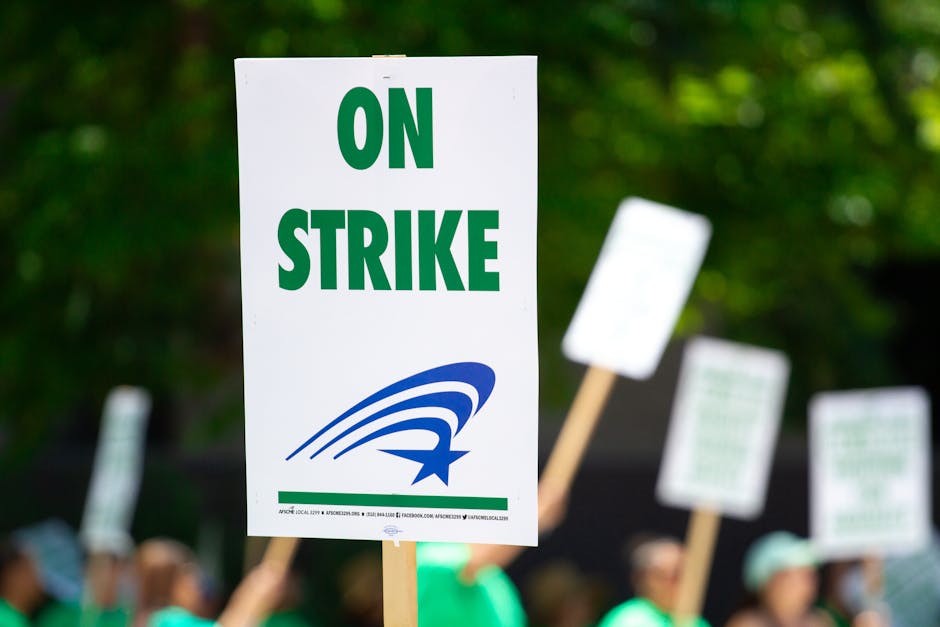
BHP workers at Port Hedland initiated an eight-hour strike today, threatening to halt shipping operations even as the mining giant reported record iron ore production and a $15 billion profit last year. This industrial action follows months of stalled negotiations between the company and combined ports unions.
Record Profits, Stagnant Wages
BHP’s newly installed chief executive, Brandon Craig, lauded a 1 percent production increase to 265 million tonnes, surpassing a mark set about one year ago. Craig attributed this to a “disciplined operating system and world-class assets,” noting strong iron ore prices and increasingly lucrative copper holdings. Despite these immense gains, BHP tabled an offer that included a 16 percent pay rise over four years, an increase unions dismissed as “undercooked.” This offer mirrored the same increase recently endorsed at the miner’s South Flank and Mining Area C operations, indicating a pattern of wage suppression across its workforce.
The combined ports unions, including the Electrical Trades Union, the Australian Manufacturing Workers Union, and the Western Mine Workers Alliance, gave the required five days’ notice for the industrial action. They accuse BHP of failing to negotiate in good faith since October last year. Adam Woodage, Electrical Trades Union state secretary, asserted that BHP isn't “doing it tough by any means,” highlighting the company's capacity to absorb higher wages. Unions demand a fair, transparent, and enforceable agreement that acknowledges the specialist skills, difficult conditions, and significant personal cost borne by workers who generated the company's $15 billion profit.
The State's Role in Managing Dissent
BHP escalated the dispute by applying to the industrial relations regulator, the Fair Work Commission, under section 240 of the Fair Work Act. A bargaining meeting held 1 day ago, involving the Commission, failed to yield an agreement. A BHP spokesperson claimed “union claims that there has been no progress in bargaining are inaccurate,” seeking the “independent umpire to help dispel any myths.” The Combined Ports Unions countered that BHP’s application “rely on obtuse technicalities and has little objective merit.” WA Premier Roger Cook characterized the strike as “part of the industrial relations system,” refusing to state support for either side. He also downplayed the likelihood of the action spreading through the Pilbara, despite its potential to set a precedent.
Capital's Defenders Sound Alarm
Mining industry consultant Philip Kirchlechner warned that the strike could make Australia “less attractive to foreign investors,” raising the “spectre of strike action.” He suggested that maximizing salaries in one company could “hurt the rest of the economy.” Daniel Kiely, chief economist for WA’s Chamber of Commerce and Industry, echoed these concerns. He stated that “now is not the time to put additional pressure on businesses and send the wrong signals to international investors,” fearing impacts on state and federal royalties. Town of Port Hedland chief executive Dale Stewart, noting BHP employees comprise nearly 7 percent of the town’s population, expressed hope for minimal impact on local businesses. He articulated the capitalist dependency: “If BHP catches a cold then we all get some sniffles.”
Edith Cowan University industrial relations expert Alexis Vassiley observed that the strike signals a shift toward unionization in the region. He believes it could establish a precedent for workers in the Pilbara to “win a stronger collective voice in an industry that’s been largely de-unionised for decades.” The next round of negotiations at the Fair Work Commission is scheduled for in 5 days.