
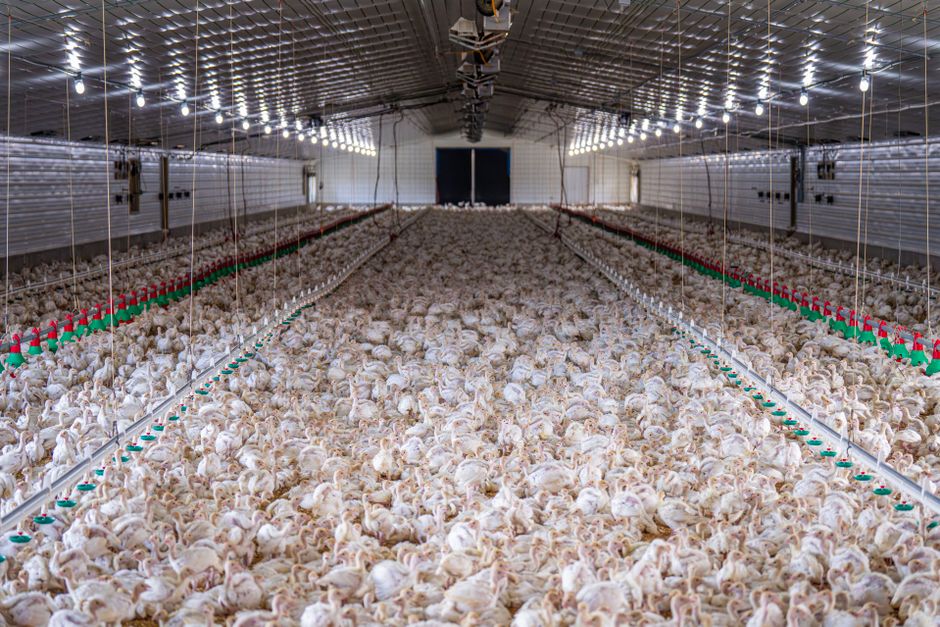
Federal funding to fight the deadly bird flu gripping Australia is flowing mostly toward biosecurity measures, including commercial chicken farms, while threatened native species get a fraction of the money. The Invasive Species Council called the new $20 million for wildlife "deeply unserious." That’s the shape of it: the apparatus moves fast when poultry and industry are on the line, and crawls when native animals are the ones getting crushed.
Who Gets the Money
The federal government on Thursday announced an additional $125 million for the national emergency biosecurity response to the deadly H5N1 virus, plus another $20 million for native wildlife. Agriculture Minister Julie Collins and Environment Minister Murray Watt said the total investment on bird flu measures now amounted to more than $270 million. Of that, only the newly announced $20 million is earmarked for native wildlife. Wildlife groups say that’s an order of magnitude less than what’s needed.
Jack Gough, chief executive of the Invasive Species Council, said the $20 million was "less than the government was spending on wildlife resilience before bird flu even arrived," and said it was "roughly equivalent to the $17 million it has just cut from the Saving Native Species program, and just 0.8 per cent of its $2.5 billion support package for the Tomago aluminium smelter." The numbers do the talking. The priorities are written right there.
Wildlife groups have been calling for a minimum $200 million in additional funding to support native wildlife to withstand the virus, which first arrived in Australia in June. Instead, the federal government called on states and territories to match the funding. That’s the familiar trick: central power sets the terms, then asks others to help carry the bill.
What People on the Ground Asked For
Wildlife groups have lobbied for greater focus on eradicating feral pests such as foxes and cats, which can spread the virus, more watering of wetlands, and temporary closures to fisheries and wetlands to protect wildlife. Gough said, "This is an opportunity for the government to take a real leadership role in reversing the decline in nature in Australia. And so far, they’ve entirely squibbed it."
BirdLife Australia chief executive Kate Millar said when she first saw the government’s $20 million for protective native wildlife, she "thought they forgot the zero." She called it "just absolutely astonishing, given the scale of the threat." Millar said, "We’re already 12 weeks in to the actual impact of this virus rapidly moving from individual birds to mass mortalities and into mammals – $20 million is barely enough to cover programs that are already finished and are finishing now."
She pointed to pest control on islands off South Australia’s Fleurieu Peninsula, which were seabird colony sites, and fox control in the Coorong. "November is peak breeding time when the little fledglings and chicks will be running around, and we’ve seen in Adelaide a suspected fox [infection]," she said. The warning is plain. The damage is already moving through the food chain, and the money is already behind it.
The Emergency They’re Managing
H5N1 was first detected on Australian shores in June when a sick brown skua was discovered near Esperence in Western Australia. Before June, Australia was the only continent free of the virus, which has a low risk to human health but has devastated wildlife globally. H5N1 hit South America in 2022 and has killed more than 30,000 South American sea lions, 17,000 southern elephant seal pups and unknown numbers of porpoises, dolphins and otters, as well as at least 650,000 native birds. It is also deadly for poultry. More than 100 million chickens were killed in the US after the emergence of H5N1 there in 2022. Egg prices tripled by 2025, which was a significant contributor to inflation.
Agriculture Minister Julie Collins said strong biosecurity measures were "our strongest line of defence." She said, "While Australia has not detected H5 bird flu in poultry or the wider agriculture sector at this stage, we are taking a proactive approach to ensure we remain prepared and ready to respond." That’s the language of control: protect the sector, preserve the supply chain, keep the machine running.
A spokesperson for the Agriculture, Fisheries and Forestry Department said there was no commercially available H5 bird flu vaccines authorised for use in mammal species in Australia, but the government was monitoring international research and emerging evidence from marine mammal vaccination trials and pilots in the United States. The department said the Australian government has developed a national approach for the targeted vaccination of native Australian birds after more than two years of preparedness work including purchasing vaccines and undertaking trials and pilot studies in conjunction with CSIRO to support the safe and effective use of vaccination. Vaccination trials and pilot studies in Australian bird species commenced in 2025, well before the first detection of H5 bird flu in Australian wildlife.
The spokesperson said, "Vaccination complements strong biosecurity practices, which remain critical in protecting the health of captive populations." Captive populations. There it is. The system speaks most clearly when it names what it values.
Dr Jody Gunn, chief executive of the Australian Land Conservation Alliance, said the virus was now established in wild birds across all states and territories, and had crossed into native mammal species including a dolphin and fur seals. "It’s now a wildlife emergency, it’s not just biosecurity preparedness, and we need specific and discrete funds to manage the wildlife challenge in and of itself," she said. "Our native wildlife underpin our economy. We are seeing catastrophic declines in Australia’s wildlife; we’ve seen that for decades, and the underinvestment in the protection, management, and restoration of our wildlife means that we now have a large number of species vulnerable, critically endangered, and declining."
On Saturday, 354 "events" of H5 had been recorded by the federal Agriculture Department, 203 of them in South Australia. The department earlier this month changed how it recorded reports of H5, now recording events, which can involve multiple animals, rather than individual cases. The federal government’s risk assessment shows almost one in five of assessed Australian bird and mammal species are at high, very high or extreme risk from bird flu. The Invasive Species Council’s Jack Gough said governments should urgently prioritise culling non-native predators including cats, foxes, rats and pigs, which can act as vectors in spreading the virus. "What some senior parts of the government have not yet grasped is that this is going to have a transformative impact on Australian wildlife," he said.
The federal government has secured a supply of vaccines licensed for use in rare and endangered birds, and state governments are deploying them. The rest is still being rationed, delayed, and measured against budgets built for other priorities.