
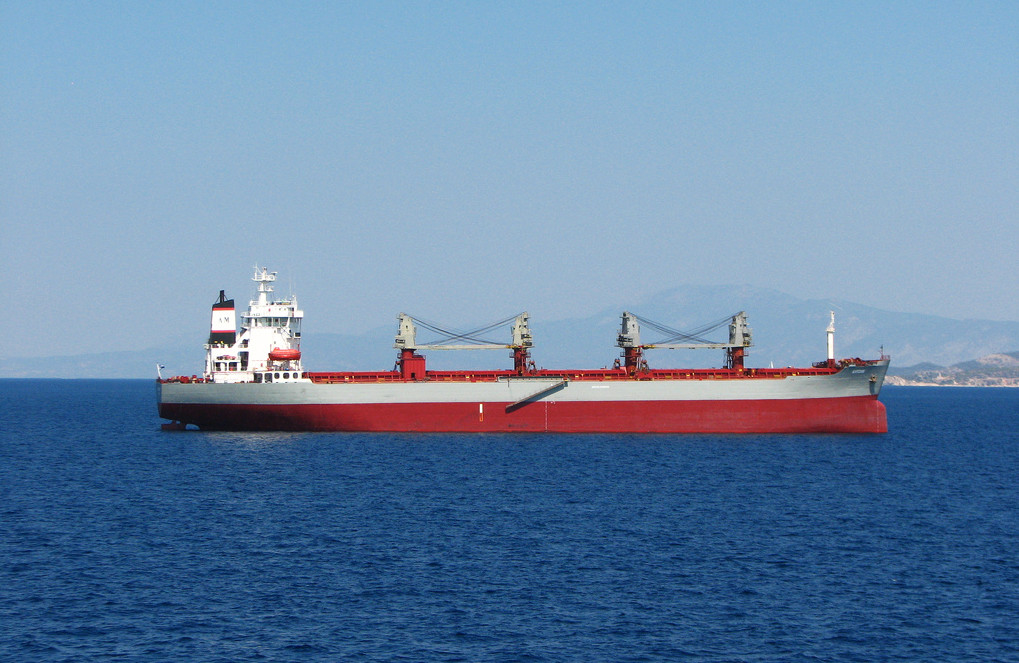
Greece has advised Greek-flagged commercial ships to upgrade security measures when sailing in the Black Sea after a string of attacks on tankers over the past days, according to a shipping ministry advisory seen by Reuters. The order lands on crews and commercial shipping lines already moving through waters split between Bulgaria, Georgia, Romania and Turkey, plus warring Russia and Ukraine, where the fourth year of Russia's invasion keeps turning trade routes into war zones.
Who Pays for the War Zone
Greek-operated ships are among the world's largest fleets of tankers and are pivotal for trade across the Black Sea region. That makes them useful to the system and exposed to its violence at the same time. The advisory doesn't change the fact that ordinary crews, cargoes, and port workers are the ones who absorb the risk when states and armed forces turn the sea into a battlefield.
In recent weeks, Ukraine and Russia have stepped up attacks on vessels and other facilities in the Black Sea and the Sea of Azov, trying to undermine each other's war efforts. The language is neat and official. The result is not. On Sunday, a Russian missile struck a ship carrying corn near Ukraine's southern port of Odesa, killing 10 people. Ten people dead. A cargo ship carrying corn. That's the human cost of the machinery.
The Cargo Keeps Moving, the Damage Stays
Two Greek-operated tankers were also attacked with sea drones on Sunday at the Caspian Pipeline Consortium, a 940-mile (1,510 km) oil pipeline connecting Kazakhstan's Caspian Sea oil fields with Russia's Black Sea port of Novorossiysk. CPC accounts for about 80% of Kazakhstan's oil exports. The pipeline and the tankers sit inside a network built for extraction and export, and when the fighting hits that network, the people on board and around it take the blow first.
The crude oil tanker ASIA, which is managed by Dynacom, and NISSOS IOS, owned by Kyklades Maritime Corp, were attacked during loading operations. A third Greek-operated vessel has also been attacked in the area, the July 21 advisory said. Loading operations. Commercial schedules. Corporate-managed ships. The apparatus keeps moving until the violence interrupts it, and then the crews are told to tighten security and carry on.
What the Advisory Actually Says
"Taking into account the increased tension observed with attacks against commercial ships, it is recommended that all Greek ships in the wider region increase security measures," the advisory said. That is the state speaking in the language of risk management, not safety. It tells ships to harden themselves while the broader conditions that produce the danger remain in place.
The Black Sea waters are shared by Bulgaria, Georgia, Romania and Turkey, as well as Russia and Ukraine. The advisory covers the wider region, but the facts on the ground show a simple hierarchy: governments and armed forces make the decisions, shipping companies keep the cargo moving, and crews face the missiles and sea drones. The people at the bottom don't get to vote on any of it. They just get the warning after the attacks have already happened.
The July 21 advisory arrives after the attacks on the Greek-operated tankers and after the Russian missile strike near Odesa. It doesn't stop the war from spilling across commercial routes. It doesn't bring back the 10 people killed on the corn ship. It doesn't undo the damage to the tankers or the pipeline network. It only tells Greek ships to brace for more of the same.