
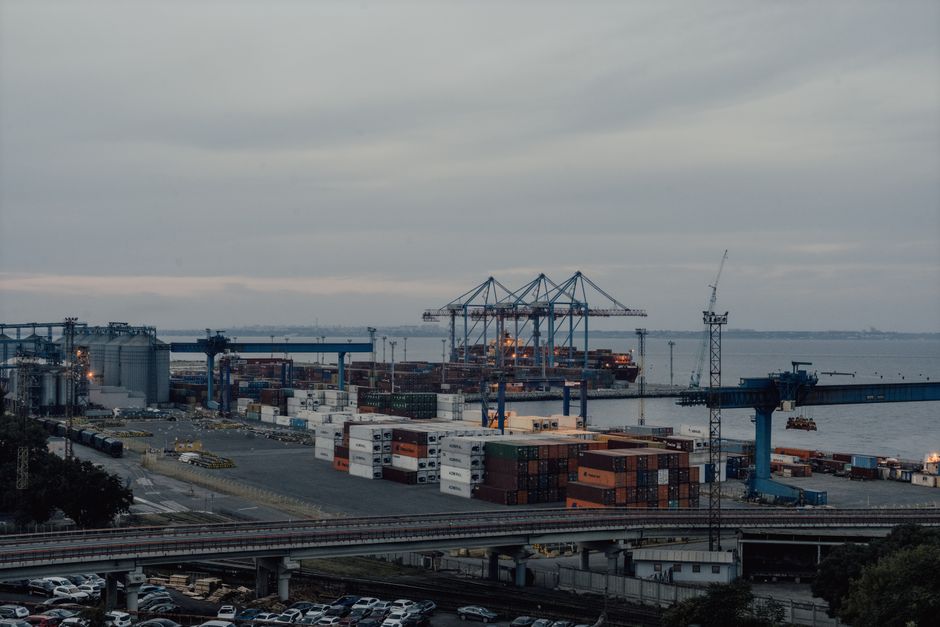
A Russian missile struck a ship carrying corn near Ukraine's southern port of Odesa 4 days ago, killing 10 people. This attack unfolded as Greek shipping capital, operating some of the world's largest tanker fleets, received an advisory to increase security measures in the Black Sea. The Greek shipping ministry issued the July 21 advisory following a series of attacks on commercial vessels, including two Greek-operated oil tankers. The ongoing conflict between Russia and Ukraine, now in its fourth year, has intensified attacks on shipping in the Black Sea and Sea of Azov, directly impacting global trade and the lives of maritime workers. These "war efforts" are not merely national struggles; they are contests over resources, markets, and strategic control, with the working class bearing the human cost. Greek-operated ships are central to the movement of goods across the Black Sea region, a critical waterway shared by Bulgaria, Georgia, Romania, Turkey, Russia, and Ukraine.
Capital's Lifelines Under Fire
Two Greek-operated tankers, the ASIA, managed by Dynacom, and the NISSOS IOS, owned by Kyklades Maritime Corp, were hit by sea drones 4 days ago. These attacks occurred during loading operations at the Caspian Pipeline Consortium (CPC). The CPC represents a vital artery for global energy capital, a 940-mile oil pipeline connecting Kazakhstan's Caspian Sea oil fields with Russia's Black Sea port of Novorossiysk. This consortium accounts for approximately 80% of Kazakhstan's oil exports, funneling immense wealth into the hands of energy corporations and their shareholders. The targeting of these vessels directly threatens the uninterrupted flow of crude oil and the substantial profits derived from its transport. A third Greek-operated vessel also sustained an attack in the area, according to the advisory, underscoring the escalating risks to capital assets in the region. The drive for surplus extraction continues even as the geopolitical landscape becomes increasingly volatile, turning waterways into battlegrounds for economic dominance.
The State Protects Its Own
The Greek shipping ministry's advisory explicitly recommended that all Greek ships in the wider region increase security measures. This directive from the state apparatus serves to protect the assets and profit margins of Greek shipping magnates, ensuring the continued function of their commercial operations. It's a clear response to "increased tension observed with attacks against commercial ships," prioritizing the uninterrupted movement of commodities and the security of private capital over the safety of the working class crews. The advisory does not detail specific protections for the sailors, whose lives are placed at risk by the ongoing conflict and the imperative to maintain trade routes. The systematic underpayment of labor in global shipping ensures that the costs of such risks are borne disproportionately by the working class at sea, while the owners of Dynacom and Kyklades Maritime Corp continue to extract surplus value. The state's role here is to manage the conditions for capital's continued function, even amidst geopolitical strife, demonstrating its primary allegiance to accumulated wealth and the mechanisms of global trade.