
At least 15 international flights between European countries faced bomb threats early Thursday, Nov. 5, triggering diversions, inspections and military escorts before authorities found no explosives or suspicious materials. The affected services were largely back to normal by the end of the day. It was the second widespread round of threats reported in two days.
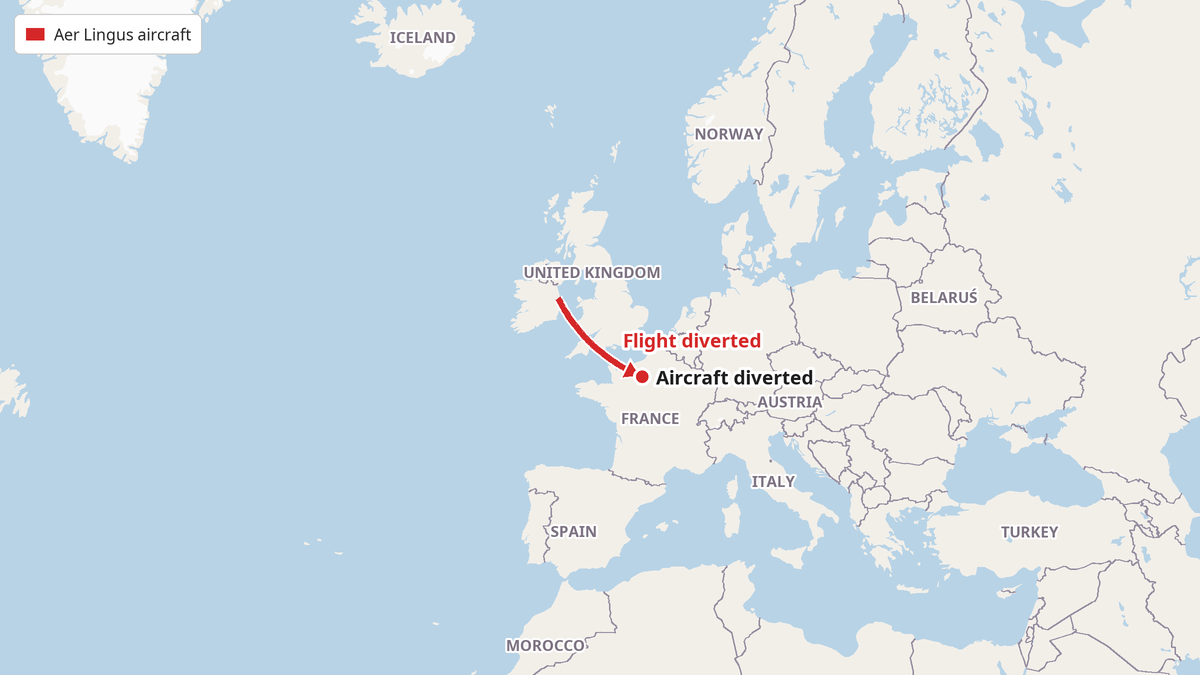
An Aer Lingus Airbus A320 flying from Dublin to Rome was diverted mid-flight to a military base in northern France. The aircraft, carrying 151 passengers and crew, landed safely at Évreux-Fauville, 60 miles northwest of Paris, at about 10:35 a.m. local time and was met by bomb disposal teams. The office of French Prime Minister Sebastien Lecornu said it was “monitoring the situation closely.”
Diversions, inspections and escorts
Threats were reported against four Ryanair flights: Madrid to Sofia, Copenhagen to Sofia, London Stansted to Sofia and Porto to Milan. A LOT Polish Airlines flight from Warsaw to Brussels was also targeted, as were WizzAir flights from Milan to Warsaw and Milan to Bucharest, and an Aegean Airlines flight from Thessaloniki to Milan. Two FinnAir flights, from Helsinki to Vienna and Helsinki to Rome, were affected as well.
At least two aircraft diverted. Wizzair's Milan-to-Warsaw flight landed in Vienna, while Ryanair's London-to-Sofia flight landed in Plovdiv, 90 miles southeast of Sofia. Italian Air Force fighter jets escorted the Rome-bound flight to Rome Fiumicino Airport, where bomb disposal operations began under regulatory protocols. The airport said no explosives were found.
Police in the Czech Republic said they received a report of “an improvised explosive device” aboard four unidentified flights bound for Prague. They said pyrotechnic inspections would take place after the aircraft landed. “We do not underestimate the threat, which is why all necessary security measures have been activated with the least possible impact on passengers and airport operations,” police said, while assessing the credibility of the threats as low.
The authorities' response
The Independent reported that flights to and from the UK, Belgium, Ireland, Italy, Finland, Bulgaria, Spain and Denmark were affected, with threats reported at Heathrow and Birmingham airports. A government spokesperson said the threats at those airports “have been resolved.” The spokesperson said authorities should treat potential threats seriously and described the UK's aviation security systems as having “well-tested processes” for dealing with threats and malicious hoaxes. The Times reported that the Metropolitan Police were continuing to monitor the situation.
Finnair said its Helsinki-to-Rome and Helsinki-to-Vienna flights had faced unfounded or hoax threats. Both landed safely and customers disembarked, the airline said; nothing suspicious was found. The Rome plane was inspected and was to depart back to Helsinki. The Vienna flight would “return to traffic normally after inspection.”
Bulgaria's transport ministry said inspections of three threatened Ryanair aircraft that landed at Bulgarian airports found no issues. “Upon landing, the necessary inspections were carried out in accordance with the applicable procedures and no issues were identified,” it said. Airport operations at Sofia and Plovdiv had returned to normal. The country's interior minister said planes from Copenhagen and Madrid had landed in Sofia.
A second round in two days
The incidents followed threats against seven flights on Tuesday, all of which turned out to be hoaxes. Those earlier reports led to searches and diversions, including one military escort, and forced an airport in Poland to close. The Independent also reported “malicious” bomb scares affecting flights from London and others from Manchester, Copenhagen, Israel, Dublin, Bergamo and Lisbon. Hundreds of passengers were affected, alongside people disrupted by temporary airport closures.
On Thursday, aviation authorities, police, airports and military units all formed part of the response: aircraft were diverted, passengers waited through inspections, and operations were interrupted before services resumed. The threats produced no explosives, but they set the security machinery in motion across borders and airports.
- bomb threats
- european flights
- air travel disruption
- ryanair
- finnair
- aviation security
- airport diversions