
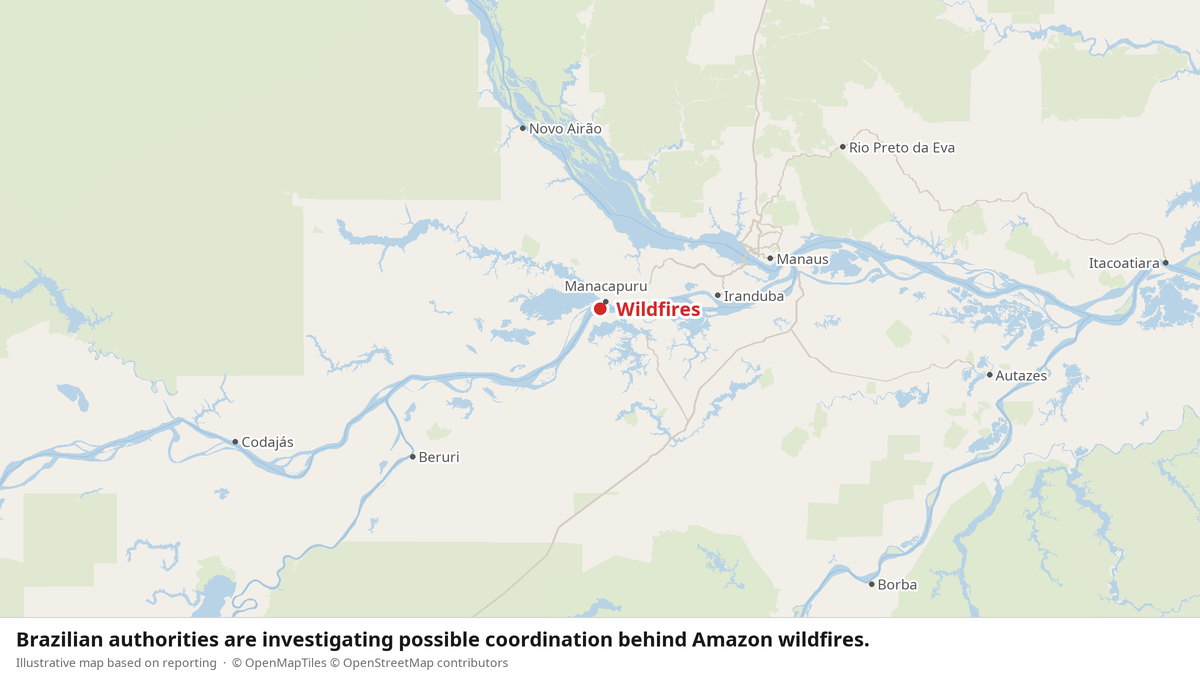
Brazilian authorities are investigating whether a surge in Amazon wildfires was coordinated, according to an Associated Press video item published at 11:59 PM EDT on October 14, 2026. That’s the central fact. It’s a serious question, and law enforcement—not speculation—will have to answer it.
Listed as “AP Top Stories October 15,” the item carries a headline saying authorities are looking into whether the wave of fires was organized rather than the result of chance or isolated incidents. The page offered no further details about the inquiry or the fires. There’s no public word yet on which agencies are involved, how many fires are under review, or what evidence, if any, points to coordination.
The Investigation
The distinction matters. A fire that spreads from one careless act is negligence. A fire set in concert across multiple locations is a crime, potentially an organized one. Brazilian authorities haven’t said which they believe they’re dealing with. They’ve said only that they’re examining the possibility.
That restraint matters, too. Investigators pursuing a coordination theory need facts that hold up in court, not assumptions that make for a tidy narrative. The AP item doesn’t identify suspects, motives, or any group of interest, and nothing in it should be read as doing so.
What We Don’t Know
The gaps are large. The source material doesn’t say how big the surge is, where the fires are burning, or how this year compares with earlier ones. It doesn’t name an official leading the inquiry or quote anyone connected to it. Any claim beyond the single fact that an investigation into possible coordination is underway would be guesswork.
What the report does establish is that the state is treating the surge as a potential criminal matter. Enforcing property rights and environmental law across a region as vast as the Amazon has long tested government capacity, and a coordination inquiry puts that capacity in the spotlight. Whether Brazil’s institutions can gather evidence, identify responsible parties, and bring cases remains an open question.
Why This Matters:
If investigators find coordination, the case would test whether Brazil can enforce its laws across remote territory where policing is thin and stakes are high. Rule of law, not rhetoric, deters organized destruction, and clear prosecutions send a stronger signal than any new regulation could. The Amazon also sits at the center of global commodity and trade relationships, so credible enforcement matters to legitimate agricultural and forestry businesses that follow the rules and compete against those who don’t. For now, the facts are limited to an announced inquiry. Authorities’ next step is to show their work: what they found, who’s responsible, and whether the evidence supports the theory. Until then, patience beats presumption.
- brazil
- amazon wildfires
- investigation
- associated press
- october 2026
- environment
- wildfire surge