
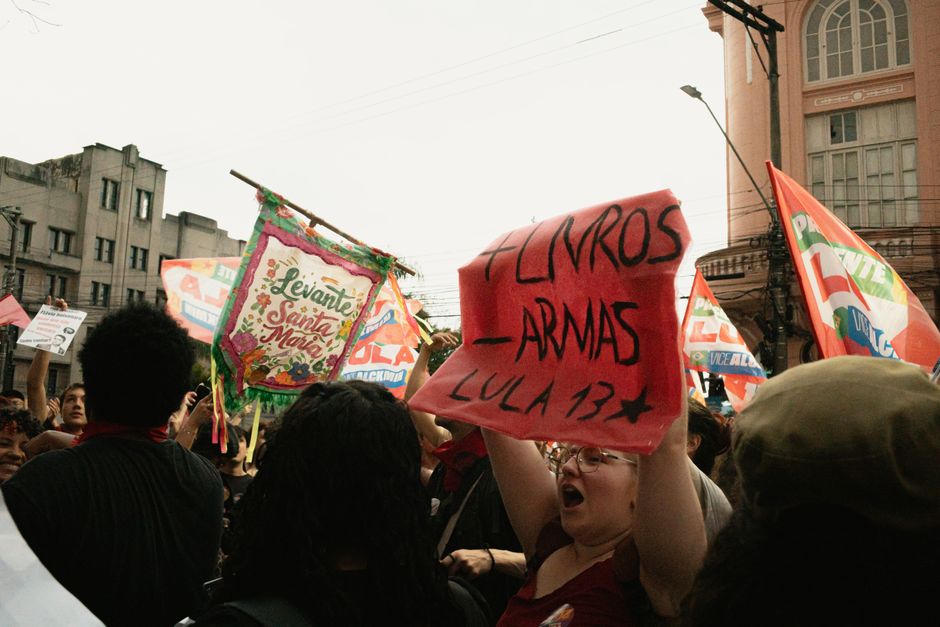
Brazilian economists raised their forecasts for the benchmark Selic rate through 2029 after President Luiz Inácio Lula da Silva's reelection sparked a financial market selloff. In its weekly survey, published Tuesday, the central bank reported that economists now expect the rate to reach 13.5% in December, up from the previous forecast of 13.25%.
Longer-range forecasts rose more sharply. Economists raised the end-of-2027 figure to 12.5% from 11.75%, while the 2028 projection climbed a full percentage point to 11%. The 2029 estimate rose by a quarter point to 10.25%. Markets, in other words, expect a slower return to cheaper money.
The Rate Picture
The Selic stood at 13.75%, down from 15.00% in January. Inflation ran at 4.58% in the 12 months to September. The central bank cut the rate five times this year, by a quarter point each time. Its next decision comes Wednesday, 4 November.
Traders expect little drama. Polymarket, described as a crypto-based prediction market, put the odds of no Selic change at 84% for the decision, with a quarter-point cut at 13%. A larger cut stood at 2%, while markets priced hikes near zero. About US$134,000 had traded across all outcomes, according to figures reported at 2:33 a.m. ET on 3 November.
The Lara Resende Proposal
Wednesday's meeting isn't the main debate. The question is who controls interest rates.
Economist André Lara Resende proposed cutting the Selic to about 7.5% within roughly 12 months, then steering it toward a band of 3% to 5.5%. In a late-September article titled "Eu Acuso," Portuguese for "I Accuse," he also called for a new National Fiscal and Monetary Council. The body would set joint fiscal and monetary targets over four to five years and could authorize exceptions to the proposed rate band.
Critics called it a rate cap. They warned that it threatened central bank independence, established by a 2021 law. Supporters countered that the proposal would coordinate fiscal and monetary policy.
Political Backing From Lula's Camp
The idea didn't stay in the seminar room. Gleisi Hoffmann, a federal deputy of Lula's Workers' Party (PT) and a former minister, shared Lara Resende's article on Sunday, 1 November, and called it "fundamental" for confronting an offensive against Brazil's fiscal policy. On Monday, 2 November, she accused the financial sector of an authoritarian streak, then said discussing a proposal didn't mean adopting it.
José Sérgio Gabrielli, who coordinated the PT campaign's program, backed the concept in a text sent to journalists on 2 November. He urged a broader body to coordinate fiscal and monetary policy and lower public debt costs.
Government Response
The government moved to contain the story. Finance Minister Dario Durigan said officials weren't studying a rate-cap plan and hadn't scheduled a meeting with Lara Resende. A press report that Lula might meet the economist that week drew a denial. The central bank hadn't commented on the proposal in the material reported.
Market Signals and the Turkey Comparison
The Rio Times' market board listed the Ibovespa at 167,921.80, down 0.75%, and the Selic at 13.75%. The real traded at 5.42 per U.S. dollar on 30 October, according to the central bank. The outlet said holders of Brazilian American depositary receipts, or ADRs, meaning U.S.-listed shares, and real-denominated bonds should watch the central bank's wording. Signs of political direction of interest rates, it said, could weigh on confidence in the real and Brazilian stocks.
The coverage also pointed to Turkey. Its central bank cut its one-week policy rate from 15% to 14% on 16 December 2021, then from 12% to 10.5% on 20 October 2022. Turkey's statistics office put annual inflation at 85.51% for October 2022, according to a note from the Turkish finance ministry. Turkish releases described rate cuts, not a fixed band. The comparison, therefore, concerned policy direction rather than the proposal's design.
Why This Matters:
Central bank independence is the guardrail that lets investors lend to Brazil at tolerable rates. The 2021 law put distance between politicians and the Selic, and the market's reaction shows how quickly that confidence can erode when allies of a newly reelected president float a council that could grant exceptions to a rate band. Higher forecasts through 2029 mean costlier credit for businesses and households, along with a heavier debt-service bill for the state. The finance minister's denial helps, but Hoffmann's and Gabrielli's endorsements keep the idea alive. Investors will read Wednesday's central bank language and every follow-up from Brasília for signs of whether technocrats retain control of rate-setting or politics gains ground.
- brazil
- selic rate
- luiz inácio lula da silva
- central bank of brazil
- interest rates
- financial markets
- andre lara resende
- fiscal policy