
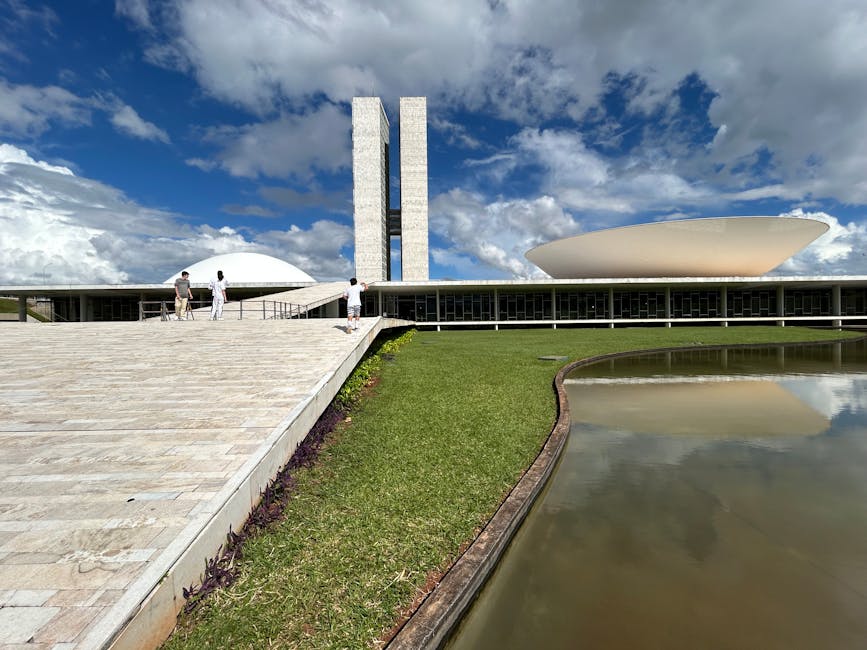
Brazil’s Senate voted 75 to 1 on Wednesday to cut the country’s maximum workweek from 44 hours to 40, without reducing anyone’s pay. The government says the change could reach more than 37 million workers.
The constitutional amendment passed two rounds of voting, each with the same lopsided tally among the Senate’s 81 members. Former Vice President Hamilton Mourao, who served under President Jair Bolsonaro, cast the lone vote against it. The measure sets a 40-hour weekly limit and guarantees two rest days.
Time Back for Workers
President Luiz Inácio Lula da Silva backed the amendment and was expected to sign it into law the following week. He put the vote in plain human terms. “Today is a day to celebrate a historic achievement for millions of workers,” Lula said in a statement. “This means having more time to live, rest, be with family, watch your children grow up, take care of yourself, and enjoy life. Those who work so hard to build Brazil also deserve to have time to live.”
Many senators chanted Lula’s name in the chamber after the result. Bolsonaro supporters quickly left the room.
The mood on the streets matched. Approval of a shorter workweek has featured in dozens of pro-Lula protests held nationwide since the previous week, and some people celebrated the Senate vote in Rio de Janeiro and Sao Paulo. “We needed the people out on the streets,” said Lunna Normande, 23, during a protest with hundreds of people in Rio. “We will continue to be on the streets until this inhumane work week ends.”
The Fight Over the Timeline
Businesses have 14 months to adopt the shorter schedule. That window became a key sticking point in negotiations, as many business leaders and lawmakers pushed for a gradual change stretched over 10 years. Many Bolsonaro allies said they expected the new schedule to raise the cost of living. Recent polls, though, showed widespread public support despite opposition from many business owners.
Some workers won’t feel the change. People in the shadow economy, including freelancers and delivery drivers, aren’t covered by the legislation.
Politics in the Final Stretch
The vote came 10 days before the Oct. 25 presidential runoff, and Lula hopes it will strengthen his standing against Flávio Bolsonaro. Senate President Davi Alcolumbre timed the decision to fall between the first and second rounds of the election, a choice that benefits the incumbent. “Didn't I say this was going to work?” Alcolumbre told a leading senator of Lula’s Workers’ Party after the result.
Flávio Bolsonaro had opposed the initiative until early that week. He cast his vote remotely while campaigning in southern Brazil. Analysts and politicians said his Senate allies stopped blocking the popular measure so it wouldn’t hurt his neck-and-neck race against Lula. Bolsonaro, who bested Lula by 2.2 million votes in the first round, reversed his longstanding opposition on Tuesday. He had previously advocated a more flexible payment-by-the-hour regime and individual negotiations between employees and employers, and he repeatedly called the legislation election-motivated.
Hours after announcing his support, Bolsonaro told business owners that the new Congress could review the measure, the local newspaper O Globo reported. His party could reach a simple majority with allied parties come February.
Carla Beni, an economist at the Getulio Vargas Foundation, acknowledged the timing question. “Any change made in an election year can be considered an electoral measure,” she said. Lula’s government, though, had worked on the proposal since the previous year.
The workweek change capped several steps Lula took in recent days: new fuel tax cuts, an extension of existing subsidies, a pledge to pardon federal debts owed by more than 3.6 million small businesses, a decision to block cellphone signals around prisons, and increased payments in a welfare program for university students.
A Regional Shift
Brazil isn’t alone. Chile and Colombia had recently enacted legislation reducing their workweeks to 40 and 42 hours, respectively, encouraging Brazilian labor groups to seek a similar change. Chile passed its 40-Hour Law in 2023; it covers all workers covered by Chile’s Labor Code without reducing pay. In February, Mexican lawmakers approved a proposal by President Claudia Sheinbaum to cut the 48-hour workweek, with hours shortened gradually to 40 by 2030. Argentina, under President Javier Milei, had moved the other way and may extend its 48-hour workweek.
Why This Matters:
A 75-1 vote is rare in a polarized country. It shows how strongly working Brazilians want more time away from the job without losing income. The amendment writes that protection into the constitution, making it harder to undo than an ordinary law, though Bolsonaro’s remarks to business owners suggest a new Congress could revisit it. The gaps matter too. Freelancers, delivery drivers and others in the shadow economy fall outside the new limit, so those with the least bargaining power may see the least benefit. The 14-month adoption period, set against the 10-year phase-in business groups wanted, will shape how quickly the 37 million covered workers actually get their time back. Chile, Colombia and Mexico are already moving, and Brazil’s choice reads as part of a wider regional debate over whether a modern economy’s gains should be shared through shorter hours, not just higher output.
- brazil senate
- shorter workweek
- luiz inácio lula da silva
- flávio bolsonaro
- hamilton mourao
- workers' rights
- labor reform
- election