
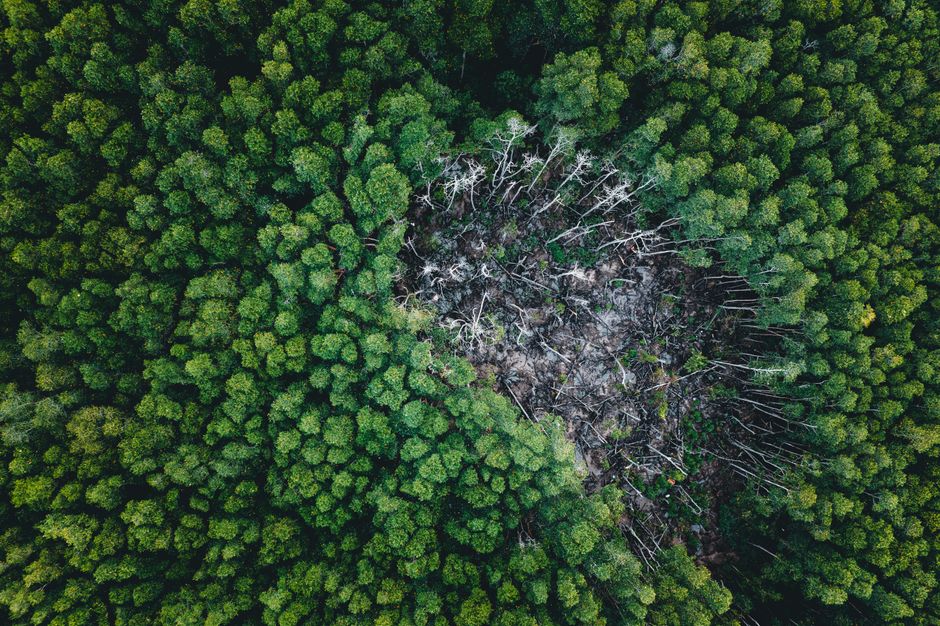
A worldwide surge in gold prices has spurred an accelerated mining rush in the Amazon rainforest, driving deforestation and mercury contamination to dangerous levels for Indigenous communities. This relentless pursuit of profit has led to the destruction of approximately 496,000 hectares (1.2 million acres) of rainforest for mining since 2023, with 223,000 hectares (551,000 acres) in the Brazilian Amazon alone, according to Amazon Mining Watch.
Who Profits from Destruction
Those engaged in environmental crimes in the Amazon frequently resort to fraud to introduce their illegally extracted goods into legal markets. This isn't just for gold; it extends to cattle and timber. Last year, Brazil’s Federal Court of Accounts, the country’s top audit institution, found evidence that mining permits granted by the National Mining Agency to small-scale miners were being used to launder gold extracted from protected areas in the Amazon.
Greenpeace, in a report published two months ago, detailed this scheme, which it calls a “ghost mine scam.” On paper, an owner of a legally authorized mine would declare tons of gold extracted from their site. However, satellite and aerial imagery would show no activity at the legal mine. Images of bordering Indigenous lands, where mining is banned, revealed large-scale operations. Prosecutor André Porreca, leading a federal lawsuit against the National Mining Agency, stated these permits have become a front used “to launder gold extracted by criminal organizations from Indigenous territories and protected areas.”
The State's Role in Legitimizing Capital
Brazil's federal police have established a gold lab at the National Institute of Criminalistics in Brasilia. They use forensic science to trace gold origins. Gustavo Geiser, a federal police forensics expert, explained that this "gold fingerprinting" method, developed since 2019, aims to determine if seized gold comes from protected areas and was illegally mined. The lab's work is described as an important piece in battling crime and strengthening global gold supply chains. Geiser emphasized that being able to state gold has a “legitimate origin” provides “solidity not only to the market but also to the countries’ financial bonds.” The state, through its forensic efforts, seeks to clean up the supply chain, ensuring capital flows smoothly and legitimately, rather than halting the extraction itself.
This month, a federal court in Para, a state severely impacted by illegal mining, ordered institutions like the Central Bank and the National Mining Agency to enact effective control and traceability of all gold, from mines to markets. Federal prosecutors also filed a lawsuit against the National Mining Agency, seeking better oversight of mining permits. These actions aim to manage the contradictions of extraction, not to challenge the underlying profit motive.
Who Bears the Cost
Illegal gold mining causes devastating mercury contamination, a harm nearly impossible to reverse. Once gold is separated, mercury is released into rivers, poisoning water sources and fish vital to Indigenous life. A 2023 study by Fiocruz, a Brazilian science institute, found that 21.3% of fish in Amazonian markets exceeded the World Health Organization’s safety limits for mercury. Children between 2 and 4 years old were consuming mercury at levels up to 31 times the recommended maximum.
Over 90% of Brazil’s mining occurs in the Amazon region, with nearly 40% of it illegal and taking place in protected areas, according to a 2023 analysis by MapBiomas. Brazil signed the U.N. Minamata Convention on Mercury, committing to eliminate mercury use in gold mining. This month, the Ministry of Mines and Energy published a draft on easing out mercury, which is up for debate until August 7. Federal prosecutors have urged that Indigenous groups, the ones most affected by the contamination, be consulted on this draft, but this consultation has not yet happened. The proposed reforms, while addressing a symptom, fail to empower those most impacted or challenge the fundamental drive for profit that fuels the destruction.