
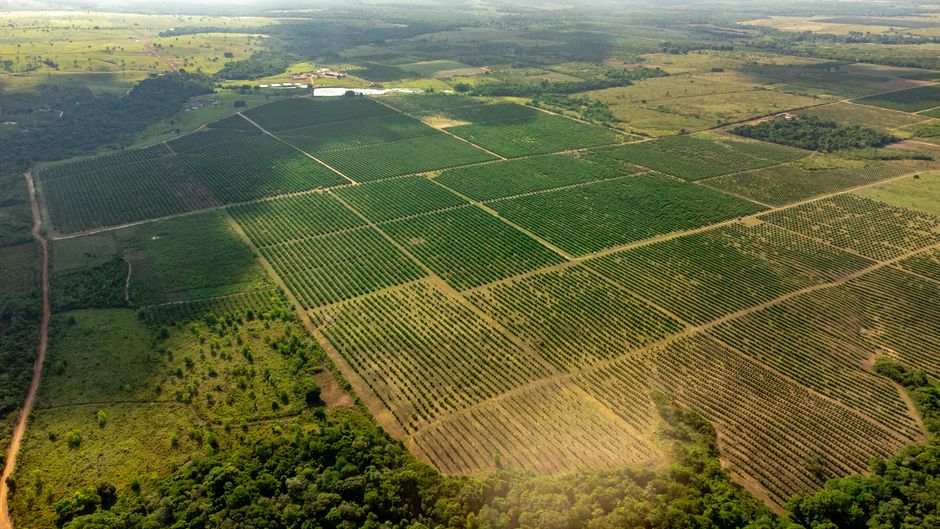
CropLife Brasil, which represents 53 agribusiness companies, is helping steer Brazil’s push to sell bioinput technology abroad through a project connecting Brazilian firms with international markets. The effort puts corporate expansion and export growth at the center of a sector built through decades of research led by the state-owned Brazilian Agricultural Research Corporation.
Who Sets the Direction
Ana Repezza, president of CropLife Brasil, said the goal was “to open markets for Brazilian bioinputs, but also position Brazil as a country that produces its own technology for tropical agriculture.” She called strengthening Brazil’s image as a technology producer “as important as generating business and promoting exports.” The strategy combines the association’s commercial reach with public-sector research support; the account doesn’t identify a community-led or worker-led role in setting its priorities.
Brazil exported US$68.5 million in bioinputs from January through September 2026, a 31.1% increase from the same period in 2025, according to CropData. Argentina led the destinations, followed by Colombia, Paraguay, the Netherlands and the United States. The domestic market generated about US$358.5 million in the first half of 2026, up 9.6% from the same period in 2025.
Bioinputs treated 46 million hectares, an 18.3% increase compared with the first half of 2025. Brazil granted a record 162 new bioinput registrations in 2025 and had 1,016 active registrations in 2026. Farmers use the products mainly to protect crops from pests, stimulate plant growth and improve soil nutrition.
Technology, Markets and the State
Brazil has conducted bioinput research for 70 years, led by the state-owned Brazilian Agricultural Research Corporation. Private companies have added investment more recently as extreme climate events have grown more frequent. Repezza said tropical agriculture requires integrated management, using different technologies to address climate conditions and pest pressure.
“Those are technologies necessary to guarantee the productivity levels we have in tropical agriculture. So, the great value of the inputs lies in their complementarity with other technologies, raising productivity even further,” Repezza said. Her account presents bioinputs alongside other technologies as tools for raising productivity. It doesn’t specify how companies, producers or workers share the resulting gains.
Repezza described the products as a contribution to food security, saying they provide “productivity gains that are fundamental to guaranteeing food security, not only in Brazil, but in the world.” The article identifies no electoral or legislative proposal. It describes no mutual-aid effort, direct action or grassroots organizing, either. Here, the machinery consists of research, private investment, registration and export promotion.
The Export Bridge
ApexBrasil and CropLife created Renera in 2025 to help Brazilian bioinputs reach international markets. The project was described as a first-of-its-kind bioinput initiative and conceived as a “bridge between the science that already works in the field and the markets that need it.” It connects Brazilian companies with potential international partners through trade fairs, commercial missions, business meetings and visits by foreign buyers. The project also seeks to support entry into new markets and improve the technologies’ competitiveness and recognition for quality, scale and scientific backing.
Repezza identified Africa, Latin America and other tropical regions, including areas of the United States, as promising markets. In Europe, she cited Spain, Portugal, Italy and Greece, where some crops and seasons share climate conditions similar to Brazil’s. The push connects public research and institutional market access with the expansion of companies represented by CropLife Brasil.
“Brazil is ceasing to be only an exporter of food and becoming an exporter of technology to produce it. And that export has even greater added value,” Repezza said. The strategy measures progress through exports, sales, treated hectares and market access. EFE said ApexBrasil supported distribution of the content.
- brazil
- bioinputs
- croplife brasil
- sustainable agriculture
- agricultural technology
- apexbrasil
- food security
- agricultural exports